 844 408 3056

 Hot Deal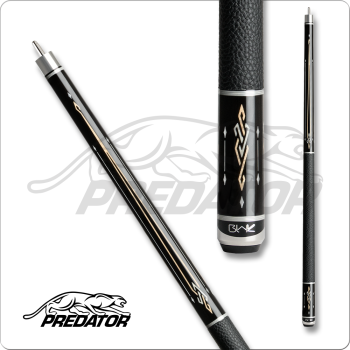
The 2026 Yalin WPA Men’s 8-Ball World Championship wrapped up on April 8 in St. Louis with Singapore’s Aloysius Yapp lifting the trophy after defeating Spain’s Francisco Sanchez Ruiz 10 to 4 in the final. The 96-player event was played on equipment supplied by Predator, and the title earned Yapp $90,000 plus a permanent place in 8-ball history. For weekend players watching the highlights, the question that always follows a result like this is the same one we hear in the shop every week: what does a champion actually use, and how much of that translates to a player who is not on tour?
The honest answer is that pros do not win because of a magic wand. They win because their entire setup is balanced, predictable, and built to hold up over a long week of matches. That is the part you can borrow. You do not need a $3,000 cue to play better, but you do need a cue, shaft, tip, and chalk combination that does the same thing every time you address the ball. Yapp’s week in St. Louis is a reminder of how much that consistency matters when the pressure rises and the racks get tighter.
Why Predator Equipment Showed Up Everywhere in St. Louis
Predator has been the official equipment partner for the Pro Billiard Series for two seasons now, and the 2026 World 8-Ball Championship was no exception. Tables were Predator Apex models, the cloth was Predator Arcadia, and the cue ball was a Predator Arcos II. That gives the players a predictable surface every match. It also tells you something useful: the brand has spent years engineering cues that play well on tournament conditions, and that work shows up in their consumer line as well as their pro tour models.
Yapp himself has played a Predator P3 chassis with a REVO carbon fiber shaft for several seasons. He prefers a relatively neutral balance and a low deflection front end, which lets him commit fully to a stroke without compensating for squirt. In an 8-ball event where you might cut a ball into the corner, draw two rails, and then have to break a cluster four shots later, that low deflection feel pays off because the cue ball ends up where you visualized it.
You can see the same DNA across our Predator Cues collection. The BLAK Series sits in the upper-mid bracket and is built around the same chassis tuning that the pros use, just with stained maple wraps and refined points instead of full custom finishes. The Predator PREBLK51 BLAK Series Cue at $1,195 gives you the genuine Predator playing balance with a 314 third generation maple shaft that you can later swap for a REVO if you want to move to carbon. That upgrade path is the same one a lot of pros walked when they first stepped up.
The Break Was the Difference Maker
One stat from the championship that did not get enough attention: ball-in-hand opportunities after the break dictated who advanced. In 8-ball, an aggressive break that lands the cue ball mid-table and spreads both groups gives you a real shot at running the rack. A weak break leaves you guessing. Yapp’s break percentages held up across rounds because his break cue setup did not let him down.
Most pros use a dedicated break cue with a stiffer shaft, a phenolic tip, and a heavier butt than their playing cue. The Predator Black BK Rush Break Cue is the consumer version of the cue you will see on most pro 8-ball and 9-ball tables. It uses Predator’s short, stiff carbon fiber break shaft and a phenolic tip that compresses less on impact, which translates more of your stroke energy directly into the cue ball. If you currently break with your playing cue, switching to a dedicated break cue is the single biggest table-presence upgrade you can make for under a thousand dollars.
It is worth pointing out that you do not have to spend Predator money to get a tournament-quality break. Our full break cues category covers everything from $150 entry-level break cues to $850 carbon fiber pro models. The principle is the same regardless of price: dedicate a separate cue to breaking, give it a hard tip, and stop punishing your playing shaft.
What Yapp’s Final Match Tells You About Position Play
The 10 to 4 scoreline against Sanchez Ruiz looks lopsided on paper, but the matches that decided that final were won at the second and third ball of each rack. Yapp consistently put the cue ball where he wanted it on the next-but-one shot, not just the next shot. That kind of forward-thinking position play is built on shaft consistency. When your shaft deflects the cue ball the same amount every time you apply english, you can plan three balls ahead instead of recalibrating every shot.
This is where carbon fiber shafts have changed the game. The Predator Throne 3 series uses the same low deflection geometry as the REVO. The carbon fiber shafts category shows you the broader landscape, including Whyte Carbon, Bull Carbon, McDermott Defy, Tiger Fortis, and several others under $500 that give you a meaningful low deflection upgrade without the Predator price tag. If you are stepping up from a stock maple shaft, this is the one upgrade that most weekend players feel immediately.
Should You Buy a Pro-Spec Cue?
Here is where we always pump the brakes. A $2,500 Predator BLAK 54 will not turn a 500 Fargo player into a 700 Fargo player. The pro setup is engineered to remove variables for a player who has already eliminated everything else. If you are still working on stance, eye pattern, and pre-shot routine, a $400 cue with a quality tip will improve your game more than a $2,500 cue ever will.
That said, once your fundamentals are solid, a tournament-grade cue starts to pay you back. You stop missing balls because of cue feel inconsistencies, and you stop second guessing your stroke. Players who level up tend to do it in a specific order: first they sort out their tip and chalk, then they upgrade their shaft, then they upgrade the cue. Browse our full pool cues collection to see the bracket that fits where you are right now, not where you wish you were.
Three Takeaways From the 2026 World 8-Ball Championship
First, equipment consistency matters more than equipment cost. Yapp won because his cue, shaft, tip, and chalk all behaved the same on rack one and rack twenty. Pick a setup and stick with it long enough to actually trust it. Switching components every month is the fastest way to play worse, regardless of how good those components are individually.
Second, the break is half the game in 8-ball. If you are still breaking with your playing cue, you are bleeding equity every rack. A dedicated break cue from our break cues lineup will pay for itself in match wins faster than almost any other piece of gear.
Third, low deflection shaft technology is no longer optional at the competitive level. Whether you go with a Predator REVO, a Whyte Carbon, a Bull Carbon, or a third-generation 314 maple shaft, the geometry that pros use is now available across every price point. The Predator Cues category on our site is the simplest place to start if you want the same chassis Yapp used in St. Louis. We carry every BLAK, P3, and Throne we can keep in stock, and we ship them with the same shaft options the pros run.
Aloysius Yapp will not be the last Singaporean world champion, and the field he beat in St. Louis was as deep as 8-ball has ever been. The takeaway for the rest of us is simpler than any equipment review: pick a setup that fits your level, commit to it, and let the table show you what you are missing. The cue is the easiest variable to control in your game. Make it a constant, and your strokes will start to look a lot more like the ones we watched on stream this month.

About Corey Bernstein
Corey Bernstein is a competitive pool player, billiards equipment specialist, and co-owner of Quarter King Billiards in Wilmington, North Carolina. With over a decade of experience in the sport, Corey has competed in regional APA and BCA sanctioned tournaments and maintains an intimate knowledge of cue construction, shaft technology, and table mechanics. As a certified dealer for brands including Predator, McDermott, Jacoby, Viking, Lucasi, Meucci, Joss, and Cuetec, Corey personally tests and evaluates every cue that comes through the shop. His hands-on approach to the business means he has racked thousands of hours behind the table — breaking in shafts, comparing tip compounds, and dialing in the nuances that separate a good cue from a great one. When he is not behind the counter or on the table, Corey is researching the latest advances in low-deflection technology, carbon fiber shaft construction, and cue ball physics. His articles on Quarter King Billiards combine real-world playing experience with deep product knowledge to help players at every level find the right equipment for their game.