 844 408 3056

 Hot Deal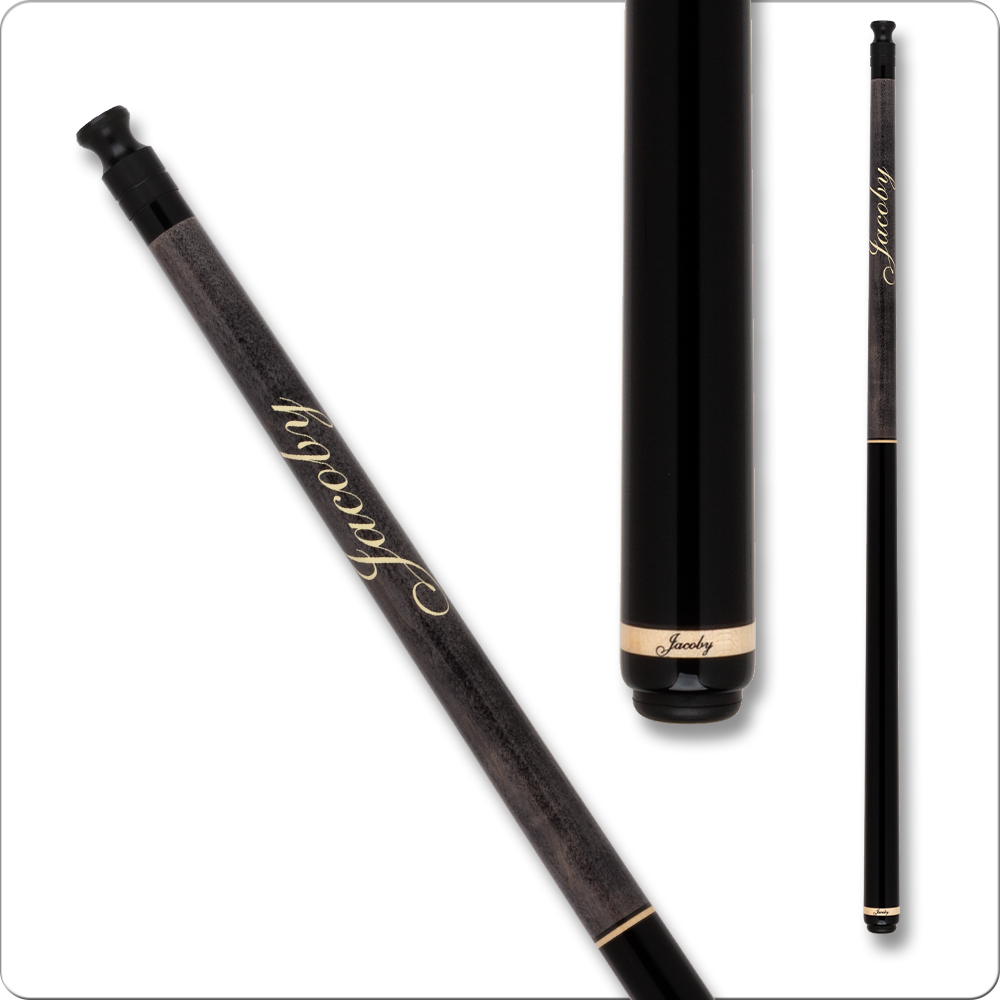
Jacoby Custom Cues is the kind of brand that flies under the radar until you actually pick one up. Built in Random Lake, Wisconsin since 1986, the company has spent four decades quietly producing some of the cleanest production-grade custom cues in the country. They are not as flashy as Predator or as legacy-loaded as Balabushka, but among players who care about how a cue is built rather than what it says on the wrap, Jacoby has a reputation that punches well above its marketing budget.
If you want to see the full Wisconsin-built lineup, head over to the Jacoby Pool Cues page. And for the wider field of brands we stock, the Pool Cues category is the right starting point. This guide focuses on what makes Jacoby its own thing and three specific cues, ranging from the JCB Magnetic line to the Monster Crush break series, that are worth your money in 2026.
What makes Jacoby different
Jacoby was started by David Jacoby in 1986 as a one-man custom shop. Over the years it grew into a real production house, but the build philosophy never changed: every cue is still made in-house in Wisconsin, every shaft is hand-turned, and the quality control is run by people who actually play. The brand became widely known when they introduced the Jacoby Edge ferrule, a hollow-design ferrule that significantly reduced end-mass on the shaft and helped popularize low-deflection performance before carbon fiber took over the conversation.
What you get from a Jacoby in 2026 is a cue with North American hard-rock maple shafts, a tight piloted joint, and finish work that holds up to humidity changes a lot better than most cues in the same price bracket. The wrap options are where Jacoby really separates from the pack. The standard Jacoby Sport Wrap is a textured rubber-style grip that some players swear by, especially in humid climates where leather and linen can get slick. They also offer traditional Irish linen on most playing models if you prefer the classic feel.
Pricing-wise, Jacoby splits into two natural tiers. The JCB Magnetic series and JCBE Element series sit between $337 and $475, which is true mid-tier territory for production cues. The Monster Crush break and jump-break cues run from $695 to $895 and represent some of the best-built dedicated break cues you can buy at any price. Across both tiers, the build quality stays consistent, which is rare in this segment.
Three Jacoby cues worth your attention in 2026
Jacoby JCBMAG1 Pool Cue (Gray) – $337.50
The Jacoby JCBMAG1 in Gray is the cue I would pick if you are looking at Jacoby for the first time and you want to understand why the brand has the reputation it does. At $337.50 (down from $375), it is the most affordable proper Jacoby playing cue, and the build is exactly what you would expect from a cue that costs twice as much. North American maple shaft, stainless steel piloted joint, leather wrap, and a finish that resists the kinds of dings and scratches that show up on lesser cues after a season of league play.
The Magnetic series is named for the magnetic joint protector that ships with each cue, which is a small thing that turns into a big quality-of-life feature once you get used to it. The cue plays with a balanced feel right around the joint, which suits both new players still working on their stroke mechanics and experienced players who prefer a neutral hit point. The gray finish is understated enough that it does not look out of place at a tournament but distinctive enough that you can spot it across a hall.
Jacoby JCBMAG2 Pool Cue (Brown) – $427.50
Step up to the Jacoby JCBMAG2 in Brown and what you are paying for, beyond the more elaborate inlay work, is the upgraded shaft. The MAG2 ships with Jacoby’s higher-grade hard-rock maple shaft and tighter joint tolerances. At $427.50 (down from $475), it lands in the mid-bracket sweet spot where you stop worrying about whether your cue is holding you back.
The brown finish on this one is a deeper, richer stain that pairs well with the cream-colored wrap accents and the points-and-veneers forearm work. Players who like a slightly more traditional aesthetic without going full sneaky-pete will appreciate how this one looks. Performance-wise, the JCBMAG2 hits firm with good tip feedback, which is what you want when you are trying to learn what a soft-touch shot feels like versus a power stroke. This is a cue you can grow into for several years before you start thinking about the next upgrade.
Jacoby JCBMCW Monster Crush Sport Grip Break Cue (Blue) – $845
The Jacoby JCBMCW Monster Crush in Blue is, full stop, one of the best-built dedicated break cues you can buy. At $845 it is not cheap, but for that money you are getting a cue specifically engineered for power transfer on the break. The Sport Wrap grip gives you a textured, tacky surface that holds up under a hard breaking stroke without slipping, which matters more than most players realize until they have lost a cue ball control because their hand moved on impact.
The Monster Crush uses a phenolic tip and a hardened ferrule designed to drive maximum energy into the cue ball without absorbing any of the impact back into the cue. The result is a break that sounds different from a standard playing cue with a soft tip; it has that distinctive crack that experienced breakers immediately recognize. The blue finish on this one is bold without being garish, and the build quality matches anything in the $1,200-plus dedicated break cue segment from other brands. If you break for tournaments or you play 9-ball seriously, this is the cue.
How to choose between them
The three cues on this list serve three different roles. The JCBMAG1 Gray is the cue you buy when you want a real production-custom cue under $350 and you want it to last for a long time. The JCBMAG2 Brown is the cue you buy when you have outgrown your starter cue and you want a step up that you will not need to upgrade again for at least a few years. The Monster Crush in Blue is the cue you buy when your playing cue is fine but you keep losing position because your break cue is bouncing the ball or scratching it on contact.
Across all three, what you are really paying for is Wisconsin build quality and a brand that has spent forty years not chopping corners. Jacoby is one of the few production cue makers left where you can buy a $337 cue and a $1,000 cue from the same factory and trust that they were both built with the same care. Browse the rest of the lineup on the Jacoby Pool Cues page and grab the one that matches the slot in your bag that needs filling.

About Corey Bernstein
Corey Bernstein is a competitive pool player, billiards equipment specialist, and co-owner of Quarter King Billiards in Wilmington, North Carolina. With over a decade of experience in the sport, Corey has competed in regional APA and BCA sanctioned tournaments and maintains an intimate knowledge of cue construction, shaft technology, and table mechanics. As a certified dealer for brands including Predator, McDermott, Jacoby, Viking, Lucasi, Meucci, Joss, and Cuetec, Corey personally tests and evaluates every cue that comes through the shop. His hands-on approach to the business means he has racked thousands of hours behind the table — breaking in shafts, comparing tip compounds, and dialing in the nuances that separate a good cue from a great one. When he is not behind the counter or on the table, Corey is researching the latest advances in low-deflection technology, carbon fiber shaft construction, and cue ball physics. His articles on Quarter King Billiards combine real-world playing experience with deep product knowledge to help players at every level find the right equipment for their game.