 844 408 3056

 Hot Deal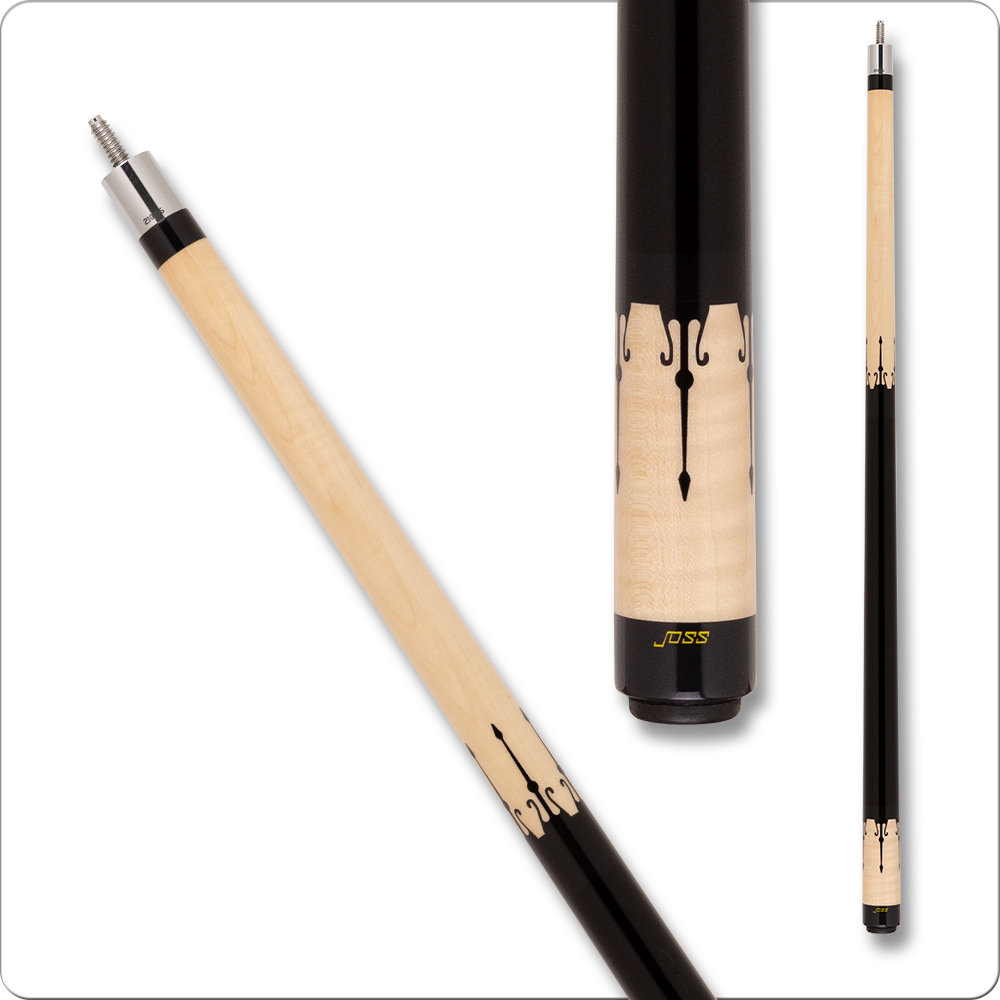
Walk into any major one-pocket or 14.1 tournament and count the Joss cues at the table. The number will surprise you. Joss has been quietly outfitting professional players since Dan Janes founded the company in 1968, and the brand has stayed loyal to a single design philosophy for nearly six decades: build cues that play the same in February as they do in August, and let the players sell them. That low-key approach is exactly why Joss has the reputation it does among the people who know.
The full Joss collection lives on the Joss Pool Cues page, and if you are still comparing Joss against other production-custom brands, the broader Pool Cues category has the cross-shop lineup. This guide focuses on three Joss models from the 2026 catalog that demonstrate why this brand has lasted as long as it has.
What makes Joss different
Joss was founded in Towson, Maryland in 1968 by Bill Stroud and Dan Janes, with Dan eventually taking over as the sole owner and lead builder. The early Joss cues built the brand’s reputation almost immediately because Dan made a specific, unfashionable decision: every cue would use a stainless steel piloted joint with a maple-to-maple contact patch. That joint design is now considered the standard for a firm, traditional hit, but at the time, most builders were using flat-faced phenolic joints because they were cheaper and easier to manufacture.
What that joint gives you, in playing terms, is feedback. You can feel exactly what the tip is doing on the cue ball, which is essential for high-level position play and for learning to control spin. A Joss cue tells you when you have miscued before the ball even moves, which is a feature that matters most to players who have moved past worrying about whether they will pocket the shot and started worrying about where the cue ball will end up.
The 2026 Joss lineup is built around the JOS playing-cue series, which spans roughly $415 to $785, and the Thor Hammer break-cue series in the $300 to $400 range. The brand also makes the JOSXS and JOSNXS shafts, which are widely considered some of the best wood shafts on the market for players who do not want to make the jump to carbon. Across all of them, the build quality is the kind of thing where you do not notice it until you put the cue down and pick up something else.
Three Joss cues worth your attention in 2026
Joss JOS52 Cue – $415.65
The Joss JOS52 is where the lineup starts to feel like proper Joss. At $415.65, this is the entry point into the JOS playing series, and the build is exactly what you expect: stainless piloted joint, hard-rock maple shaft, Irish linen wrap, and the kind of finish work that will still look right after five years of weekly play.
The JOS52 features a four-point butt design with veneers that pop without being loud, which fits the Joss aesthetic of looking serious without trying to look expensive. Balance lands neutral, weight is in the 19-ounce range, and the hit is firm enough that you can feel a stop-shot lock the cue ball in place. This is the cue I would buy a serious league player or a son or daughter who has just outgrown their starter cue. It will teach them what a real cue is supposed to feel like, and it will not need to be replaced for a long time.
Joss JOS56 Cue – $539.75
Move up to the Joss JOS56 at $539.75 and what you are paying for is a more elaborate forearm and a slightly tighter joint tolerance. The aesthetic on this one runs darker, with a richer stained forearm and contrasting points that read as more traditional than the JOS52. Functionally, the cue plays with the same Joss DNA: firm feedback, neutral balance, and that tight piloted joint that defines the brand.
The JOS56 is a strong pick for players who already know they like the Joss feel and are ready to commit to a cue they will play for the long haul. The hit is informative without being harsh, which makes it well suited for finesse games like one-pocket and straight pool where you need to be able to feel exactly how much spin you are putting on the cue ball. If you are coming from a softer-hitting cue, expect a brief adjustment period as you recalibrate to the more direct feedback. Most players land on the other side of that adjustment a noticeably better shot-maker.
Joss JOSN7 Cue – $782
The Joss JOSN7 at $782 is the cue that demonstrates what Joss can do when they pull out the more advanced shop techniques. The forearm features more elaborate inlay work, the points are tighter and cleaner than on the JOS-series cues, and the cue ships with a higher-grade shaft from the same maple stock Joss uses for their full-custom builds. Visually, this is one of the more striking cues in the under-$1,000 range from any brand.
What makes the JOSN7 worth the price jump is the precision of the build. The joint tolerances are noticeably tighter, the wrap fit is cleaner, and the finish has a depth that you can really only achieve with extra coats and longer cure times. This is the cue you buy when you have been playing seriously for a while, you know your stroke, and you want a Joss that feels like it was built for you specifically. It will absolutely outlast the trend cycle, and it will hold its value better than most cues at this price.
How to choose between them
The pick depends mostly on where you are in your playing journey. The JOS52 is the right answer if you have outgrown a starter cue and want something that will teach you what a real cue is supposed to feel like. The JOS56 is the upgrade move when you have decided you like the Joss family hit and you want to step into something with a more refined aesthetic. The JOSN7 is for the player who has been at this for a decade and is ready to buy a cue with the build quality of a custom one-off without paying full custom prices.
The thing that separates Joss from the brands that compete with it on price is the consistency. A Joss bought today plays the same as a Joss built in 1985 because the design has not changed in any meaningful way. That is a rare thing in 2026, and it is why pros keep showing up to tournaments with Joss cues even when they have offers from flashier brands. Browse the full Joss Pool Cues lineup and grab the one that fits your stage of the game.

About Corey Bernstein
Corey Bernstein is a competitive pool player, billiards equipment specialist, and co-owner of Quarter King Billiards in Wilmington, North Carolina. With over a decade of experience in the sport, Corey has competed in regional APA and BCA sanctioned tournaments and maintains an intimate knowledge of cue construction, shaft technology, and table mechanics. As a certified dealer for brands including Predator, McDermott, Jacoby, Viking, Lucasi, Meucci, Joss, and Cuetec, Corey personally tests and evaluates every cue that comes through the shop. His hands-on approach to the business means he has racked thousands of hours behind the table — breaking in shafts, comparing tip compounds, and dialing in the nuances that separate a good cue from a great one. When he is not behind the counter or on the table, Corey is researching the latest advances in low-deflection technology, carbon fiber shaft construction, and cue ball physics. His articles on Quarter King Billiards combine real-world playing experience with deep product knowledge to help players at every level find the right equipment for their game.