 844 408 3056

 Hot Deal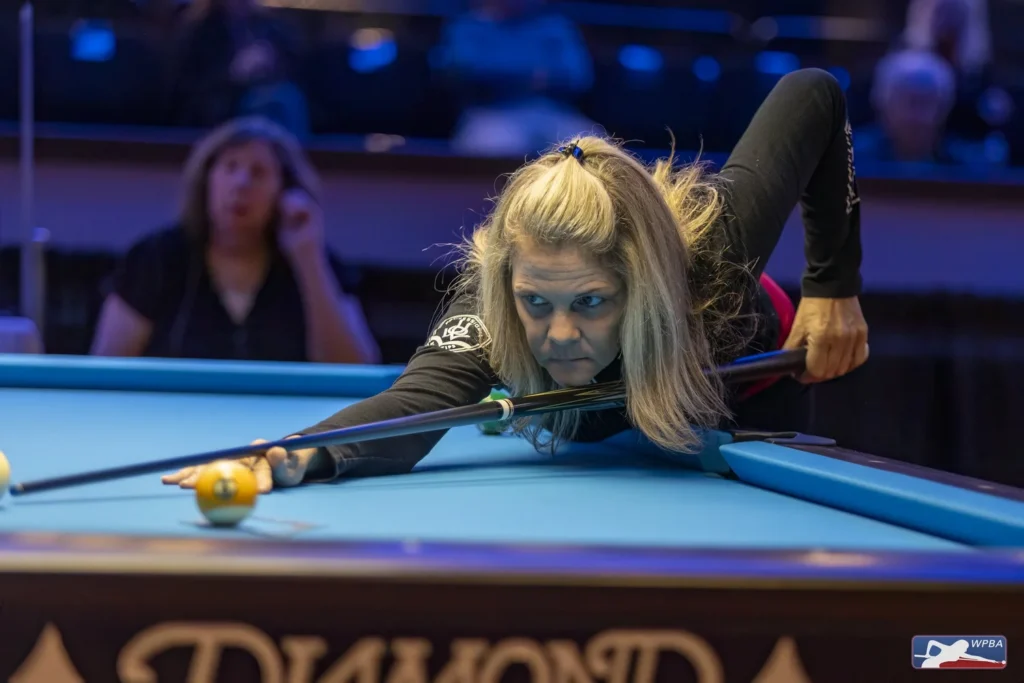
One reason Margarita Fefilova Styer keeps staying relevant in big women’s professional pool moments is that she looks comfortable where a lot of players start rushing. Hill-hill racks do that to people. They shrink decision-making, speed up breathing, and make even smart players feel like they need to force something. That is why her latest tight finish at the 2026 Raxx Mezz Olhausen CPBA Invitational still matters after the trophy photo. It offers a useful lesson for league players and tournament regulars who play well for most of a set, then lose control right when the finish line shows up.
Closing a match is not a separate skill from playing pool. It is what your fundamentals look like when the emotional cost of every decision gets higher. Players who close well usually trust their cue-ball routes, keep their pace under control, and refuse to change personalities because the score got loud.
Why hill-hill wins keep teaching the same lesson
Fans remember the final shot, but players should study the two or three decisions before it. Tight matches are usually decided by who manages the middle of the rack better under pressure. That means choosing the simpler angle, accepting a longer but cleaner path, and refusing to flirt with low-percentage shape just because the adrenaline says “go now.”
Fefilova Styer’s recent result fits that pattern. What stands out is not only that she won. It is that she stayed organized late. In modern nine-ball, organized closing often beats dramatic shot-making because pressure punishes overhit cue balls and half-committed position routes much faster than it punishes patience.
What strong closers do differently
Players who close important racks well usually show a few repeatable habits:
- They slow their eyes down before they slow their stroke down. The decision gets clean first, then the body follows.
- They favor certainty over style. A boring angle is often the winning angle.
- They protect the cue ball. Late in sets, speed control is worth more than flair.
- They do not let one wobble infect the next shot. Recovery matters as much as rhythm.
That is useful for any serious player because most blown sets do not come from impossible layouts. They come from ordinary layouts handled too emotionally.
Pressure exposes equipment habits too
Another thing hill-hill finishes reveal is whether a player trusts their setup. When you are unsure about tip response, shaft feel, or how the cue ball is going to come off a stun shot, the doubt gets louder under pressure. That is why so many serious players keep refining simple fundamentals with dependable gear instead of chasing constant change.
If you are trying to become a steadier closer in league or tournament play, it helps to start with equipment you understand. A dependable cue from our pool cue collection, well-maintained cue tips, and practical cue accessories can make pressure decisions feel simpler because you are removing guesswork instead of adding it.
How to practice closing, not just shooting
If you want a useful takeaway from this kind of pro result, do not just practice harder shots. Practice the last three racks feeling. Set up short race scenarios where you start with the score 6-6 or 8-8. Call a full plan before you get down. Track whether the miss came from bad execution or from a rushed decision. Most players improve faster once they realize the second problem is the more expensive one.
Another smart drill is to play ghost sets where every inning starts with one awkward transition shot. That forces you to settle the cue ball early instead of hoping the rack becomes easy by itself.
Why this result still matters in 2026
Women’s professional pool keeps getting deeper, which means hill-hill composure is becoming even more valuable. The field strength is high enough now that nobody coasts through pressure rounds for long. Players who can keep their shot selection stable when the match tightens are the ones who keep giving themselves chances on Sunday.
That is why a result like this still deserves attention. It is not only a recap. It is a case study in what competitive discipline looks like when the set gets loud.
Final thought
Margarita Fefilova Styer’s latest hill-hill finish matters because it reminds players that closing sets is mostly about clarity. The cue ball still obeys speed, angle, and touch, even when your nerves want to turn the rack into chaos. Players who learn to keep the table simple late are the ones who stop letting good matches slip away.
FAQ
Why do players struggle to close sets at hill-hill?
Because pressure changes pace, shot selection, and cue-ball trust. Many players start forcing patterns instead of staying with the same disciplined decisions that got them there.
What is the best way to practice closing pressure?
Practice short race scenarios at hill-hill scores, call your plan before each rack, and review whether mistakes came from execution or rushed decisions.
Can better equipment really help under pressure?
It helps when it reduces uncertainty. A cue and tip setup you understand makes it easier to commit fully to speed control and cue-ball routes.

About Corey Bernstein
Corey Bernstein is a competitive pool player, billiards equipment specialist, and co-owner of Quarter King Billiards in Wilmington, North Carolina. With over a decade of experience in the sport, Corey has competed in regional APA and BCA sanctioned tournaments and maintains an intimate knowledge of cue construction, shaft technology, and table mechanics. As a certified dealer for brands including Predator, McDermott, Jacoby, Viking, Lucasi, Meucci, Joss, and Cuetec, Corey personally tests and evaluates every cue that comes through the shop. His hands-on approach to the business means he has racked thousands of hours behind the table — breaking in shafts, comparing tip compounds, and dialing in the nuances that separate a good cue from a great one. When he is not behind the counter or on the table, Corey is researching the latest advances in low-deflection technology, carbon fiber shaft construction, and cue ball physics. His articles on Quarter King Billiards combine real-world playing experience with deep product knowledge to help players at every level find the right equipment for their game.