 844 408 3056

 Hot Deal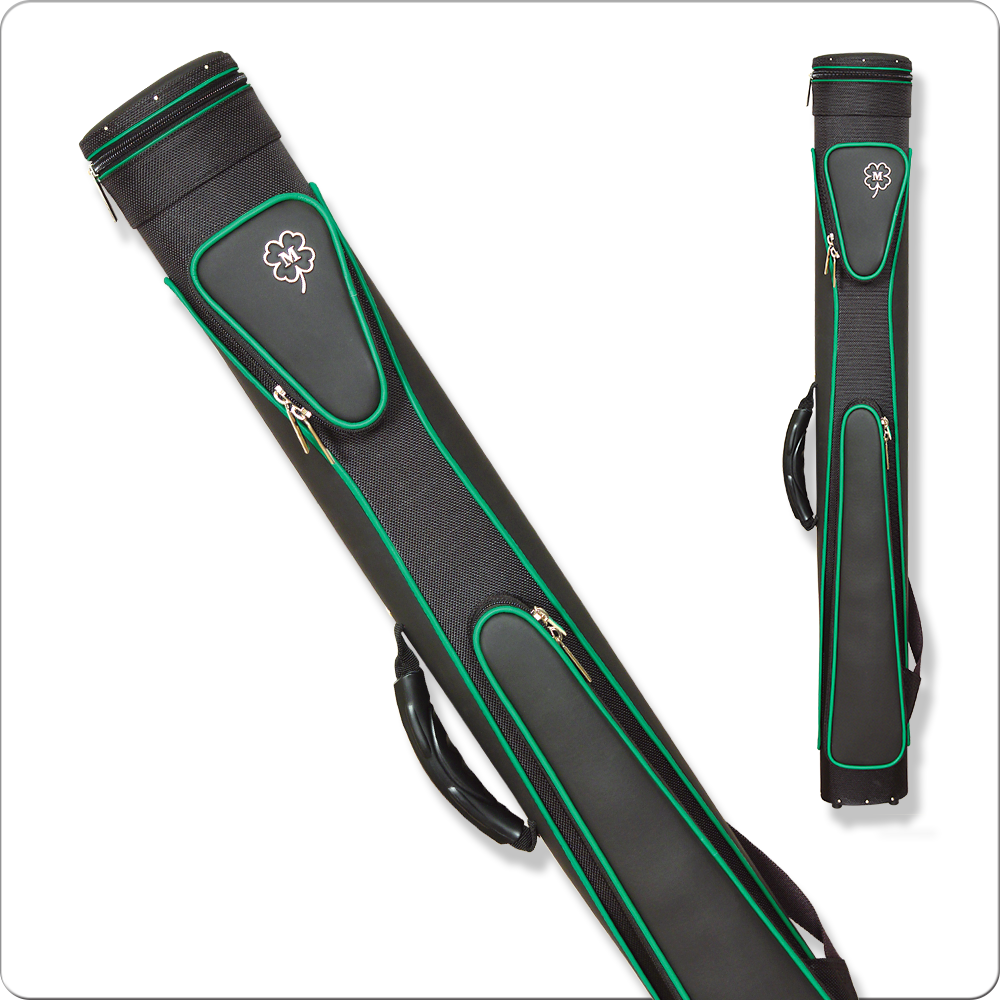
McDermott built its reputation on cues that hold up to decades of league play, and the case program follows the same philosophy. If you have already spent real money on a McDermott shaft and butt, the case is the part of your kit that decides whether the cue arrives at the table in the same shape it left your house. This guide walks through the McDermott case range we stock at Quarter King Billiards, explains the capacity codes you keep seeing in product names, and lines up three cases that cover most player needs in 2026.
You can browse the full lineup on our McDermott cases page, or step out to the broader pool cue cases category if you want to compare against other brands before committing.
What makes McDermott cases different
McDermott has been building cues in Wisconsin since the 1970s, and the case program is designed to match that same level of long-term ownership. The cases use premium leather and synthetic exteriors over rigid internal structures, with stitched panels and reinforced corners where most damage actually happens during travel. You will not find paper-thin foam or flimsy zippers here. The interiors are lined to keep wraps and shaft finishes from getting scuffed, and the divider tubes are sized for standard McDermott shafts so they do not rattle around in transit.
The other thing worth noting is configuration honesty. When McDermott labels a case as a 2×3 or 3×5, the slot count is built around real cue dimensions, not theoretical numbers that only work if you own three pencil-thin jump shafts. That matters when you start carrying a break cue, a jump cue, and an extra shaft alongside your playing cue.
Decoding capacity: what 2×2, 2×3 and 3×5 actually mean
Case shorthand can confuse new buyers. The first number is butts, the second is shafts. A 2×2 holds 2 butts and 2 shafts, which is one full cue plus one extra shaft, or two complete cues if you are sharing. A 2×3 stretches that to 2 butts and 3 shafts, the most common setup for a serious league player carrying a playing cue, a backup shaft, and a break shaft. A 3×5 moves into pro-level capacity at 3 butts and 5 shafts, room for a playing cue, a break cue, a jump cue, and spares without anything getting cramped.
You will also see soft, hard, and hybrid construction. Soft cases are lighter and absorb impact through padding. Hard cases use a rigid shell and are the gold standard for travel. Hybrid cases combine a rigid spine or panel inserts with softer outer materials, giving you most of a hard case’s protection at a lower weight.
Three McDermott cases worth your attention in 2026
McDermott 2×2 Sport Case MCDC22
The McDermott 2×2 Sport Case MCDC22 sits at $301 and is the right pick if you carry one cue plus a backup shaft to weekly league or your home room. The 2×2 footprint keeps weight and bulk down, but the hybrid construction means you still get rigid panel protection where it counts.
This case ships with a padded shoulder strap, a top handle, and an organizer pocket sized for chalk, tip tools, and a glove. The exterior holds up to bar floors and trunk rides, and the interior tubes are lined to protect McDermott’s standard wrap finishes. For a single-cue player who wants a real case rather than a sleeve, this is the entry point into the McDermott line.
McDermott 2×3 Hybrid Case MCDC47
At $360, the McDermott 2×3 Hybrid Case MCDC47 is the workhorse of the lineup. The 2×3 layout fits the standard tournament loadout: one playing cue with a backup shaft, plus a dedicated break or jump cue. The third shaft slot also gives you room to grow if you swap shafts seasonally or carry a low-deflection upgrade alongside your factory shaft.
The hybrid build keeps overall weight manageable without sacrificing impact resistance. Storage pockets handle tip picks, a scuffer, chalk, and a small glove pouch with no overflow. If you are in the market for one case that can cover league night, weekend tournaments, and the occasional out of town trip, this is the McDermott to look at first.
McDermott 3×5 Backpack Sport Case MCDC35
For players who travel or run multiple specialty cues, the McDermott 3×5 Backpack Sport Case MCDC35 at $360 is the move. The 3×5 capacity covers a playing cue, a break cue, a jump cue, and spares, all with room to spare. The backpack strap configuration is the headline feature: padded dual straps that distribute weight across both shoulders make a real difference once you start hauling four or more cues plus accessories through airports and parking lots.
Pocket organization is the other strong point. You get a large accessory compartment for gloves, towels, and tip tools, plus smaller pockets for chalk, paperwork, and personal items. The hard exterior protects against everything from being dropped off a barstool to getting stacked under a duffel in a hotel shuttle. For a touring player or anyone who actually checks a case at the airport, the MCDC35 is the safest bet in the McDermott lineup.
How to choose between them
Start with capacity. If you carry one cue and one backup shaft, the MCDC22 is enough and saves you weight. If you carry a playing cue plus a dedicated break or jump setup, the MCDC47 covers it without forcing you into a larger case than you need. If you have three or more cues in active rotation, or you fly to events, the MCDC35 backpack is worth the small price step up because of how much easier it carries on long days.
Then think about how you actually use the case day to day. Soft and hybrid construction is fine if the case mostly lives in a car and gets carried into a poolroom. If your case takes real abuse, gets thrown in trunks with toolboxes, or rides under airline seats, lean toward the hard backpack option. McDermott cases are built to last years, but the right capacity choice up front saves you from upgrading again in twelve months.
Ready to lock in a case that protects your cue investment? Browse the full McDermott cases collection at Quarter King Billiards, or text Cortex if you want a quick second opinion before checkout.
Ready to shop? Buy McDermott pool cue cases online at Quarter King Billiards — browse the full in-stock selection with free shipping on U.S. orders over $98.

About Corey Bernstein
Corey Bernstein is a competitive pool player, billiards equipment specialist, and co-owner of Quarter King Billiards in Wilmington, North Carolina. With over a decade of experience in the sport, Corey has competed in regional APA and BCA sanctioned tournaments and maintains an intimate knowledge of cue construction, shaft technology, and table mechanics. As a certified dealer for brands including Predator, McDermott, Jacoby, Viking, Lucasi, Meucci, Joss, and Cuetec, Corey personally tests and evaluates every cue that comes through the shop. His hands-on approach to the business means he has racked thousands of hours behind the table — breaking in shafts, comparing tip compounds, and dialing in the nuances that separate a good cue from a great one. When he is not behind the counter or on the table, Corey is researching the latest advances in low-deflection technology, carbon fiber shaft construction, and cue ball physics. His articles on Quarter King Billiards combine real-world playing experience with deep product knowledge to help players at every level find the right equipment for their game.