 844 408 3056

 Hot Deal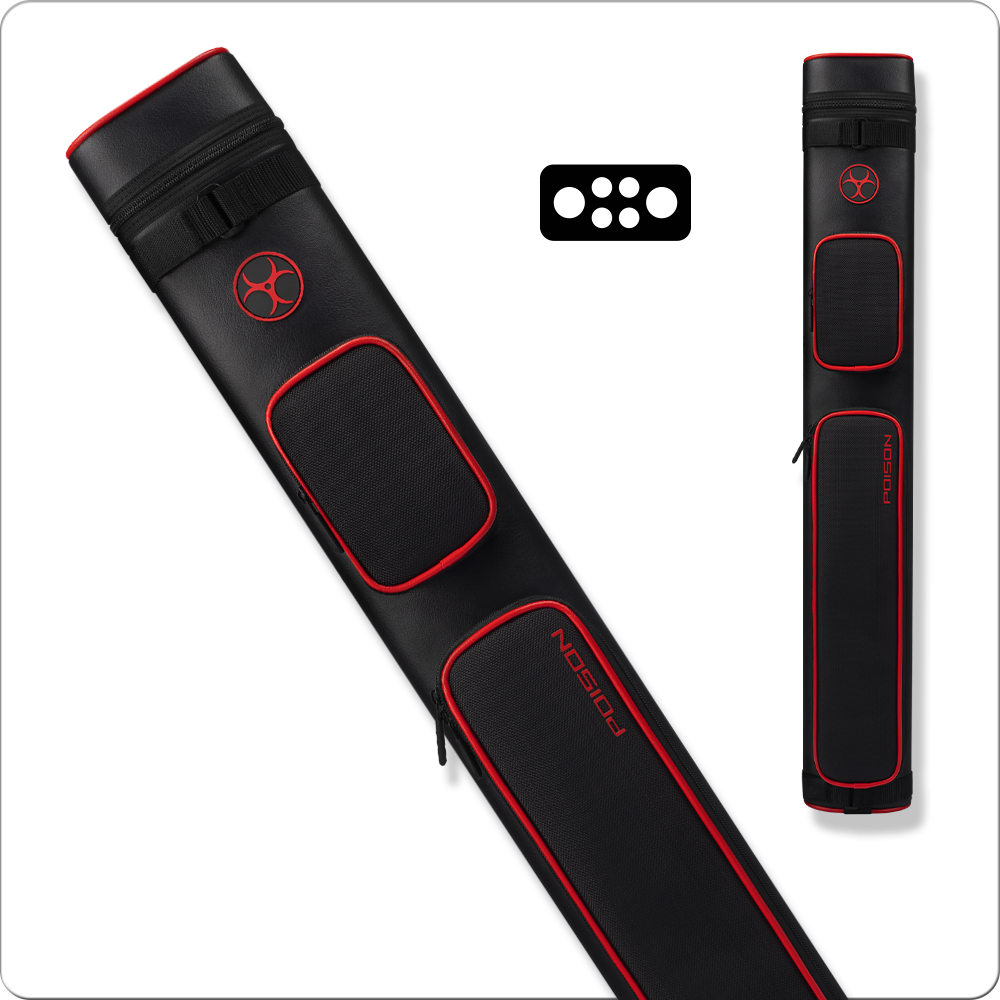
Spend real money on a cue and the next question answers itself. How are you going to protect it? A pool cue is a precision instrument made largely of wood, and wood hates being knocked around, baked in a hot trunk, or rattled loose in a flimsy sleeve. The case you choose is not an afterthought. It is the insurance policy that keeps a 300 dollar or 1,000 dollar cue straight, sealed, and ready to play for years. Here is how to choose one that actually fits your game.
Start With Capacity: What Do the Numbers Mean?
Cases are described by two numbers, like 2×2 or 3×5. The first number is how many butts the case holds. The second is how many shafts. So a 2×2 carries one full cue plus a spare shaft, or two complete cues if you share. A 2×4 holds two butts and four shafts, which is the sweet spot for most serious players who keep a playing cue, a break cue, and an extra shaft or two.
Think honestly about what you carry now and what you will carry in a year. Many players start with one cue, then add a dedicated break cue, then a carbon shaft, and suddenly a 2×2 is overflowing. Buying one size up from your current kit is rarely a mistake. The Poison 2×4 Hard Case is a popular choice for exactly this reason, giving you room for a break cue and spare shafts without jumping to a bulky tournament case.
Soft Cases Versus Hard Cases
This is the real decision, and it comes down to how much protection you need against how much you want to carry.
Soft Cases
A soft case uses a padded fabric body, often with a backpack strap and extra pockets for chalk, gloves, and a jump bridge. Soft cases are lighter, usually cheaper, and easy to sling over a shoulder for a quick league night. The tradeoff is impact protection. They guard against scratches and minor bumps, but they will not save a cue from a serious drop or a heavy object falling on top of it. For players who travel light, drive carefully, and store the case indoors, a quality soft case like the Action 2×4 Textured Soft Case is plenty.
Hard Cases
A hard case has a rigid shell, often over a tube interior, that shrugs off impacts a soft case cannot. If you fly to tournaments, throw your case in a crowded trunk, or simply own a cue you would be sick to damage, the extra weight is worth it. Hard cases hold their shape, protect the joint and tip, and resist the crushing forces that warp shafts. They cost more and weigh more, but for an expensive cue they are the obvious choice.
Material and Build Quality
Within hard and soft categories, materials range widely. Entry cases use durable synthetic fabrics and molded plastics that protect well for the price. Premium cases step up to leather and reinforced interiors that look the part and last for decades. The Instroke Buffalo Leather Case is an example of the high end, with genuine leather, deep capacity, and the kind of craftsmanship that signals you take the game seriously. A premium case is not just vanity. The interior padding and tube construction on better cases genuinely protect the cue better than a bargain shell.
Whatever the price, check three things. Look at the interior, where individual tubes or dividers keep cues from banging into each other. Check the closure, since a strong zipper or latch is what stands between your cue and the floor. And inspect the strap and handle hardware, because that is usually the first thing to fail on a cheap case.
How You Carry It Matters
The best case is the one you will actually bring with you, set up the way you like to travel. If you walk or take transit to play, a backpack style case keeps your hands free and spreads the weight across your shoulders. The Action Backpack 2×4 Hard Case blends hard shell protection with backpack convenience, which is a smart combination for league players who are tired of a shoulder strap digging in after a long night.
Drivers who keep a case in the car face a different enemy, which is heat. A cue left in a hot trunk through a summer afternoon can suffer, and a rigid case with good insulation buys you a margin of safety. No case fully replaces common sense, so bring the cue inside when you can, but a quality hard case is the next best thing.
Matching the Case to the Cue
There is a rough rule worth following. Spend in proportion to what you are protecting. A starter cue does not need a leather tournament case, and a soft sleeve is fine. But once you invest in a quality playing cue, a dedicated break cue, or a carbon shaft, the math changes. A hard case is a small fraction of what those pieces cost, and it protects all of them at once. If you have upgraded your cue recently, treat the case as part of that purchase rather than a separate splurge.
It also helps to plan around your full kit. If you run a playing cue, a break cue, and a spare shaft, a 2×4 keeps everything in one place and saves you from juggling multiple bags. Players who add a jump cue often move up to a 3×5 so the whole arsenal travels together.
The Compact Option: When a 2×2 Is the Right Call
Not everyone needs to haul a tournament case to the pool hall. If you shoot with a single cue and maybe a spare shaft, a well built 2×2 hard case gives you full protection in a package that is easy to carry and store. It slips into a closet, rides cleanly in a back seat, and weighs far less than a loaded 3×5. The Athena 2×2 Hard Case is a good example, pairing rigid protection with a clean look and a size that suits casual and league players who keep their kit simple. Buying exactly the capacity you need, rather than the biggest case on the shelf, often means a better made case for the same money.
Common Mistakes When Buying a Case
A few errors come up over and over. The first is buying purely on looks and ending up with a case that is too small within a year. The second is choosing a soft case for an expensive cue that really needs hard shell protection. The third is ignoring the closure and strap quality, since those are the parts that fail first and let a cue hit the floor. The fourth is forgetting about heat, especially for anyone who stores a case in a vehicle. Avoid those four traps and you will buy once instead of twice, which is the whole point of treating the case as part of the cue purchase rather than a last minute add on.
Care That Extends the Life of Both
A good case does its best work when you help it. Wipe down your shafts before you put them away so chalk dust and oils do not transfer inside the tubes. Let a damp case air out rather than zipping moisture in against the wood. Periodically check the joint protectors and make sure caps are snug so the threads stay clean. None of this takes more than a minute, and it is the difference between a cue that plays like new for a decade and one that develops problems you could have prevented.
When you are ready to choose, browse the full pool cue cases collection and filter by the capacity and style that match how you play and travel. The right case is the cheapest insurance in the game. It pays for itself the first time it takes a hit your cue otherwise would have, and it keeps the equipment you worked to choose performing exactly the way you bought it to.

About Corey Bernstein
Corey Bernstein is a competitive pool player, billiards equipment specialist, and co-owner of Quarter King Billiards in Wilmington, North Carolina. With over a decade of experience in the sport, Corey has competed in regional APA and BCA sanctioned tournaments and maintains an intimate knowledge of cue construction, shaft technology, and table mechanics. As a certified dealer for brands including Predator, McDermott, Jacoby, Viking, Lucasi, Meucci, Joss, and Cuetec, Corey personally tests and evaluates every cue that comes through the shop. His hands-on approach to the business means he has racked thousands of hours behind the table — breaking in shafts, comparing tip compounds, and dialing in the nuances that separate a good cue from a great one. When he is not behind the counter or on the table, Corey is researching the latest advances in low-deflection technology, carbon fiber shaft construction, and cue ball physics. His articles on Quarter King Billiards combine real-world playing experience with deep product knowledge to help players at every level find the right equipment for their game.