 844 408 3056

 Hot Deal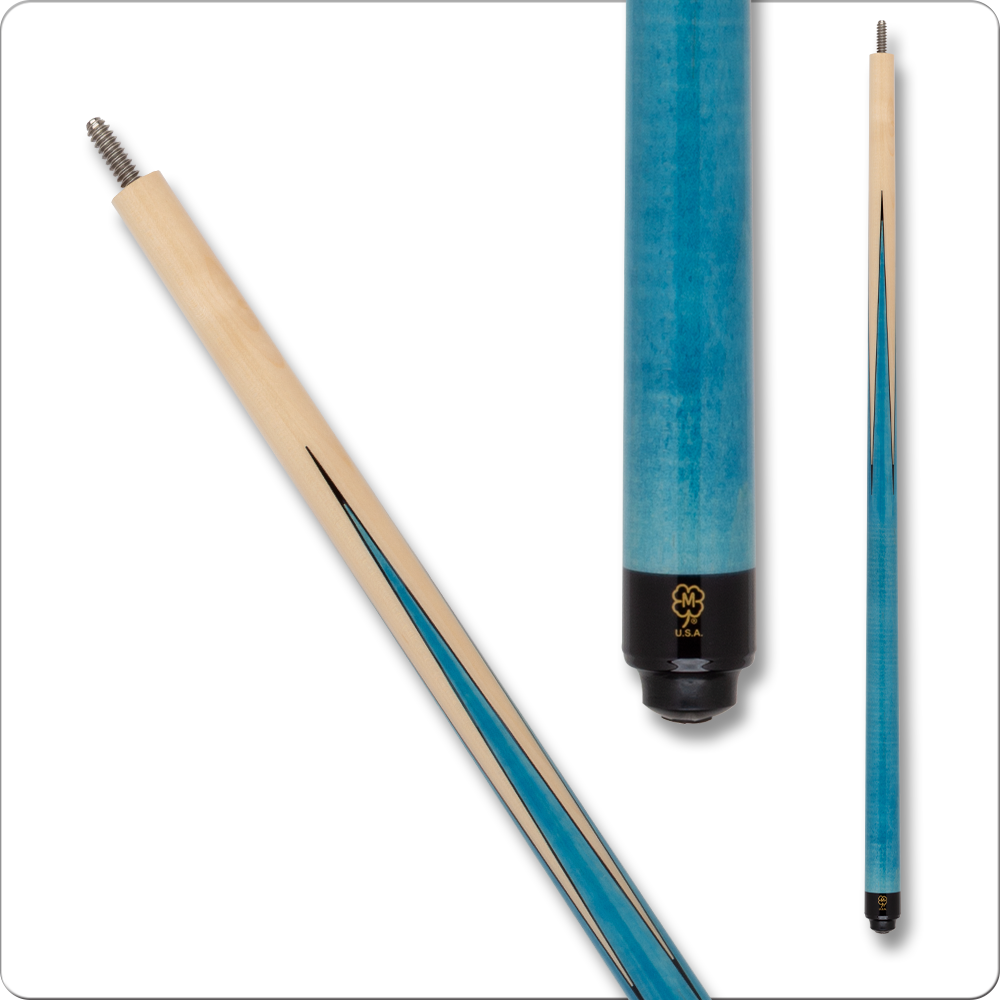
Walk into any pool room and ask three good players what cue weight they use, and you will likely get three different answers, each delivered with total confidence. Weight is one of the most personal choices in pool, and also one of the most misunderstood. A difference of two or three ounces changes how a cue breaks, how the cue ball reacts, and how the whole stroke feels in your hand. Understanding why is the first step to picking a cue that suits the way you actually play.
Most playing cues live between 18 and 21 ounces, with 19 ounces sitting as the common middle ground. That range exists because it covers nearly every body type, stroke style, and game preference. The trick is knowing which end of the range fits you, rather than copying whatever your favorite pro happens to use.
What Weight Actually Does to Your Shot
Physics gives heavier and lighter cues different strengths. A heavier cue, around 20 to 21 ounces, carries more momentum into the cue ball for the same stroke speed. That can mean more power on the break and a more solid, planted feel on your shots. Many players find a heavier cue helps them keep a smooth, slow stroke because the cue does some of the work for them.
A lighter cue, around 18 to 18.5 ounces, lets you generate faster cue speed with less effort. That extra hand speed translates into sharper cue ball action, more lively draw and follow, and a feeling of control for players with a quick, accurate stroke. The tradeoff is that a light cue can feel less stable to players who rely on the cue’s mass to steady their delivery.
There is no universally correct answer, which is why weight is a feel decision more than a math decision. The cue that lets you stroke smoothly, stay accurate, and repeat the same hit is the right weight for you, regardless of the number stamped on the spec sheet.
How to Find Your Weight
If you are not sure where to start, begin at 19 ounces and pay attention to two things: accuracy and comfort over a long session. Does the cue feel like it wants to swing straight, or are you fighting it? After an hour of play, is your stroke still smooth, or has fatigue crept in? Those answers point you up or down the scale faster than any chart.
Players with a powerful, deliberate stroke often settle slightly heavier for stability. Players who prize finesse, draw, and delicate position frequently prefer a touch lighter for the extra cue ball action. Smaller-framed players and those who play long tournaments sometimes choose lighter cues simply to reduce arm fatigue across many racks. None of these are rules, just useful starting points.
A great way to learn your preference without overspending is to start with a quality, well-balanced cue and live with it for a few months. The Action ACT160 Fractal Cue is an excellent example of an affordable, dependable cue that lets you settle into a feel before you invest in a higher-end stick. From there you will know exactly what you want to refine.
Adjustable Weight: The Quiet Advantage
Many modern cues use a weight bolt system in the butt, which means you can add or remove weight to tune the cue to your taste. This is a genuinely useful feature, because it lets one cue serve as a test bench. You can shift between roughly 18 and 21 ounces and feel the difference for yourself across the same familiar shaft and grip.
Cues like the McDermott Sneaky Pete and the Cuetec AVID CT321NW give you a reliable, well-built platform that many players can fine tune to a preferred balance. If you tend to overthink specs, an adjustable cue removes the pressure of getting the number perfect on day one. You buy the cue, then tune it to you.
Break Cues Follow Different Rules
Weight logic flips a little when you talk about breaking. For years the conventional wisdom was that a heavier break cue meant a more powerful break. Modern thinking, backed by how today’s pros actually break, leans toward matching the break cue close to your playing weight or even slightly lighter, so you can generate more cue speed and keep control of the cue ball after impact. Speed and accuracy on the break usually beat raw mass.
That is why a dedicated break cue is built differently from a playing cue, with a firmer tip and a stiffer hit rather than simply being heavy. A purpose-made model such as the Meucci MEJSS Jayson Shaw Cue shows how a quality build matters more than chasing ounces, and you can compare dedicated options in the break cues collection. If you currently break with your good playing cue, switching to a proper break cue protects your main shaft and tip while improving your results.
Balance Point Matters as Much as Total Weight
Two cues can weigh the same and still feel completely different in your hands, and the reason is balance point. A cue that carries more of its weight toward the butt feels lighter and quicker through the stroke, while a more forward balance feels heavier and more planted even at the same total ounces. This is why you should never judge a cue by its weight number alone. Pick it up, stroke it, and feel where the mass sits.
Why the Same Ounces Can Feel Wrong
If you have ever tried a friend’s cue that matches your weight exactly yet felt strange, balance point was almost certainly the culprit. Wrap material, joint type, and shaft taper all shift how the cue carries. The lesson is to treat weight as one ingredient in overall feel rather than the whole recipe. A cue that swings the way you want will always beat one that merely hits a target number on paper.
Common Weight Myths Worth Dropping
The idea that a heavier cue automatically gives a more powerful break has not held up to how modern players actually perform, where controlled cue speed matters more. The notion that beginners should start heavy for stability is also shaky, since many newer players stroke straighter with a lighter, more responsive cue. Ignore the absolutes you hear at the pool hall and trust what your own stroke tells you over a full session.
Test, Do Not Guess
The fastest way to settle the weight question is to play, not to theorize. Borrow cues of different weights during open play, note which one keeps your stroke smooth deep into a session, and trust that feedback over any spec chart or pool hall opinion. Your body knows what works long before your brain can explain it, so let real table time make the call. Once you find the weight that disappears in your hands, commit to it and stop second guessing.
Match the Weight to the Player, Not the Trend
The biggest mistake players make is treating weight like a status symbol or a trend to follow. The right weight is the one that disappears in your hand, letting you focus on aim, speed, and pattern rather than on the cue itself. Try a middle weight, notice how your stroke and accuracy respond over real sessions, and adjust from there. If your cue offers a weight bolt, experiment until the hit feels effortless.
When you are ready to choose, you do not have to guess in the dark. Browse the full selection of pool cues, consider whether you lean toward power or finesse, and pick a cue that matches your stroke. Weight is not magic, but the right weight makes everything else in your game a little bit easier, and that is exactly the edge most players are looking for.

About Corey Bernstein
Corey Bernstein is a competitive pool player, billiards equipment specialist, and co-owner of Quarter King Billiards in Wilmington, North Carolina. With over a decade of experience in the sport, Corey has competed in regional APA and BCA sanctioned tournaments and maintains an intimate knowledge of cue construction, shaft technology, and table mechanics. As a certified dealer for brands including Predator, McDermott, Jacoby, Viking, Lucasi, Meucci, Joss, and Cuetec, Corey personally tests and evaluates every cue that comes through the shop. His hands-on approach to the business means he has racked thousands of hours behind the table — breaking in shafts, comparing tip compounds, and dialing in the nuances that separate a good cue from a great one. When he is not behind the counter or on the table, Corey is researching the latest advances in low-deflection technology, carbon fiber shaft construction, and cue ball physics. His articles on Quarter King Billiards combine real-world playing experience with deep product knowledge to help players at every level find the right equipment for their game.