 844 408 3056

 Hot Deal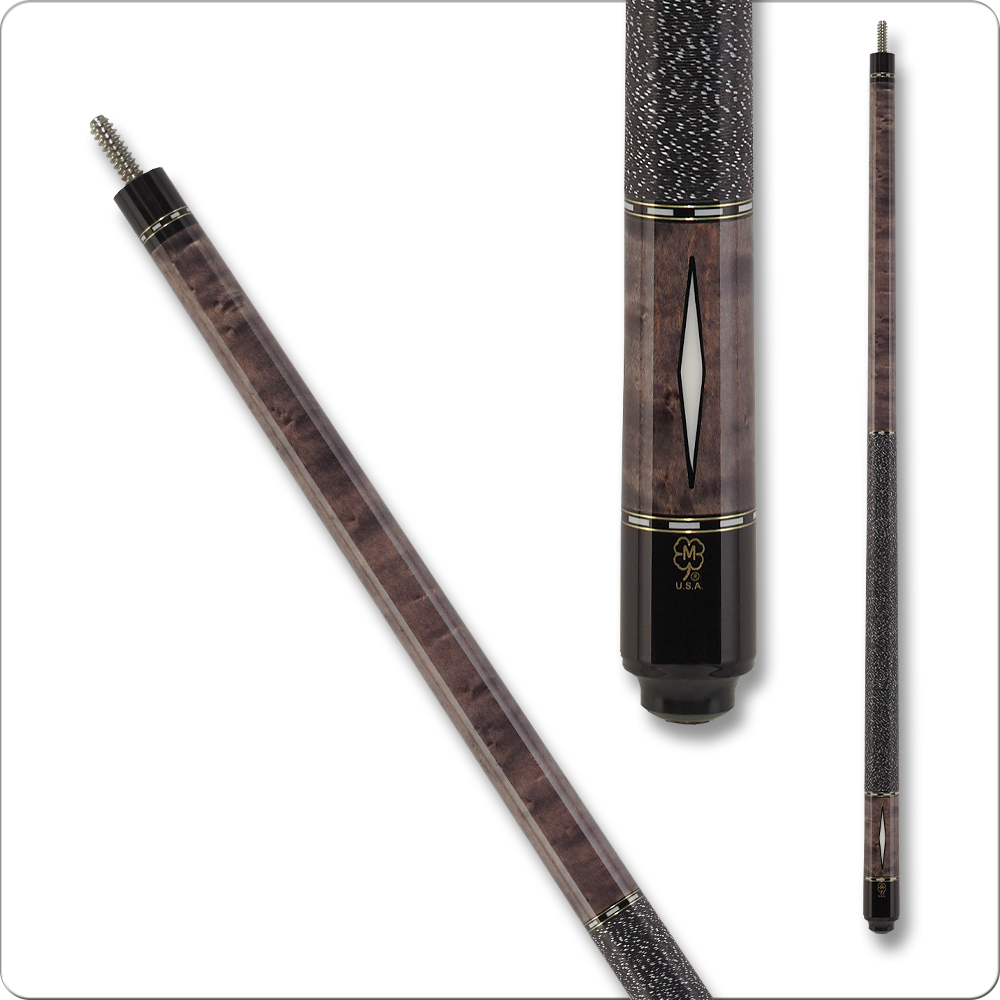
Pick up ten pool cues at any well-stocked shop and you will hold ten different weights. Not radically different, but different enough to matter: 18 ounces in your fingertips feels like a baton, 21 ounces feels like a hammer, and every half-ounce in between changes the way the cue swings. Cue weight is the single most undertaught variable in the buying process, and it is the variable a player will feel every single time they shoot, more often than they feel joint type, wrap material, or tip hardness combined. Most new players default to 19 ounces because the salesperson said so. Most experienced players have a number they can defend with twenty minutes of stories. This is the part of the buying decision worth getting right the first time.
The guide below walks through what each weight band actually feels like at the table, who tends to play each weight at the tour level, and how to pick a number that matches the way you stroke rather than the way someone else does.
The Cue Weight Range: What 18 to 21 Actually Means
Production playing cues in the United States ship in roughly a three-ounce band, from about 18 ounces at the low end to 21 ounces at the high end. The vast majority of cues sold are between 18.5 and 19.5 ounces, with 19 ounces being the most common single number across every major brand. Half-ounce increments matter more than they sound. A 19.0 cue and a 19.5 cue feel meaningfully different in the back hand, and most players who try both will prefer one strongly over the other within fifteen minutes of stroke time.
Weight is not the same as balance. Two cues at the same total weight can play very differently if the balance point is two inches apart, and the same cue can feel “heavier” or “lighter” depending on whether the weight sits forward (closer to the joint) or rearward (closer to the butt cap). Tour-grade cues typically balance somewhere between 18 and 19 inches from the butt cap on a 58-inch cue. Forward balance feels more stable on long shots and harder to snap on draw. Rearward balance feels nimble on touch shots and easier to load on power strokes.
18 to 18.5 Ounces: The Touch Player’s Weight
The lightest band, 18 to 18.5 ounces, is the touch player’s range. The cue feels nimble in the back hand, the stroke arc shortens naturally, and the cue ball responds quickly to tip placement. This is the weight band that produces the cleanest draw shots, the softest position play, and the most repeatable cut shots at long distance. The trade-off is power on the break and stability on heavy follow shots. An 18-ounce cue is harder to break with at tour speeds, and the cue tends to twist slightly on contact when a player muscles through a power stroke.
The 18-ounce range is favored by smaller-framed players, women players, junior players, and finesse-style match players. The Mezz family ships several models in this weight range, and a strong example at the playing-cue tier is the Mezz ZZPBGW Power Break G Cue profile lineage, which has a sister playing-cue version at the lighter end. The Cuetec Cynergy and Truewood lines also offer multiple cues that order down to 18 ounces, including the Predator Throne3 3 Pool Cue at the high-end. A player who has been bullying a 19-ounce cue around the table for years will often feel an immediate, noticeable improvement in cue ball control by dropping to 18.5.
19 Ounces: The Default and Why It Is the Default
The 19-ounce weight is the most common shipping weight in production pool cues for a single reason: it is the best average compromise across all the things a cue needs to do. A 19-ounce cue breaks well enough, plays soft draw well enough, and holds steady through a long match without fatiguing the player’s back arm. If a player walks into a pool hall and picks up a house cue, it almost always weighs between 19 and 20 ounces because the room is trying to find one weight that works for everyone.
The default is also a trap. A 19-ounce cue is the right answer for the largest single slice of players, but it is the wrong answer for the player who would shoot better at 18.5 or 19.5 and never tried either. The trap is most expensive for new players who buy a 19-ounce cue based on what their friend uses, then spend three years fighting the weight without ever knowing the fight is the weight. The McDermott G302 Cue ships in standard 19 ounces as a default and is one of the cleanest single-cue answers in the McDermott family for the player who has confirmed the default actually fits.
19.5 to 20 Ounces: The Power Player’s Weight
The 19.5 to 20 ounce range is the power player’s weight. The cue feels more stable on long shots, more forgiving on stroke deviations, and noticeably easier to break with at tour speeds. A 20-ounce cue is the weight at which a player can muscle a follow shot without the cue twisting in the bridge hand, and it is the weight at which the break shot stops feeling like a separate skill and starts feeling like an extension of the regular stroke.
The trade-off is in the soft game. A 20-ounce cue is harder to draw cleanly at short distances, harder to stop the cue ball on a stop shot, and the back arm fatigues faster across a long match. The 20-ounce band is favored by larger-framed players, players with long-armed strokes, and league players who break and play with the same cue. The McDermott G201 Cue at the traditional maple end and the Predator PREBLK52 BLAK Series Cue at the modern carbon end are both available in the 19.5 to 20 range, and both reward the player who confirms the weight fits before ordering.
20.5 to 21 Ounces: The Edge Cases and the Break Cue Crossover
The 20.5 to 21 ounce band is the edge case for playing cues. Most production playing cues do not ship above 20 ounces because the population of players who actually want that weight for a playing cue is small. The weight band is, however, the dominant range for break cues. Break cues commonly ship at 20 to 21 ounces because the energy transfer at the break shot rewards more mass behind the tip, and the break cue is held in the bag rather than carried through a whole match. If a player wants a 20.5-ounce playing cue, the most common path is a custom order from a builder like Jacoby, where the weight is dialed at build.
Players who genuinely want a 21-ounce playing cue tend to have very specific stroke profiles: short backswing, heavy follow-through, and a tendency to muscle the cue rather than glide it. The weight slows the muscling, which is sometimes a real fix for a player whose stroke has been too aggressive for years. For most players, however, 21 ounces is a break cue weight and the playing cue should be lighter.
How to Test the Right Weight in Forty Minutes
The forty-minute weight test is the most useful exercise in the entire buying process and almost no shop teaches it. The test is simple: borrow or rent three cues at 18.5, 19.0, and 19.5 ounces. Spend ten minutes with each, in a fixed order, running the same drill: ten draw shots from the same starting position, ten stop shots from the same starting position, ten long-rail cuts from the same starting position. After all three cues, the player almost always identifies the cue that produced the most repeatable results. The fourth ten minutes is a re-test of the winner to confirm it was not coincidence.
The thing the test exposes is rarely the cue a player expected to prefer. Most players assume they want a heavier cue than they actually shoot best with. The lighter cue, run blind, almost always wins more drills than the heavier one for players under six feet tall and under one hundred ninety pounds. The opposite happens for larger-framed players, who often shoot better with the 20-ounce option even when they expected the 19 to win. The test removes the guesswork. The Pool Cues parent category is the navigation entry point, and any of the brand subcategories carry the spectrum.
The Cue Weight Choice Tied to a Real Brand Recommendation
The brand most committed to letting buyers order the exact weight they want is Pechauer, whose lineup is built around weight customization at the order stage. The Predator family ships most cues in two or three weight options. The Viking and Jacoby brands offer the widest custom range for players who want a specific number outside the production defaults. The right weight is not the most expensive answer, it is the answer the player has actually tested and confirmed. The cue carries that decision for years.

About Corey Bernstein
Corey Bernstein is a competitive pool player, billiards equipment specialist, and co-owner of Quarter King Billiards in Wilmington, North Carolina. With over a decade of experience in the sport, Corey has competed in regional APA and BCA sanctioned tournaments and maintains an intimate knowledge of cue construction, shaft technology, and table mechanics. As a certified dealer for brands including Predator, McDermott, Jacoby, Viking, Lucasi, Meucci, Joss, and Cuetec, Corey personally tests and evaluates every cue that comes through the shop. His hands-on approach to the business means he has racked thousands of hours behind the table — breaking in shafts, comparing tip compounds, and dialing in the nuances that separate a good cue from a great one. When he is not behind the counter or on the table, Corey is researching the latest advances in low-deflection technology, carbon fiber shaft construction, and cue ball physics. His articles on Quarter King Billiards combine real-world playing experience with deep product knowledge to help players at every level find the right equipment for their game.