 844 408 3056

 Hot Deal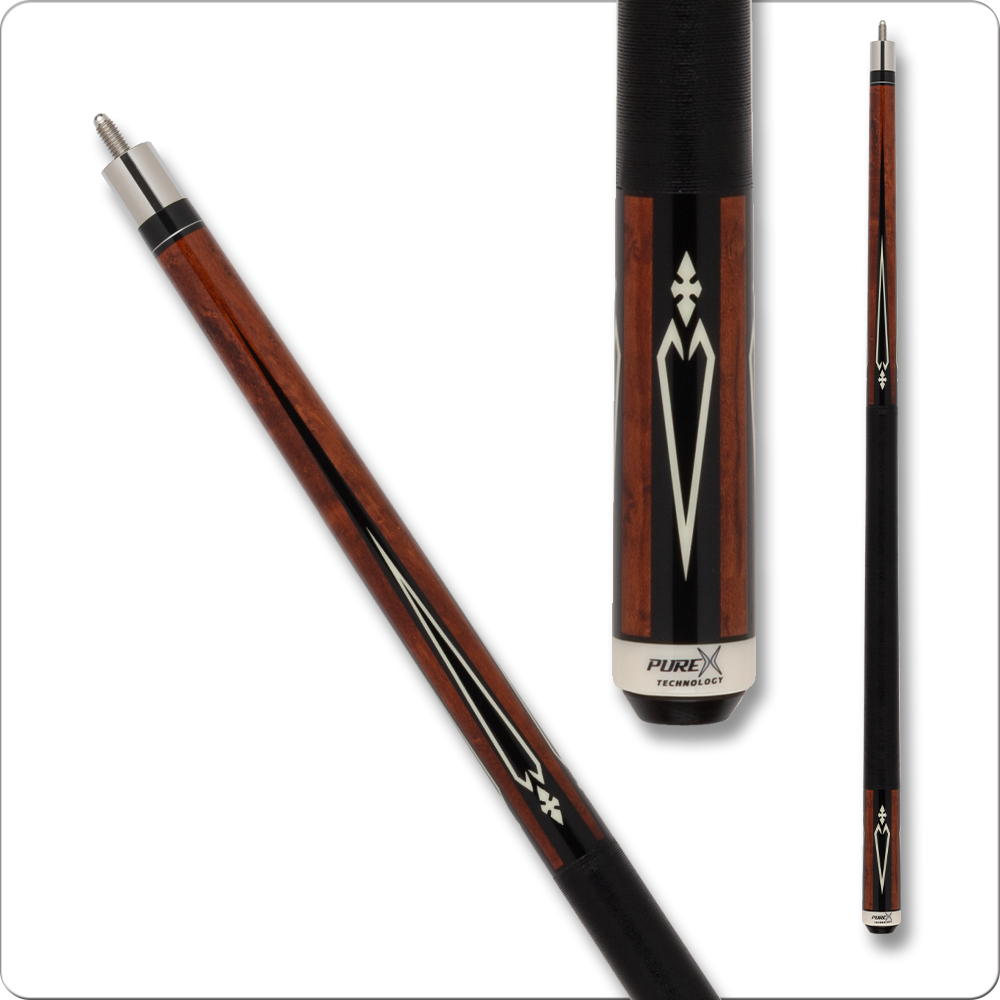
Ask a room full of league players what they practice and you will hear about draw shots, banks, and breaking. Almost nobody says safeties. Yet watch any professional match and count the innings: a huge share of games are decided not by a spectacular pot but by one player leaving the other nothing, forcing a foul, and running out with ball in hand. Defense wins games at every level, and it is the fastest skill to improve because most of your opponents have never spent a single hour on it. This guide covers when to play safe, the four safeties that handle ninety percent of situations, and how to practice them so they hold up under pressure.
The decision: shoot or lock them up
Every safety starts with an honest assessment. Before you commit to a tough shot, ask three questions. What is my realistic make percentage on this ball? If I make it, do I have a path to finish the rack? And if I miss, what am I leaving? A 60 percent shot with no shape on the next ball is usually a worse choice than a 90 percent safety that hands your opponent a kick from six feet away.
League players lose far more games being brave than being careful. The math is simple even if the ego resists it. When you shoot a low-percentage ball and miss, you usually leave a makeable shot, so your miss converts almost directly into your opponent’s turn at a live table. When you play a quality safety, even one that is not perfect, your opponent must execute something difficult just to survive the inning. Over a match, those pressure innings pile up and crack people.
Safety one: the full hook
The classic. Park the cue ball directly behind a blocking ball so your opponent has no direct line to any legal object ball. In 8-ball this means hiding the cue ball behind your own group. In 9-ball it means using any ball on the table to block the path to the lowest numbered ball.
The mistake almost everyone makes is obsessing over the hide and ignoring the object ball. A full hook where the object ball sits over a pocket is a half-safety at best, because even a decent kick leaves your opponent safe by accident. The professional version controls both balls: cue ball buried, object ball pushed to a rail or into open space where nothing good can happen even if the kick connects.
Safety two: the distance safety
No blocker available? Make the table itself the obstacle. Send the object ball to one end rail and the cue ball to the other, leaving a nine-foot shot with the cue ball frozen or nearly frozen to the cushion. There is no hook here, and none is needed. A frozen-rail cue ball forces your opponent to elevate slightly and strike above center with limited follow-through, which turns even a straight shot into a genuine test.
Distance safeties live and die on speed control. You are moving two balls to opposite ends of the table off one hit, and being three inches off on either one can open the whole rack up. That sensitivity is exactly why this safety needs practice reps rather than match-night improvisation.
Safety three: the rail freeze
Sometimes the best safety barely moves anything. When the cue ball and object ball are already close together near a cushion, a soft touch that freezes the cue ball to the object ball, or to the rail directly behind it, strips your opponent of options. Frozen cue balls eliminate draw entirely and make sidespin risky, so even if your opponent can see a ball, they cannot do much with it.
The touch required here is measured in ounces. Most players hit this shot three times harder than necessary because soft strokes feel uncomfortable under pressure. A good drill: place the cue ball a foot from an object ball and try to bump it less than one ball’s width while the cue ball stops dead. Ten in a row before you leave practice. It feels tedious right up until it wins you a playoff match.
Safety four: the cluster park
Eight-ball specific and devastating. When your opponent has a cluster of two or more of their balls tied up, park the cue ball inside or directly behind that cluster. They now face an awkward bridge, no clean angle, and the added insult that their own balls are the problem. Meanwhile, every shot they attempt risks breaking their cluster open for you or leaving you ball in hand.
This safety pairs with smart pattern play. Strong 8-ball players identify problem clusters during their first visit and deliberately leave them alone, saving them as safety targets for the moment the rack stops cooperating.
The speed control engine behind all of it
Every safety above is really a speed control exercise wearing a disguise. Two drills build the engine. First, the lag ladder: shoot the cue ball up and down the table trying to stop it within one diamond of the head rail, then within half a diamond, then touching it. Second, the two-ball placement drill: pick a target zone the size of a sheet of paper anywhere on the table, hit a half-table safety, and score yourself on whether both balls finished where you intended. Chart ten attempts a session and watch the number climb week over week.
Equipment notes for the defensive player
Safeties involve a lot of thin hits, soft spin, and precise small-distance moves, which is where a predictable low-deflection setup quietly earns its money. When you cut a ball razor thin at lag speed, unwanted squirt on the cue ball shows up immediately in where both balls come to rest. A shaft that behaves the same at every speed makes the soft game learnable.
The Players cue lineup is a smart place to look because their HXT low-deflection shafts come standard on mid-priced cues rather than as an expensive upgrade. The Players HXT15 at around $326 has been a league favorite for years for exactly this reason. The HXT30 offers the same shaft with different cosmetics, and the HXT90 lands just under $316 for players who want a subtler look. Any of the three gives you a consistent tool for the touch shots this article is built on, and the broader pool cue collection has options in every direction if you want to compare.
Reading your opponent’s answer
A safety is not the end of the exchange, it is a question. Your opponent will kick, and where that kick goes tells you what to do next. Watch whether they kick to hit or kick to safe. A player kicking just to make contact usually leaves something; be ready to punish it rather than reflexively playing safe again. A player who returns your safety with a better one is inviting a battle, and you should slow down, take the extra ten seconds, and refuse to be the first one to bail out with a low-percentage shot.
Two-way shots deserve a mention here because they are the graduate version of this whole subject. Whenever possible, choose shots where the miss is also a safety: pot attempt with pace that leaves the cue ball on a rail, or a thin cut that sends the object ball toward a pocket while the cue ball travels to the far end. When your offense and defense happen on the same stroke, opponents feel like they never get a fair chance, which is exactly the feeling you want across a long race.
Make defense a habit, not an apology
Plenty of league players treat safeties as slightly shameful, something you do when you cannot shoot. Flip that framing. A well-played safety is a skill shot with a higher success rate and a bigger payoff than most of the hero balls it replaces. Spend two practice sessions on the four patterns above, add the speed drills to your warm-up, and track how many games you win off ball in hand over the next month. The number will make the argument better than this article can.

About Corey Bernstein
Corey Bernstein is a competitive pool player, billiards equipment specialist, and co-owner of Quarter King Billiards in Wilmington, North Carolina. With over a decade of experience in the sport, Corey has competed in regional APA and BCA sanctioned tournaments and maintains an intimate knowledge of cue construction, shaft technology, and table mechanics. As a certified dealer for brands including Predator, McDermott, Jacoby, Viking, Lucasi, Meucci, Joss, and Cuetec, Corey personally tests and evaluates every cue that comes through the shop. His hands-on approach to the business means he has racked thousands of hours behind the table — breaking in shafts, comparing tip compounds, and dialing in the nuances that separate a good cue from a great one. When he is not behind the counter or on the table, Corey is researching the latest advances in low-deflection technology, carbon fiber shaft construction, and cue ball physics. His articles on Quarter King Billiards combine real-world playing experience with deep product knowledge to help players at every level find the right equipment for their game.