 844 408 3056

 Hot Deal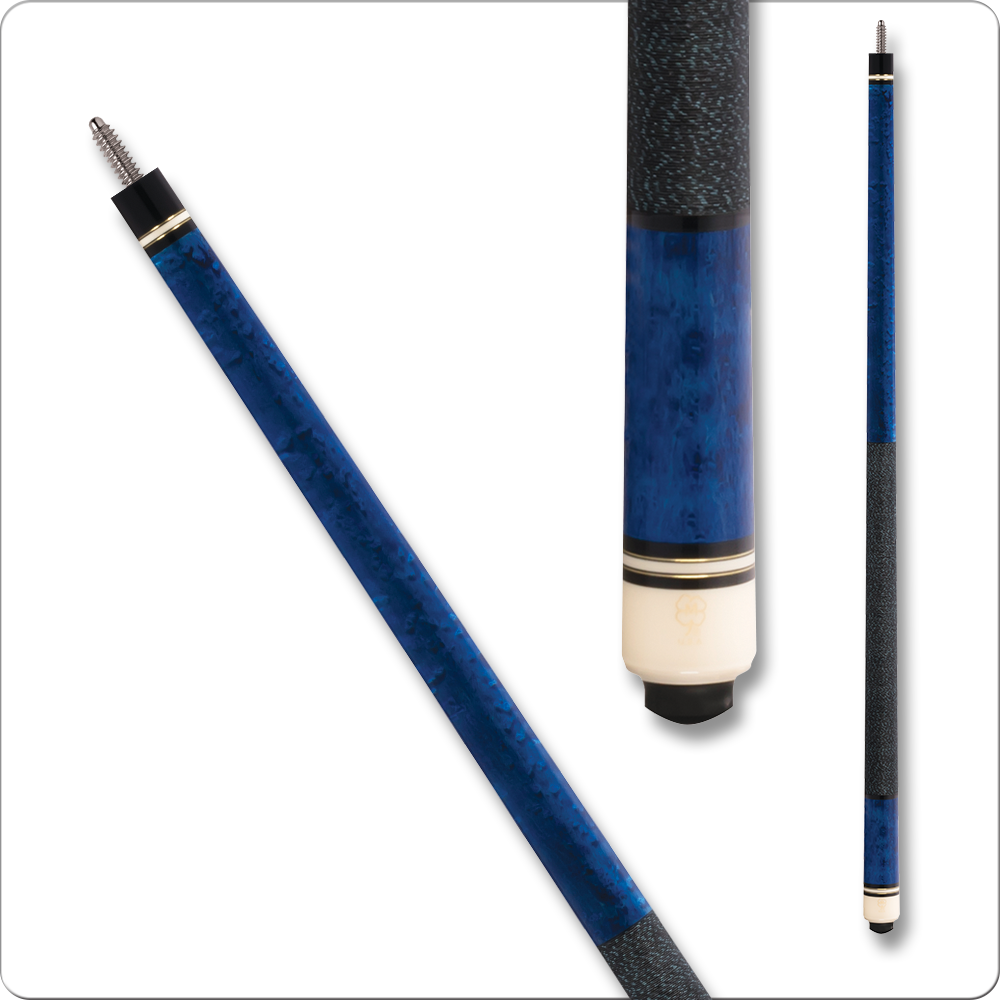
The break decides how a rack of eight-ball starts. Your pattern decides whether you finish it. Two players can face the exact same layout after the break, and the one who reads the table correctly will run out while the other gets three balls in and hooks themselves behind a cluster. Pattern play is the skill of choosing the order of your shots so every ball leads naturally to the next, and it is the fastest way for a league player to turn ball-making ability into actual run-outs.
The encouraging part is that pattern play is a thinking skill far more than a physical one. You do not need a faster stroke to learn it. You need a plan, a few reliable habits, and a cue you can trust to put the cue ball where the plan says it should go. Here is how to read a rack, clear the problems early, and run the table in order.
Start from the eight ball and work backward
Beginners plan forward from the first easy ball they see. Strong players plan backward from the eight. Before you commit to a single shot, look at where the eight ball sits, decide which pocket it is going in, and picture where the cue ball needs to be to make it simple. That spot is your destination. Then choose a key ball, the shot right before the eight, whose position naturally leaves you on that spot. Now you have the last two moves locked, and you can build the rest of the run to arrive at the key ball with shape.
This backward-planning habit changes everything, because the eight ball is the shot you cannot afford to be out of line on. When you plan forward, you often reach the eight from an ugly angle and have to force a bank or a thin cut to win. When you plan backward, the eight becomes the easiest shot in the rack, because you reserved a good angle for it from the very first ball you shot.
Solve clusters and problem balls early
The single most common reason a run-out dies is a cluster that never got addressed. If two of your balls are frozen together, or one is buried behind an opponent’s ball, that problem does not fix itself. It only gets harder as the table opens and you lose the traffic you needed to break it apart. Deal with clusters while you still have insurance balls near them, ideally by clipping the cluster on the way to another shot so you break it open without spending an entire turn on it.
The same logic applies to any ball stuck on a rail or wedged in a tough spot. Address it when the surrounding position gives you a natural angle to do so, not at the end when it is the only ball left and you are trying to thread it out of trouble. Every rack has one or two shots that are harder than the rest. Find them before you start shooting, and fold them into your pattern early instead of praying they work out late.
Pick your group with the whole rack in mind
Choosing solids or stripes is a pattern decision, not a count of which color has more easy shots. Look at the trouble first. If the solids include a nasty cluster and a ball frozen on the rail while the stripes are all open, take stripes even if you love the look of one particular solid. You are choosing the group that runs, not the group with the single prettiest shot. A quick, honest survey before you commit will win you more games than any single stroke improvement.
Play the three-ball-ahead game
You cannot map an entire rack shot by shot in your head and expect the plan to survive contact with the table. What you can do is always know your next two shots while you shoot the current one. Think of it as a rolling window: current ball, next ball, the one after that. As you pocket each shot, the window slides forward and you pick up one more ball of the plan. This keeps you flexible when the cue ball lands a few inches off, while still giving you the forward vision that separates a run from a string of lucky singles.
The physical key to this is speed control. Most position errors are not side to side, they are too far or too short. Learning to move the cue ball the right distance, using a smooth stroke and natural roll rather than forced spin, is what makes your three-ball plan actually happen. Practice sending the cue ball to specific spots with a soft, a medium, and a firm stroke until each distance is repeatable on demand.
Leave yourself angles, not straight-ins
A straight-in shot feels safe, but it is a position trap. With no angle on the object ball, your only ways to move the cue ball are draw and follow along a single line, which severely limits where you can go next. Whenever you can, leave a slight angle on each shot so the cue ball has a natural path to the following ball. Half a ball of angle is usually plenty. Choosing your speed to hold a small angle, or cheating the pocket a hair, turns a dead-straight trap into a live position play.
When the run is not there, have a safety valve
Reading a rack honestly sometimes tells you the run is not on. Maybe two clusters cannot both be solved, or the eight is locked up with no key ball in sight. That is not a failure, it is information. The mature play is to take a smart safety, leave your opponent nothing, and wait for the table to open. Great pattern players are not the ones who fire at everything. They are the ones who know the difference between a rack that runs and a rack that should be played safe, and they pick the right one more often than not.
The equipment that makes a plan repeatable
A pattern is only as good as your ability to execute it, and execution rewards a cue that returns the same hit every time. A solid maple playing cue with a quality shaft gives you predictable deflection, so your position routes match your intention. The McDermott G201 cue is a proven workhorse in this range, and the Viking VIK228 cue offers the same dependable American-made feel that helps you dial in speed control. If you are assembling your first real setup on a budget, the Valhalla VA113 cue punches well above its price. Compare balances and price points across the full pool cues range and the McDermott lineup.
Once your stroke is repeatable, the next upgrade is a low deflection shaft, which shrinks the cue ball’s squirt when you use english to hold or move an angle. A carbon option such as the Cuetec Cynergy carbon shaft lets you spin the cue ball for position with far less compensation, which means your three-ball plans come off more consistently. When your gear stops surprising you, your patterns start finishing.
Turn planning into a habit
Pattern play does not demand talent so much as a routine. Walk the table before you shoot. Find the eight, find your key ball, find your trouble, and pick the group that runs. Keep a rolling window of your next two shots, leave yourself angles, and use speed rather than force to move the cue ball. Do this every rack, even in casual games, and it becomes automatic. Give yourself a cue you trust from the pool cues collection, commit to a plan before your first shot, and you will watch your run-outs climb while your opponents are still shooting at whatever ball happens to be closest.

About Corey Bernstein
Corey Bernstein is a competitive pool player, billiards equipment specialist, and co-owner of Quarter King Billiards in Wilmington, North Carolina. With over a decade of experience in the sport, Corey has competed in regional APA and BCA sanctioned tournaments and maintains an intimate knowledge of cue construction, shaft technology, and table mechanics. As a certified dealer for brands including Predator, McDermott, Jacoby, Viking, Lucasi, Meucci, Joss, and Cuetec, Corey personally tests and evaluates every cue that comes through the shop. His hands-on approach to the business means he has racked thousands of hours behind the table — breaking in shafts, comparing tip compounds, and dialing in the nuances that separate a good cue from a great one. When he is not behind the counter or on the table, Corey is researching the latest advances in low-deflection technology, carbon fiber shaft construction, and cue ball physics. His articles on Quarter King Billiards combine real-world playing experience with deep product knowledge to help players at every level find the right equipment for their game.