 844 408 3056

 Hot Deal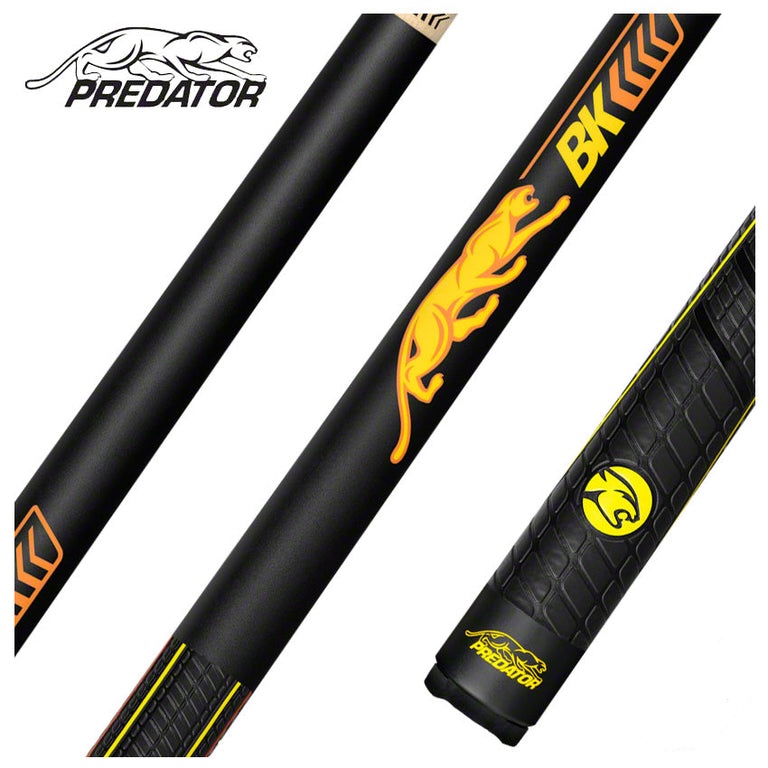
Ask a room full of league players where they leak the most games and most will point at the same shot. Not the pressure nine, not the long rail cut, but the very first hit of the rack. A weak break gives the table away before the match even starts. An out of control break makes balls but scratches or sells out. The break is the one shot you take every single rack, and most players never train it on purpose.
The good news is that breaking well is far more about technique and timing than raw muscle. Smaller players generate fearsome breaks all the time, and gym strong players routinely flail. If your break is letting you down, the fix is almost never to swing harder. It is to deliver the energy you already have through the center of the cue ball at the moment of contact.
Power comes from sequence, not strength
A strong break is a chain of movements that fire in order, the same way a baseball swing or a golf drive works. The legs and hips start the move, the torso rotates, the shoulder and elbow follow, and the wrist snaps last. When that sequence is timed well, the cue is accelerating fastest exactly as it meets the cue ball. When players try to muscle the break with the arm alone, they peak too early and the tip is already slowing down at contact.
To feel this, practice breaking at roughly seventy percent effort and focus only on letting the cue accelerate through the ball rather than at it. Many players find their cue ball speed actually increases when they stop straining, because the timing improves. Speed at impact, not effort at the start, is what spreads the rack.
Hit center, or pay for it
The single most common break flaw is striking the cue ball slightly off center. A miss high sends the cue ball flying off the table or hopping the rack. A miss low buries it in the stack or pops it up. Either way you lose control of where the cue ball ends up, and control of the cue ball is what separates a break that leaves you a shot from one that leaves your opponent everything.
Aim for a touch below center on a standard rack so the cue ball drives forward and then settles near the middle of the table after contact. Film your break from behind with a phone if you can. Most players are stunned to see how far off center they actually strike when they swing for the fences. Dialing the contact point back to true center will do more for your results than any amount of added force.
Your stance changes for the break
A shooting stance is built for fine control. A break stance is built to let the body uncoil. Widen your feet slightly for a stronger base, allow a bit more weight to shift forward through the hit, and let your bridge hand sit a touch longer than normal so the cue has room to build speed. Keep your head down and still through contact, because lifting up early is what pulls the tip off center at the worst possible moment.
Stay relaxed in the grip until the final forward stroke. A tight grip from the start kills the wrist snap that adds free speed at the end of the swing. Think loose, then explosive, then still.
The cue you break with matters
Breaking with your good playing cue is a slow way to ruin it. The repeated high impact flattens the tip, can crack a ferrule, and beats up a shaft you spent real money to keep clean. A dedicated break cue solves all of that and usually breaks better too, because break cues are built with stiffer shafts and hard tips that transfer energy efficiently instead of absorbing it.
A hard or phenolic tip does not grab the cue ball the way a soft playing tip does, and that is exactly what you want on the break. Less grip means a cleaner, more direct energy transfer and less unwanted spin. If you are shopping, the Predator BK4 break cue with sport wrap and the Mezz Power Break G cue are both engineered specifically to convert your stroke into rack spreading speed. For players who want a carbon era feel at a friendlier price, the Cuetec AVID Surge break cue is a popular pick.
Newer players who are not ready to spend much can still get the benefit of a purpose built break cue. Something like the Action ABK05 break cue protects your playing cue and teaches you a proper break motion without a big outlay. You can compare the full lineup in the break cues category and match a tip and weight to your stroke.
Find your break weight
Heavier is not automatically better. A heavier break cue carries more mass into the rack but is harder to accelerate, so a lighter cue can produce more cue ball speed for a player with good timing. Many strong breakers actually drop down in weight to swing faster. Try a few weights if you can and judge by results on the table, not by what feels powerful in your hands. The cue that spreads the rack and parks the cue ball near center is the right one, whatever the number on it says.
Where you stand on the rail changes everything
Breaking from the same spot every time is a habit worth questioning. In eight ball, breaking from slightly off center near the side rail and catching the second ball of the rack flush is a proven way to spread the balls while keeping the cue ball under control. In nine ball, where the rules often require the cue ball to start behind the head string anyway, a soft side break aimed at the one ball has become the standard at the top level because it makes a ball, spreads just enough, and leaves the one shootable.
Experiment with break position on the rail and with which ball you are trying to hit first. Two inches of cue ball position can be the difference between a dry break and a wide open table. Treat the head string as a workshop, not a fixed mark, and let your results pick the spot.
The three mistakes that kill most breaks
First, swinging so hard that the head and body come up before contact, which pulls the tip off line. Second, gripping the cue tight from the first backswing, which strangles the wrist snap that adds free speed. Third, ignoring the cue ball after the break and only watching whether balls drop, which means you never learn to control where the cue ball lands. Fix those three and your break improves even if your raw speed never changes. None of them cost a dollar to correct, which is why the break is the highest return practice you can do.
Build a break you can repeat
A great break that shows up once a night is a parlor trick. A solid break you can repeat every rack is a weapon. Spend ten minutes of every practice session breaking full racks and watching where the cue ball settles, not just whether a ball drops. Adjust your contact point and speed until the cue ball reliably finishes near the middle of the table with an open layout in front of you.
Do that for a few weeks and the first shot of the rack stops being the one you dread and starts being the one you count on. When you are ready to add the right tool, browse the complete range of pool cues and give your good playing cue the break cue partner it deserves. Your tip, your ferrule, and your win rate will all thank you.

About Corey Bernstein
Corey Bernstein is a competitive pool player, billiards equipment specialist, and co-owner of Quarter King Billiards in Wilmington, North Carolina. With over a decade of experience in the sport, Corey has competed in regional APA and BCA sanctioned tournaments and maintains an intimate knowledge of cue construction, shaft technology, and table mechanics. As a certified dealer for brands including Predator, McDermott, Jacoby, Viking, Lucasi, Meucci, Joss, and Cuetec, Corey personally tests and evaluates every cue that comes through the shop. His hands-on approach to the business means he has racked thousands of hours behind the table — breaking in shafts, comparing tip compounds, and dialing in the nuances that separate a good cue from a great one. When he is not behind the counter or on the table, Corey is researching the latest advances in low-deflection technology, carbon fiber shaft construction, and cue ball physics. His articles on Quarter King Billiards combine real-world playing experience with deep product knowledge to help players at every level find the right equipment for their game.