 844 408 3056

 Hot Deal
# How to Be Good at Pool: 12 Tips from Amateur to Advanced
Want to stop missing easy shots and start running racks? The difference between average players and good players isn’t natural talent—it’s consistent fundamentals, deliberate practice, and understanding what actually matters. Whether you’re just learning or trying to break through a plateau, these 12 proven tips will transform your game.
The Truth About Getting Good at Pool
Here’s what most beginners don’t realize: pool isn’t about hitting balls hard or making flashy shots. It’s about control, consistency, and thinking two shots ahead. The players who improve fastest focus on mastering fundamentals before trying to run-before-gun or attempting trick shots.
This guide breaks down exactly what you need to focus on, in the order that will give you the fastest improvement. Whether you practice once a week or daily, these principles work.
1. Master Your Stance First
Your stance is your foundation. A poor stance leads to inconsistent strokes, missed shots, and bad habits that take months to unlearn.
Perfect stance checklist:
– Feet shoulder-width apart
– Front foot pointing at the target line
– Back foot at 45-90 degrees
– Weight distributed 60% front, 40% back
– Head directly over the cue
– Comfortable, balanced, repeatable
The test: Can you hold your stance comfortably for 10 seconds after your shot? If you’re losing balance or straining, adjust.
Most players stand too upright. Get lower. Your chin should be close to the cue, giving you a clear sight line. Watch professional players—they’re athletes getting into athletic positions.
2. Develop a Rock-Solid Bridge
Your bridge hand is where the magic happens—or where it falls apart. A loose, inconsistent bridge means even perfect aim won’t save you.
Closed bridge (for accuracy):
– Loop your index finger over the cue
– Three points of contact: thumb, index loop, middle finger
– Hand firmly planted on the table
– 7-10 inches from the cue ball
Open bridge (for power and learning):
– Create a V with thumb and index finger
– Cue rests in the V
– Still requires firm hand placement
– Good for beginners and break shots
Practice drill: Place your bridge hand and stroke through 20 times without moving it. The cue should glide smoothly through the same channel every time.
3. Develop a Consistent Pre-Shot Routine
Every good player has a routine. It’s not superstition—it’s consistency. Your routine tells your brain “we’re shooting now” and eliminates variables.
Sample routine:
1. Identify the shot and plan position
2. Walk around if needed to verify angles
3. Approach the table from behind the shot line
4. Set your stance and bridge
5. Practice strokes while sighting
6. Pause, focus on contact point
7. Shoot with confidence
The exact routine doesn’t matter. What matters is doing it the same way every single time. Tiger Woods has a routine. Efren Reyes has a routine. You need one too.
4. Fix Your Stroke Mechanics
A smooth, straight stroke is the difference between a good shot and a great shot. Most players develop a chicken-wing stroke (elbow moving out) or a punchy stroke (no follow-through).
Proper stroke mechanics:
– Elbow stays directly above the cue
– Forearm acts like a pendulum
– Upper arm stays still
– Smooth acceleration through the ball
– Follow-through extends naturally
The wall drill: Practice your stroke with your cue tip an inch from a wall. If you’re punching or steering, you’ll hit the wall. Smooth strokes go straight back and straight through.
Equipment note: Your cue matters more than you think. A warped or ill-fitting cue makes a good stroke impossible. Invest in a quality pool cue that fits your height and stroke style.
5. Aim with Your Eyes, Not Your Cue
Most beginners aim by moving their cue around until it “looks right.” That’s backwards. Your eyes should tell your body where to aim, then you set up to that line.
The ghost ball method:
1. Imagine a “ghost ball” touching the object ball
2. The ghost ball is positioned where the cue ball needs to be at contact
3. The center of the ghost ball is your target
4. Aim to send the cue ball’s center to the ghost ball’s center
The contact point method:
– Find the exact point on the object ball where contact needs to happen
– Focus intensely on that point during your practice strokes
– Trust your aim and stroke through
Many players improve dramatically by upgrading to a low-deflection shaft. These modern shafts reduce “squirt” and make your aim more predictable.
6. Control Your Speed, Control the Game
Speed control separates average players from good players. The perfect shot isn’t just about pocketing the ball—it’s about leaving yourself perfect position for the next shot.
The three speeds:
– Soft: Just enough to reach the pocket (most common for position play)
– Medium: Standard shooting speed (your default)
– Hard: When you need power or distance (break, long cuts, some position plays)
Practice drill: Set up a straight shot to the corner. Pocket the ball with three different speeds, watching where the cue ball ends up. Learn to predict and control final position.
The speed ladder: Practice pocketing the same ball with progressively harder speed, noting how the cue ball position changes. This builds your mental catalog of speed and position relationships.
7. Learn Basic Position Play
The difference between running three balls and running the rack is position play—thinking beyond the current shot to set up the next one.
Position play fundamentals:
– Plan two shots ahead (minimum)
– Take the easiest path to position
– Use natural angles when possible
– Avoid difficult position by thinking ahead
– Sometimes the “easy” shot isn’t the right shot
The centerline concept: Try to keep the cue ball near the center of the table. Balls near the center give you more options and easier angles. Avoid leaving yourself on the rail.
Practice drill: Set up three balls in a row. The goal isn’t just to pocket them, but to pocket them *in order* with perfect position each time. Reset and repeat until it becomes automatic.
8. Master Cue Ball Control
English (sidespin), follow (topspin), and draw (backspin) aren’t advanced techniques—they’re essential tools for controlling the cue ball.
Follow (topspin):
– Hit above center
– Cue ball continues forward after contact
– Use when you need the cue ball to travel forward
Draw (backspin):
– Hit below center
– Cue ball comes backward after contact
– Requires firm stroke and good tip
– Use when you need the cue ball to come back
English (sidespin):
– Hit left or right of center
– Changes cue ball’s path after rail contact
– Increases deflection—compensate your aim
– Use sparingly until you understand deflection
Critical tip: Don’t use English unless you need it. Many players add unnecessary spin that makes aiming harder. Center ball hits are more reliable.
Keep your cue tip in good condition with proper shaping and chalk. A worn or improperly shaped tip can’t grip the ball properly for spin shots.
-
Sale!

-
Summit SUML20 Green Carbon Fiber Pool Cue
Original price was: $499.00.$449.10Current price is: $449.10. Select options -
Sale!
-
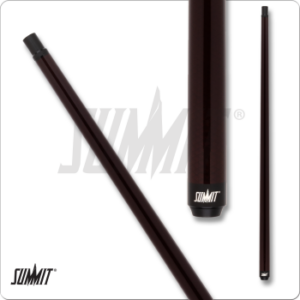
Summit SUML19 Red Carbon Fiber Pool Cue
Original price was: $499.00.$449.10Current price is: $449.10. Select options -
Sale!

-
Summit SUML18 Blue Carbon Fiber Pool Cue
Original price was: $499.00.$449.10Current price is: $449.10. Select options -
Sale!
-
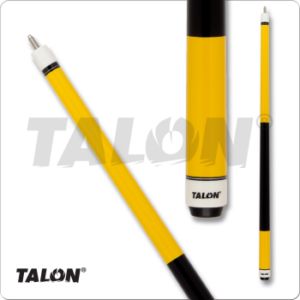
Talon TL08 Yellow Starter Pool Cue
Original price was: $79.00.$71.10Current price is: $71.10. Select options This product has multiple variants. The options may be chosen on the product page
9. Practice with Purpose, Not Just Play
Mindlessly shooting balls won’t make you better. Deliberate practice with specific drills builds skills faster than playing game after game.
Effective practice structure:
– 20 minutes: Warm up with basic shots and stroke drills
– 30 minutes: Focus on specific skills (position play, bank shots, etc.)
– 20 minutes: Pressure drills or games
– 10 minutes: Cool down and reflection
Top practice drills:
– Straight-in shots: Line up shots to all pockets, focus on stroke
– The L-drill: Ball on the spot, cue ball on the head spot, make it and get position on a ball on the side rail
– 9-ball ghost: Play nine-ball against yourself, ball in hand after misses
– Stop shot drill: Practice hitting center ball with just enough speed to stop dead on contact
Track your progress. Can you make 7 out of 10 straight-in shots? Next week, aim for 8 out of 10. Measurable goals drive improvement.
10. Study the Pros (But Copy Wisely)
Watching professional pool teaches you what’s possible and reveals subtle techniques you might miss otherwise.
What to watch for:
– Pre-shot routines and tempo
– Shot selection (what they *don’t* shoot)
– Position play and planning
– Stroke mechanics and speed control
– How they handle pressure
Where to watch:
– Matchroom Pool on YouTube
– Accu-Stats video archives
– Professional tournaments (US Open, Mosconi Cup)
– Instructional content from pros
Warning: Don’t copy trick shots or flashy play. Copy fundamentals, routine, and decision-making. Efren Reyes makes impossible shots—but he also has perfect fundamentals.
11. Invest in Your Equipment (But Don’t Overthink It)
You don’t need a $2,000 cue to become a good player. But you do need equipment that fits you properly and isn’t actively working against you.
Equipment priorities:
1. Straight cue with proper weight (18.5-21 oz for most players): Browse quality starter cues that won’t break the bank
2. Good tip, properly shaped and maintained: Get proper tip tools and learn to maintain it
3. Quality chalk (Kamui, Predator, Taom): Better chalk = fewer miscues
4. Cue case for protection: Protect your investment with a proper case
5. Consider upgrading to a low-deflection shaft: Modern carbon fiber or LD shafts make aiming more predictable
What NOT to buy yet:
– Jump cues (learn basic jumps with your playing cue first)
– Breaking cues (until you’re breaking hard enough to risk your playing cue)
– Expensive custom cues (until you know exactly what you want)
12. Develop Mental Toughness
Pool is a mental game. The shot that felt easy in practice becomes terrifyingly difficult when you’re down to the eight ball in a tournament.
Mental game essentials:
Confidence without ego: Believe you can make the shot, but don’t let your ego make you attempt shots beyond your skill level.
Acceptance: You’ll miss. Accept it, learn from it, move on. Dwelling on mistakes creates more mistakes.
Routine under pressure: This is why you practiced your routine—it works the same whether you’re practicing alone or shooting for the win.
Positive self-talk: Replace “don’t miss” with “make this shot.” Your brain works better with positive instructions.
Visualization: See the shot working perfectly before you shoot it. Your body follows your mind.
Breathing: Take a deep breath during your routine. Tension kills smooth strokes.
Putting It All Together: Your Improvement Plan
Don’t try to fix everything at once. Here’s your priority order:
Month 1: Fundamentals
– Perfect your stance
– Build a consistent bridge
– Develop your pre-shot routine
– Practice straight-in shots
Month 2: Stroke and Speed
– Refine stroke mechanics
– Practice speed control
– Work on follow and draw
– Build consistency through drills
Month 3: Position and Strategy
– Learn basic position play
– Practice thinking two shots ahead
– Study professional play
– Play practice games with position focus
Month 4+: Refinement and Advanced Skills
– Add English when needed
– Master tough angles
– Develop competitive mental game
– Continue deliberate practice
Common Mistakes That Keep Players Stuck
Mistake #1: Playing too much, practicing too little
Games are fun, but drills build skills. Balance your table time.
Mistake #2: Ignoring fundamentals
Advanced techniques built on poor fundamentals create bad habits. Master the basics first.
Mistake #3: Equipment excuses
A better cue won’t fix a bad stroke. Fix your mechanics, then upgrade equipment.
Mistake #4: No routine
Inconsistent approach creates inconsistent results. Build your routine and stick to it.
Mistake #5: Attempting shots beyond skill level
Practice tough shots in practice, not in games. Play within your abilities.
Your Next Steps
Becoming good at pool is a journey, not a destination. Every player, from weekend warriors to world champions, is constantly refining and improving. The difference is that good players practice deliberately, focus on fundamentals, and think strategically.
Start with your stance and bridge. Get those right, and everything else becomes easier. Practice with purpose. Play with patience. And most importantly, enjoy the process.
Ready to take your game to the next level? Visit Quarter King Billiards for expert advice and quality equipment that supports your improvement. From beginner-friendly cues to professional-grade shafts and practice accessories, we’re here to help you become the player you want to be.
-
Sale!
-
Talon TL07 Tangerine Starter Pool Cue
Original price was: $79.00.$71.10Current price is: $71.10. Select options This product has multiple variants. The options may be chosen on the product page -
Sale!

-
Talon TL06 Fuchsia Starter Pool Cue
Original price was: $79.00.$71.10Current price is: $71.10. Select options This product has multiple variants. The options may be chosen on the product page -
-
Now get out there and practice. Your next great game is waiting.