 844 408 3056

 Hot Deal
# How to Choose Your First Pool Cue: Complete Buyer’s Guide for Beginners
Choosing your first pool cue is an exciting milestone in your development as a player. A personal cue provides consistency that house cues can’t match, improves your game immediately, and grows with you as your skills develop. However, with hundreds of options across wide price ranges, selecting the right cue can feel overwhelming for beginners.
This guide will walk you through everything you need to know to choose a pool cue that matches your skill level, budget, and playing style.
Why You Need Your Own Pool Cue
Before diving into selection criteria, understand why owning a personal cue matters:
Consistency: Every house cue is different (weight, tip condition, warp, balance). Your personal cue feels the same every time, letting you develop muscle memory and consistent mechanics.
Better maintenance: You control tip condition, shaft smoothness, and overall cue care. House cues are often poorly maintained with worn tips and damaged shafts.
Confidence: A cue that feels right in your hands builds confidence and lets you focus on the game, not the equipment.
Better equipment: Even an entry-level personal cue outperforms most house cues in straightness, balance, and tip quality.
Customization: You can adjust weight, change tips, upgrade shafts, and modify the cue to match your evolving preferences.
When to Buy Your First Cue
You’re ready for a personal cue when:
– You play at least once a week regularly
– You understand basic fundamentals (grip, bridge, stroke)
– You’re committed to improving your game
– House cues frustrate you with inconsistency
You don’t need to be “good” to buy a cue—buying a cue often accelerates improvement by providing the consistency needed to develop proper technique.
Budget Guidelines for First Cues
Pool cues range from $30 to $30,000+. Here’s realistic budget guidance for first-time buyers:
$75-150: Entry-Level Quality Cues
– Reliable construction and straightness
– Decent tips (usually replaceable)
– Basic two-piece design
– Good enough for most recreational players
– Best for: Casual players who want consistency without major investment
$150-300: Solid Intermediate Cues
– Better wood quality and construction
– Superior balance and feel
– Low-deflection shaft options
– Adjustable weight systems
– Nice inlays and aesthetics
– Best for: Serious recreational players and league players
$300-600: Advanced Amateur Cues
– Premium maple and exotic woods
– High-performance low-deflection shafts
– Professional-quality tips
– Excellent craftsmanship
– Best for: Competitive players and serious students of the game
$600+: Professional and Custom Cues
– Not necessary for first-time buyers
– Consider only after you know your preferences
Recommendation for most first-time buyers: $150-250
This range offers excellent quality without overspending before you understand your preferences.
Key Features to Consider
1. Cue Weight
Most cues range from 18-21 ounces:
- 18-19 oz: Lighter, better for finesse and control
- 19-20 oz: Medium, versatile for most players (most popular)
- 20-21 oz: Heavier, more power and stability
Recommendation: Start with 19 oz (the standard) or choose a cue with adjustable weight bolts so you can experiment.
Many cues have weight bolt systems that let you adjust ±1-2 ounces, giving you flexibility as your preferences develop.
2. Cue Length
Standard cue length is 58 inches, which works for most players.
- Shorter (52-57 inches): For players under 5’6″ or youth players
- Standard (58 inches): Fits 90% of players
- Longer (58-61 inches): For players over 6’2″
Unless you’re notably shorter or taller than average, choose 58 inches.
3. Tip Diameter
The tip is the leather piece that contacts the cue ball:
- 13mm: Modern standard, better for applying English (spin)
- 14mm: Traditional standard, more forgiving for beginners
Recommendation: 13mm is the current standard and what most new cues feature. Start there unless you have a specific reason to choose 14mm.
4. Tip Hardness
Tips come in soft, medium, and hard:
- Soft: More grip, better spin, wears faster
- Medium: Balanced performance, most popular
- Hard: Long-lasting, more power, less spin
Recommendation: Medium hardness for your first cue. You can always replace the tip later once you understand your preferences.
5. Shaft Type: Standard vs Low-Deflection
Standard maple shaft:
– Traditional feel
– Less expensive
– Reliable and proven
– Requires learning to compensate for deflection (cue ball curve from spin)
Low-deflection (LD) shaft:
– Reduces cue ball deflection when applying English
– Easier to aim with spin
– More expensive
– Popular with modern players
Recommendation: If your budget allows ($200+), consider a low-deflection shaft. It makes learning spin application easier. If budget is tight, standard maple is perfectly fine and what generations of players learned on.
6. Joint Type
The joint connects the shaft to the butt. Common types:
- 5/16 x 18 pin: Most common, huge variety of compatible shafts
- Radial pin: Professional standard, very stable
- Uni-Loc: Quick release, popular on many cues
- 3/8 x 10: Less common, fewer shaft options
Recommendation: 5/16 x 18 or Radial gives you the most flexibility for future shaft upgrades.
7. One-Piece vs Two-Piece
One-piece cues:
– No joint, completely solid
– Slightly better hit feedback
– Difficult to transport
– Rare for personal cues
Two-piece cues:
– Separates in the middle for transport
– Easy to carry in a case
– 99% of personal cues are two-piece
Recommendation: Two-piece, no question. Portability matters.
8. Wrap Type
The grip area can have:
- Irish linen: Traditional, moisture-absorbent, textured
- Leather: Smooth, sophisticated feel, less absorbent
- No wrap (bare wood): Clean look, can become slippery with sweat
- Rubber/synthetic: Unusual, sticky feel
Recommendation: Irish linen or leather based on personal preference. Try both if possible. Many players prefer linen for its moisture management.
Construction Quality Indicators
When evaluating any cue, check these quality markers:
Straightness Test
– Roll the cue on a flat table
– It should roll smoothly without wobbling
– Any visible bend or hop disqualifies the cue
Joint Fit
– The joint should screw together smoothly
– No gaps between shaft and butt when assembled
– Feels solid when assembled, not loose
Finish Quality
– Smooth finish with no rough spots or drips
– Even stain/color throughout
– Clean, precise inlay work (if applicable)
Tip Quality
– Tip should be properly shaped and centered
– Securely glued with no gaps
– Appropriate size for the ferrule
New vs Used Cues
New cues:
– Guaranteed straight and undamaged
– Warranty protection
– Latest technology and designs
– Higher cost
Used cues:
– Significant savings (30-50% off retail)
– Need careful inspection for damage/warp
– No warranty
– Great value if you know what to look for
Recommendation for first-time buyers: Buy new unless you have an experienced player helping you evaluate used cues. The peace of mind is worth the extra cost.
STARTER CUES AT QUARTER KING
-
Sale!
-
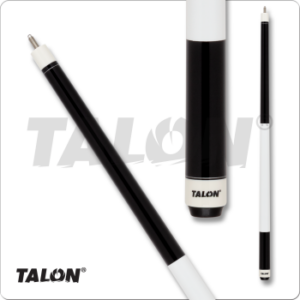
Talon TL11 Black with White Accents Starter Pool Cue
Original price was: $79.00.$71.10Current price is: $71.10. Select options This product has multiple variants. The options may be chosen on the product page -
Sale!

-
Talon TL10 Royal Blue Starter Pool Cue
Original price was: $79.00.$71.10Current price is: $71.10. Select options This product has multiple variants. The options may be chosen on the product page -
Sale!
-
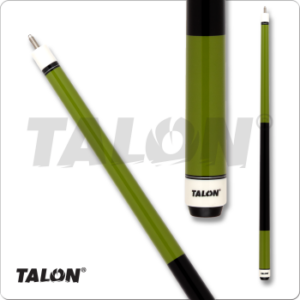
Talon TL09 Olive Starter Pool Cue
Original price was: $79.00.$71.10Current price is: $71.10. Select options This product has multiple variants. The options may be chosen on the product page -
Sale!
-
Talon TL04 Red Stain Starter Pool Cue
Original price was: $79.00.$71.10Current price is: $71.10. Select options This product has multiple variants. The options may be chosen on the product page
Where to Buy Your First Cue
Local Billiard Stores (Best Option)
Pros:
– Handle cues before buying
– Expert staff guidance
– Test shots on their tables
– Build relationship with local shop
Cons:
– Limited selection compared to online
– Sometimes higher prices
Online Retailers
Pros:
– Huge selection
– Often better prices
– Easy comparison shopping
– Convenient
Cons:
– Can’t test before buying
– Harder to assess straightness/quality
– Return hassles if there’s a problem
Recommendation: Visit local stores first to get a feel for what you like, then price compare online. If buying online, choose reputable retailers with good return policies.
Quarter King Billiards offers a curated selection of quality cues across all price ranges with expert guidance.
Top Beginner Cue Recommendations by Budget
Under $150
Look for:
– Solid maple construction
– Adjustable weight
– Irish linen wrap
– 13mm tip
– Reputable brand (Players, Viper, Rage)
$150-300
Look for:
– Low-deflection shaft option
– Premium maple
– Better joint (Radial or Uni-Loc)
– Professional tips (Tiger, Kamui soft)
– Brands: Players HXT, Viking, Lucasi
$300-500
Look for:
– True low-deflection shafts (Predator, OB)
– Exotic wood inlays
– Superior craftsmanship
– Premium joint systems
– Brands: McDermott, Predator, Lucasi Hybrid
Mistakes to Avoid
Mistake #1: Buying Based on Looks Alone
Pretty inlays don’t improve your game. Prioritize performance features (straightness, shaft quality, tip) over cosmetics.
Mistake #2: Overspending Too Soon
You don’t know your preferences yet. A $500+ cue before you’ve played 100 hours is premature.
Mistake #3: Buying Too Cheap
A $40 cue is barely better than house cues. Invest at least $100-150 for meaningful quality improvement.
Mistake #4: Ignoring Weight and Length
Choose proper specifications for your body and playing style. “It looks cool” isn’t enough.
Mistake #5: Not Planning for a Case
Always budget for a decent cue case. Protecting your investment matters.
Essential Accessories for Your First Cue
Budget an extra $50-100 for:
- Cue case ($30-80): Protects your investment
- Extra tips ($10-20): You’ll need replacements eventually
- Tip tool ($10-15): For shaping and scuffing
- Shaft cleaner ($8-15): Keeps your shaft smooth
These aren’t optional—they’re necessary for maintaining your cue’s performance.
The Bottom Line
Your first pool cue should be:
– Straight and well-constructed (non-negotiable)
– Standard specifications (19 oz, 58″, 13mm unless you have specific needs)
– Within $150-300 (sweet spot for beginners)
– From a reputable brand (Players, Viking, McDermott, Lucasi)
– Comfortable in your hands (try before you buy if possible)
Don’t overthink it. You’re not committing to this cue for life—you’re committing to consistent equipment while you learn what you like. As your game develops, you’ll understand whether you want different weight, shaft type, or features.
The most important thing is making the jump from house cues to your own cue. The specific model matters far less than the consistency and quality improvement you’ll experience.
FIND YOUR FIRST CUE
-
Sale!
-
Summit SUML20 Green Carbon Fiber Pool Cue
Original price was: $499.00.$449.10Current price is: $449.10. Select options -
Sale!
-
Summit SUML19 Red Carbon Fiber Pool Cue
Original price was: $499.00.$449.10Current price is: $449.10. Select options
Visit your local billiard store this week, handle some cues in your budget range, and make the leap. Your game will thank you.