 844 408 3056

 Hot Deal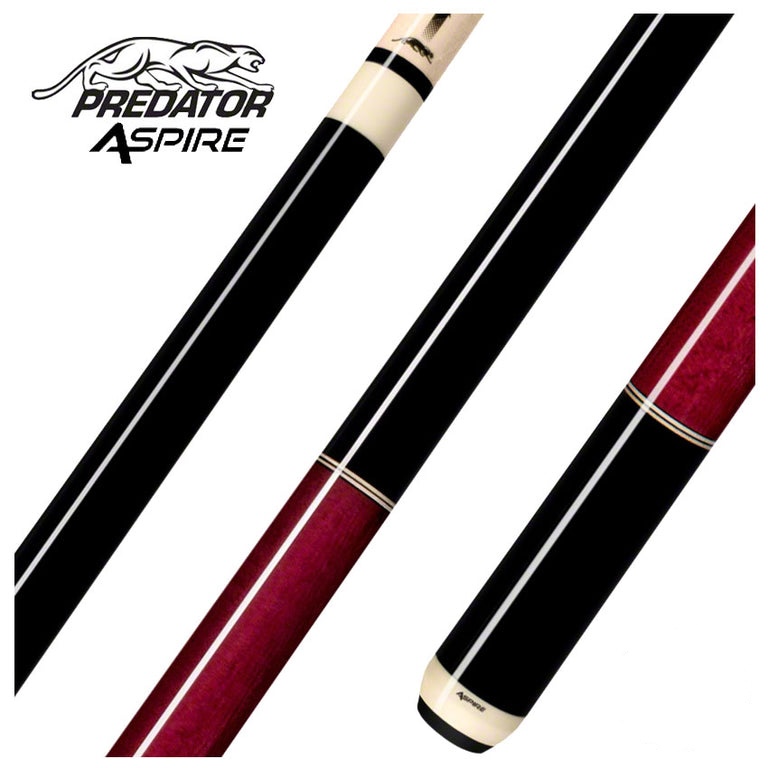
Every serious pool player eventually hits the same wall. Center-ball position play only takes you so far, and the racks that stay out of reach usually come down to one missing skill: controlled sidespin. English opens up angles that plain rolling cue balls cannot reach, but it also introduces three physical effects that punish anyone who aims the same way they always have. Squirt, swerve, and throw are the reasons your first experiments with sidespin probably ended with hangers rattling in the jaws.
The good news is that all three effects are predictable. Learn what each one does to the cue ball and the object ball, and english stops being a gamble. This guide breaks down the physics in plain language, gives you a practice progression that builds real calibration, and explains why the cue you play with changes the size of the corrections you need to make.
What Actually Happens When You Hit Off Center
Strike the cue ball anywhere but its vertical axis and you set three forces in motion at once. Understanding them separately is the only way to aim with confidence when they stack together on a real shot.
Squirt: The Cue Ball Leaves at the Wrong Angle
Squirt, also called cue ball deflection, is the immediate sideways push the cue ball takes in the opposite direction of your tip offset. Hit the ball on the right side and it launches slightly left of your aiming line. The cause is the mass of your shaft resisting sideways motion at contact. The heavier and stiffer the end of the shaft, the more the cue ball gets shoved off line.
Squirt is the largest of the three effects on most shots, and it is the one equipment can genuinely reduce. Low deflection shafts remove mass from the last several inches of the shaft so the tip gives way instead of pushing the cue ball sideways. A cue that squirts less needs smaller aiming compensations, which is the entire argument for modern low deflection technology.
Swerve: The Cue Ball Curves on the Way There
A cue ball spinning on a cloth surface does not travel dead straight. Any time your cue is elevated even slightly, sidespin makes the cue ball arc back toward the side you struck. That curve is swerve, and it partially cancels squirt over distance. Soft speeds and long distances give the ball more time to curve, while firm speeds hold the squirt line longer before the arc shows up.
This is why the same shot aimed the same way behaves differently at different speeds. A soft touch shot with right english can curve back and hit thicker than you planned, while the identical hit at speed misses thin. Until you account for swerve, your english game will feel random even when your stroke is pure.
Throw: The Object Ball Gets Dragged Off Line
The third effect happens at the moment of contact between the balls. Friction between the cue ball and object ball drags the object ball a few degrees off the pure geometric line. Sidespin changes the direction and amount of that drag. Outside english reduces throw and can make cut shots slide closer to the geometric line, while inside english increases it and sends the object ball thicker than the contact point suggests.
Throw is small, rarely more than a few degrees, but pockets are small too. On long cut shots a couple of degrees is the difference between the heart of the pocket and the near rail. Clean equipment matters here as well, since chalk marks and dirt increase ball to ball friction and make throw less consistent.
How to Aim When All Three Stack Together
You do not need physics equations at the table. You need a repeatable system for finding your personal correction, because the right compensation depends on your cue, your tip position, your speed, and your elevation. Professional players are not calculating, they are recalling thousands of reps with one cue whose behavior they trust completely.
Start with back hand english as your baseline method. Aim the shot as if you were using center ball, then keep your bridge hand planted and pivot the back of the cue to move the tip to your desired offset. If your bridge length matches your cue’s natural pivot point, the pivot automatically builds in most of the squirt correction. Shorter pivot points suit low deflection shafts, which is another reason players pair the technique with modern equipment.
From there, adjust for conditions. Firm speed and short distance mean squirt dominates, so favor your pivot correction. Soft speed and long distance mean swerve claws back much of the squirt, so aim closer to the center ball line. Humid rooms and worn cloth exaggerate swerve. New cloth and polished balls change throw. The framework stays the same, only the size of the corrections moves.
A Practice Progression That Builds Real Calibration
Random practice with english teaches you nothing because every shot changes too many variables at once. Isolate the effects one at a time and your brain maps them quickly.
Begin with the squirt line drill. Place the cue ball on the head spot and shoot straight up the table at the center diamond on the far rail with maximum right english at firm speed. Firm speed minimizes swerve, so wherever the cue ball lands relative to the diamond shows you your cue’s raw squirt. Repeat with left english. Ten reps per side gives you a number you can trust, and you only need to relearn it when you change equipment.
Next, map your swerve. Run the same drill at soft, medium, and firm speeds and watch the landing spot walk back toward center as the ball gets more time to curve. Then add a small bridge elevation, the kind you use shooting over a ball, and watch the curve grow. Most players are shocked by how much their normal stance elevates the cue without them noticing.
Finally, feel throw directly. Freeze an object ball on the foot spot and shoot a half ball cut into the corner, first with outside english, then inside, at the same speed. The object ball will not enter the pocket at the same point. Once you have seen the difference with your own eyes, you will stop blaming your stroke for misses that were always about friction.
Close every session with the same three shot audit: one firm squirt check, one soft swerve check, one cut with inside english. Five minutes keeps your calibration current as cloth and humidity change through the season.
Why Your Cue Decides How Hard This Is
Nothing about english requires expensive equipment, but the size of the corrections you must learn is set by your shaft. A traditional full mass maple shaft can squirt more than twice as much as a modern low deflection design. Every degree of extra squirt is a degree you must compensate on every single shot with sidespin, at every speed, at every distance. Players who learn on high squirt cues and switch to low deflection report that the game suddenly feels honest, because the cue ball finally goes where the tip line points.
Predator built its reputation on exactly this problem, and the current lineup at Quarter King’s Predator cue collection covers every budget. The Predator Aspire 1-1 is the entry point, a genuine Predator playing cue with low deflection shaft technology for around 330 dollars. In the flagship tier, the Ikon4 3 and the Throne3 3 pair tournament grade construction with Predator’s most advanced shaft platforms, the same designs you see on TV in pro events. If you already love your butt, a shaft upgrade from the carbon fiber shaft collection gets you most of the benefit, and our full pool cue lineup has low deflection options from a dozen brands.
Featured Predator Products
Putting It All Together at the Table
Sidespin mastery is not a trick, it is a calibration project. Squirt pushes the cue ball off line immediately, swerve curves it back over distance, and throw nudges the object ball at contact. Aim with a system instead of a guess, run the three drills until the corrections become automatic, and retest whenever conditions or equipment change.
Be patient with the timeline. Most players need a few weeks of short daily sessions before english stops feeling like a coin flip, and the improvement shows up in position play before it shows up in potting. The moment you can hold the cue ball on the correct side of the next ball with inside english at soft speed, whole rack patterns simplify, and the game you watched the pros play starts looking like the game you play.
Your equipment should make that journey shorter, not longer. A low deflection cue shrinks every correction you have to learn and repays you on every shot for the rest of your playing life.

About Corey Bernstein
Corey Bernstein is a competitive pool player, billiards equipment specialist, and co-owner of Quarter King Billiards in Wilmington, North Carolina. With over a decade of experience in the sport, Corey has competed in regional APA and BCA sanctioned tournaments and maintains an intimate knowledge of cue construction, shaft technology, and table mechanics. As a certified dealer for brands including Predator, McDermott, Jacoby, Viking, Lucasi, Meucci, Joss, and Cuetec, Corey personally tests and evaluates every cue that comes through the shop. His hands-on approach to the business means he has racked thousands of hours behind the table — breaking in shafts, comparing tip compounds, and dialing in the nuances that separate a good cue from a great one. When he is not behind the counter or on the table, Corey is researching the latest advances in low-deflection technology, carbon fiber shaft construction, and cue ball physics. His articles on Quarter King Billiards combine real-world playing experience with deep product knowledge to help players at every level find the right equipment for their game.