 844 408 3056

 Hot Deal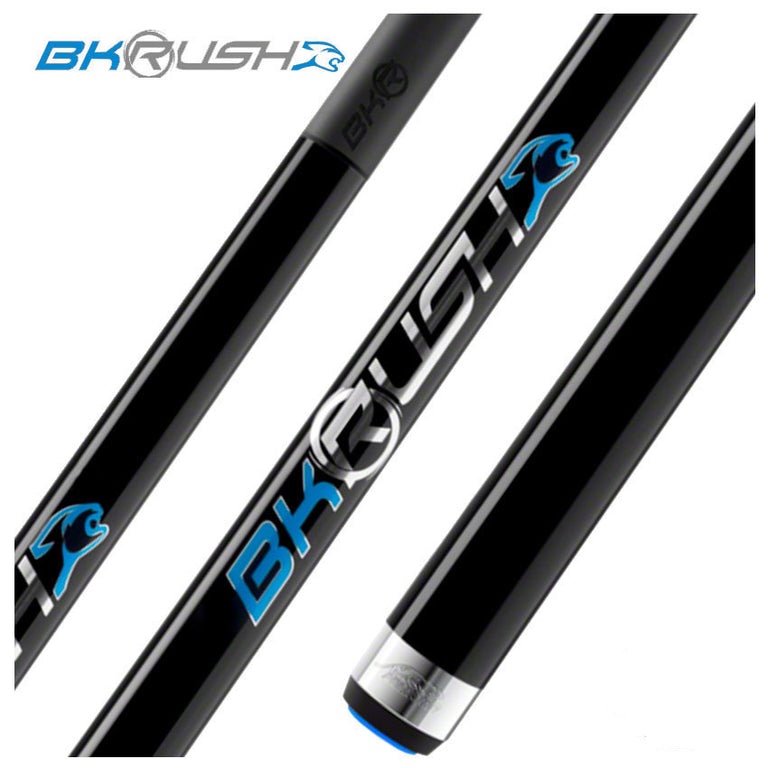
The break shot is the single most violent thing your equipment ever does on a pool table. A full power break on a tight rack of nine ball can deliver fifteen miles per hour of cue ball energy in roughly a hundredth of a second of contact. That kind of impact does ugly things to a player cue. Soft leather tips compress flat. Ferrules crack from repeated shock load. Joints loosen. Wood shafts develop a permanent hop in the spine. The fix for all of this is also the cheapest performance upgrade most league players never make. Buy a dedicated break cue and let it absorb the punishment your player cue should not be taking.
What Actually Makes a Break Cue a Break Cue
A break cue is built differently from a playing cue in three specific ways. First, the tip. Break tips are hard, often phenolic or layered laminate or a high density compressed leather. Phenolic tips transfer almost all of the strike energy into the cue ball because they barely compress on impact. Standard playing tips, even hard ones, compress noticeably and rob the break of speed. Second, the ferrule. Break cue ferrules are built to handle the impact, often using harder materials or thicker construction that would feel terrible on a normal shot. Third, the build itself. Break cues frequently sit between nineteen and twenty one ounces and use stiffer wood blends and shorter taper transitions to keep the cue from flexing during the break stroke. Players who chase higher break speeds sometimes go even heavier or even lighter depending on their stroke mechanics, but most production break cues sit in the upper range of normal cue weight.
That combination is what lets a real break cue do something a playing cue cannot. It transmits the maximum amount of your stroke energy into the rack while protecting your equipment from the cost of the break. A phenolic tip break cue will outlast a playing cue used as a breaker by a factor of five or more. That alone pays for the cue.
Why You Should Never Break With Your Player
Players who refuse to buy a separate break cue almost always tell the same story. They love the feel of their playing cue. Switching cues mid match disrupts their rhythm. They are happy to replace tips when they wear out. None of those arguments survive a quick look at what is actually being lost. The tip on a playing cue, even a quality layered tip, is built for delicate cue ball control. Smashing it into the head ball at full speed mushrooms the leather, kills the consistency on follow shots, and forces you to reshape the tip after every break shot or live with the compromised feel.
The bigger problem is the ferrule and the joint. Repeated high speed impact transmits shock all the way down the cue and into the joint pins. Players who break exclusively with their playing cue often complain that their joint feels loose after a few months. There is a reason. The wear is real. A dedicated break cue keeps that wear off the cue you actually paid serious money for. The break cue selection at QKB covers every price point from a first break cue under two hundred dollars up to the tour grade builds that touring pros actually use in the room.
Predator BK Rush and BK4: The Tour Grade Standard
If you watch professional nine ball or ten ball events in 2026, you are watching break cues that have one common feature. They are designed for it. The Predator BK series has been the dominant break cue family on the world tour for years, and the latest generation continues that. The Predator Black BK Rush No Wrap at QKB is the cue most touring pros reach for when they want maximum power with maximum control. The BK Rush uses a Predator REVO carbon fiber break shaft, which delivers the same low deflection benefit on the break that the regular REVO delivers on playing strokes. That matters more than most amateurs realize. A break shaft that throws the cue ball off line creates scratch breaks. A break shaft that hits where you aim produces controllable cue ball action after the break, which sets up the run.
One price tier down sits the Predator BK4 Sport Wrap, which is still the same family DNA in a more accessible build. The BK4 is one of the most popular league level break cues at QKB for a reason. It hits hard, it is consistent, and it survives years of weekly league play. The matching BK4 No Wrap trims the price slightly for players who prefer the bare forearm grip.
McDermott, Cuetec, and Jacoby for the Brand Loyalist
Players who already play a specific brand often want their break cue to match the family. That is not a marketing argument, it is a practical one. Matching joints across your playing cue and break cue mean shared shafts and shared joint protectors. The break cue marketplace has grown into that. The McDermott Stinger NG08 Jump Break Cue serves McDermott loyalists who want both functions in one cue. The Stinger handles jump shots cleanly with a quick release joint, then converts to a full break stick with the long butt attached. For Cuetec players, the Cuetec AVID Surge CT338NW brings the AVID series production quality into the break cue space at a real player friendly price. Jacoby owners have the Jacoby JCBBKH Break Cue, which uses a phenolic tip and a build engineered specifically for the break stroke that QKB has stocked since the Jacoby relaunch.
Picking a Break Cue Weight That Matches Your Stroke
The weight question on break cues is more nuanced than the playing cue version. The old advice was always to break with a heavier cue. Modern thinking has corrected that. The break speed equation cares about cue speed and cue mass together, and most players actually generate more cue ball speed with a slightly lighter cue because they can swing it faster without losing control. Twenty ounces is still the standard for production break cues, but eighteen and a half to nineteen ounce break cues have become popular among players who break with a snappy wrist driven stroke.
Test your own break with a friend who has a couple different break cues in their bag. If you naturally swing fast, a lighter break cue is probably your friend. If your stroke is slower and more deliberate, the standard twenty ounce build will get you the speed because your stroke needs more mass to deliver real cue ball energy. Either way, the gain from a real break cue over breaking with your player cue is large. Players who switch typically pick up two to three miles per hour of cue ball speed on day one without changing anything else in their break.
Break Cue Add Ons That Make a Real Difference
Two upgrades pair naturally with a new break cue. The first is a quality jump break combo if you want one cue that does both. Jump break cues use a removable middle section that lets you break with the full length, then unscrew the joint to leave you with a short butt and a jump shaft for legal jump shots. The Stinger and the Elite jump break family at QKB are both proven options. The second add on is a hard sided case slot for your break cue. Carrying a break cue loose in your case lets it bang into your playing cue with every step, which defeats half the protection benefit. A 1×2 or 2×4 case from the QKB pool cue case category with a separate slot for your breaker keeps them apart and quiet on the walk to your table.
The Real Reason League Players Hold On to Their Old Setup
The most common reason players never buy a break cue is psychology. They believe their break is what is holding them back, and they think a new cue is going to magically fix it. When that fix is not instant, they assume the upgrade was wasted money. The truth is that a break cue does not change your mechanics. It rewards good ones and protects you from the cost of bad ones. A player who breaks with a wild, uncontrolled stroke will get better results faster from twenty minutes of break practice than from a new cue. A player who breaks well already, but is grinding down their playing cue every weekend, gets immediate value from the upgrade in protected equipment and predictable cue ball action.
Start with the right tool for your level and your budget. The break cue lineup is one of the most underused categories on the site. Pair the right cue with a real practice routine and a basic understanding of your own stroke, and the break stops being the part of pool that hurts your equipment and starts being the part of pool that wins you racks.

About Corey Bernstein
Corey Bernstein is a competitive pool player, billiards equipment specialist, and co-owner of Quarter King Billiards in Wilmington, North Carolina. With over a decade of experience in the sport, Corey has competed in regional APA and BCA sanctioned tournaments and maintains an intimate knowledge of cue construction, shaft technology, and table mechanics. As a certified dealer for brands including Predator, McDermott, Jacoby, Viking, Lucasi, Meucci, Joss, and Cuetec, Corey personally tests and evaluates every cue that comes through the shop. His hands-on approach to the business means he has racked thousands of hours behind the table — breaking in shafts, comparing tip compounds, and dialing in the nuances that separate a good cue from a great one. When he is not behind the counter or on the table, Corey is researching the latest advances in low-deflection technology, carbon fiber shaft construction, and cue ball physics. His articles on Quarter King Billiards combine real-world playing experience with deep product knowledge to help players at every level find the right equipment for their game.