 844 408 3056

 Hot Deal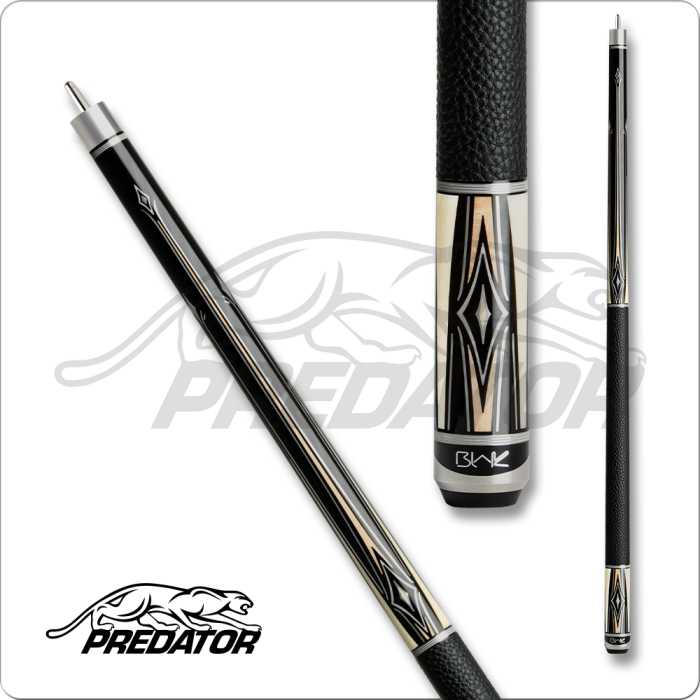
Predator builds more distinct cue families than most pool players realize, and the price gap between them is wide enough that knowing what separates each line is the difference between buying a tool you grow into and buying a status symbol you grow past. The 2026 Predator catalog still anchors on five core series for the player who wants a Predator butt paired with their REVO, Z-3, or 314-3 shaft: the entry-priced Aspire line, the workhorse Ikon, the heritage P3, the pattern-grade 9K, and the high-line BLAK. Each of those lines targets a real-world buyer, and the differences are not just paint.
The shaft conversation drives a lot of this. Predator built its name on low deflection technology, and across the cue lineup almost every butt is offered as either an Uni-Loc joint set up for an REVO carbon shaft or a Radial joint that fits traditional 314, Z, and 8K2 maple shafts. That choice matters more than which series you buy. If you already own a REVO and want a butt to mate with it, the joint type on the new cue dictates compatibility, not the family name on the badge.
Aspire: the Predator pattern at a player price
The Aspire series exists because the rest of the Predator lineup starts well above what a new league player wants to spend. Aspire is mid three figures, ships with a Radial pin, and is designed to take a 314-3, Z-3, or 8K2 shaft on day one. It is the line that lets a player commit to the Predator ecosystem without writing a four-figure check.
Pattern work on the Aspire is real inlay rather than decal, which is unusual at this price tier. The Predator Aspire 1-10 is the visual flagship of the line, and the cleaner Aspire 1-7 is the volume seller. Both wear the same butt construction and Radial joint, so the choice is taste, not performance.
Aspire pairs well with a Z-3 if you want a thinner tip diameter and a more pronounced low deflection feel, or with a 314-3 if you want a more familiar hit closer to a traditional maple shaft. The pairing is the actual upgrade path. Most Aspire buyers spend the next year deciding whether they prefer a 12.4mm tip or a 11.75mm tip, and the answer often pulls them toward whichever shaft their league or local room rewards.
Ikon: the workhorse with classic styling
One step up from Aspire sits the Ikon series, currently in its Ikon4 generation. Ikon is the cue Predator builds for the player who wants a serious tournament butt without paying for high-end exotic woods. Construction is the standard Predator stainless joint, leather wrap on most, and a more involved point pattern than what Aspire offers.
The Ikon4 3 is the practical buy in this family. It is the price-point that league players who already own a REVO or 314 most often pick when they replace a starter butt. The look is conservative, the balance is neutral, and the cue tracks like a Predator should once you put your preferred shaft on it.
If you compare Ikon to a comparable Cuetec Avid or a McDermott G-Core butt at the same price, the differentiator is the Predator joint and the shaft ecosystem that joint unlocks. Buying an Ikon is buying into the REVO and Z-3 family of upgrades you will probably make over the next five years.
P3: the playable luxury cue
The P3 series is where Predator pricing starts to feel premium. P3 cues run around the four-digit mark and pair with either Radial maple shafts or, in the REVO-fitted variants, the Uni-Loc joint for carbon. The P3 is the line you see on the rails at higher-stakes tournaments more often than any other Predator family.
Two things separate P3 from Ikon. The first is the construction and weight system. P3 cues use Predator’s removable weight bolt, so a player can adjust between roughly 18.6 and 19.5 ounces in studio without sending the cue back to be re-cored. The second is the build quality on the forearm, which is tighter and uses better stock. The Predator P3 Black No Wrap in particular has become a default upgrade for players moving up from a Cuetec Cynergy or a McDermott G-Core into a maple-shaft tournament cue.
P3 is the line we recommend for a player who knows they want a Predator for the next decade, knows they want a clean conservative look, and does not need to chase the high-end exotic wood and metal work that lives in 9K and BLAK.
9K: the high-line maple cue
The 9K series is where Predator answers Mezz, Schon, and high-end Pechauer on craftsmanship. 9K cues use a more exotic forearm stock, more involved inlay, and a refined butt cap. The 9K family is positioned above P3 and below BLAK, and most 9K butts ship as four-point inlay with the 9K signature joint collar.
The cleaner builds in the 9K-1 and 9K-3 variants are popular with players who want a maple butt that will hold its resale value. 9K cues are the line we point a player toward when they tell us they want a Predator but they also want something that does not look like every other Predator on the rack at their local room. The visual difference between a 9K and a P3 is obvious from across the table.
On the performance side, 9K is not meaningfully different from P3 once you bolt the same REVO or 314-3 shaft onto it. The hit comes from the shaft and the tip, and you are buying the 9K butt for the craftsmanship and the resale, not for a measurable change in playability.
BLAK: the flagship
BLAK is the current Predator flagship. The BLAK series sits well above 9K on price and uses high-grade wood selection, more involved metal inlay, and a black-finished theme that is consistent across the line. The PREBLK54 is the variant most often quoted at trade shows, and the PREBLK52 is the cleaner-pointed sibling that some players prefer for tournament use.
BLAK is a status purchase. The cue plays like a Predator with a REVO or Z-3 in front of it. What you are paying for is the wood, the metal work, and the visual identity. We have customers who buy BLAK because it is the cue they will own for the rest of their playing life, and we have customers who buy P3 because they prefer to spend the BLAK difference on a second REVO and a custom Predator case from our cases category.
Joint type matters more than series
The choice that affects play more than any of the series differences is the joint. A Predator butt with a Uni-Loc collar fits REVO carbon shafts directly. A Predator butt with a Radial joint fits 314-3, Z-3, 8K2, and other Predator maple shafts. Some series, including P3 and BLAK, offer the same model in both joint styles. If you already own a REVO, buy a Uni-Loc butt. If you already own a 314-3, buy a Radial butt. Mixing the two with a converter ring is an option but not a long-term plan.
If you are still picking your first Predator shaft, the volume choice in 2026 is the REVO Z-3 carbon at 11.75mm, and the maple choice that holds the most resale is the 314-3 at 12.4mm. Both work across the Aspire, Ikon, P3, 9K, and BLAK lines as long as the joint matches.
Which Predator series fits which player
A league player coming off a house cue or a starter Action butt who wants a real Predator tip-to-bumper for under five hundred dollars buys an Aspire and a 314-3 or Z-3 shaft. That player upgrades the shaft to a REVO at year two if they like the low deflection feel.
A serious tournament player who already owns a REVO and wants a Predator butt that will track and feel right for a decade buys an Ikon4 or a P3. Ikon if they like classic styling, P3 if they want the removable weight system and a tighter build.
A player who wants the high-line look and plans to keep the cue for life buys 9K or BLAK. The shaft and tip do the work of playing the cue. The butt does the work of being beautiful, and both lines are built to hold that value.
You can see the full Predator family in our Predator cues category, the broader carbon-shaft world inside our pool cues collection, and the case options that fit each tier in our pool cue cases section. If you are not sure which series to start with, the safest first move in 2026 is an Aspire butt plus a REVO Z-3 shaft. You can keep the shaft when you upgrade the butt later, and the upgrade path stays clean for the rest of your playing life.
Ready to shop? Buy Predator pool cues online at Quarter King Billiards — browse the full in-stock selection with free shipping on U.S. orders over $98.

About Corey Bernstein
Corey Bernstein is a competitive pool player, billiards equipment specialist, and co-owner of Quarter King Billiards in Wilmington, North Carolina. With over a decade of experience in the sport, Corey has competed in regional APA and BCA sanctioned tournaments and maintains an intimate knowledge of cue construction, shaft technology, and table mechanics. As a certified dealer for brands including Predator, McDermott, Jacoby, Viking, Lucasi, Meucci, Joss, and Cuetec, Corey personally tests and evaluates every cue that comes through the shop. His hands-on approach to the business means he has racked thousands of hours behind the table — breaking in shafts, comparing tip compounds, and dialing in the nuances that separate a good cue from a great one. When he is not behind the counter or on the table, Corey is researching the latest advances in low-deflection technology, carbon fiber shaft construction, and cue ball physics. His articles on Quarter King Billiards combine real-world playing experience with deep product knowledge to help players at every level find the right equipment for their game.