 844 408 3056

 Hot Deal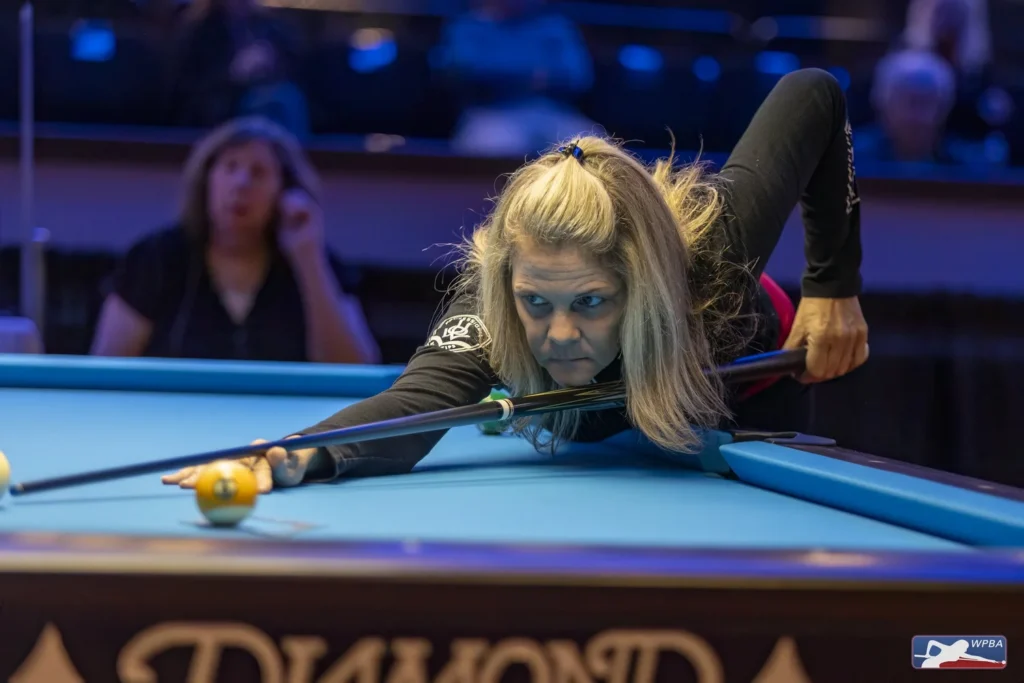
At the 2026 Raxx Mezz Olhausen CPBA Invitational, the headline result belonged to Margarita Fefilova Styer, who closed the week with a hill hill win over Rubilen Amit. But one of the most useful tournament lessons from the event belongs to Amit too. After taking an 8 to 1 loss in the hot seat match, she still found a way to battle back through the one loss side and force a final that came down to the last rack.
That kind of turnaround matters because most competitive players do not lose events when they miss one ball. They lose them when one rough set bleeds into the next one. Amit’s bounce-back in New York is a strong reminder that tournament resilience is not abstract. It looks like emotional reset, cleaner decision making, and a willingness to keep solving racks after momentum turns against you.
Bad sets happen, the reset is the skill
Every league player and weekend tournament regular knows the feeling. One set gets away from you fast. The scoreline looks ugly. The other player controls the table, the rolls go their way, and suddenly you are carrying a result that feels heavier than it should. What separates strong competitors from frustrated ones is what happens next.
Amit’s path back into the final is a useful model. A lopsided loss can tempt players to chase something dramatic in the next match. They hit harder, force shape, and start trying to make the set disappear with one big run. The better answer is almost always the opposite. Slow the emotional pace down, play the table in front of you, and rebuild your confidence through small correct decisions.
How to reset after a rough set
- Shorten your focus window. Do not replay the last match rack by rack. Think one break, one safety, one pattern at a time.
- Choose cleaner cue ball routes. After a bad set, the smart play is usually the route with more margin, not the flashier route.
- Win the first simple exchanges. A good push, a smart containing safety, or a routine starter ball can calm the whole match down.
- Let your speed settle first. Players coming off a loss often underhit or overhit because they are still carrying tension.
If you are building a more reliable tournament game, it helps to have equipment that keeps the stroke predictable under pressure. A comfortable cue, dependable chalk, and a bridge setup that feels familiar all reduce the number of variables you are fighting. Quarter King Billiards has useful options if you are shopping pool cues, chalk, or billiard gloves that make match play feel steadier.
Why bounce-back players stay dangerous
The scary player in a bracket is not always the one who never stumbles. Often it is the player who can absorb a bad match without changing identity. They do not abandon their pace. They do not start proving points with low percentage shots. They simply get back to the habits that put them in position to win in the first place.
That is why Amit’s run is worth studying. Once a player shows they can come through the one loss side after a heavy defeat, everyone in the room knows they are still live. That changes the pressure on the field too. Opponents understand they are facing someone who already survived the emotional low point of the tournament.
What league players can steal from this moment
You do not need to be playing on a televised table to use this lesson. If you lose a race badly in league, the next set does not need revenge energy. It needs structure. Get your pre shot routine back. Confirm your tip position. Play one extra half second slower on key shots. Trust stop shots, natural angles, and simple patterns before you ask your cue ball to do something fancy.
That approach also helps when your match equipment starts feeling uncertain. If your tip is glazed, your shaft is sticky, or your glove hand is inconsistent, tension multiplies fast. Keeping your setup simple and dependable can be as important as any mental note. If your gear needs attention, browsing a few reliable cue tip or pool cue accessory options before your next event can save frustration later.
The real takeaway from New York
Yes, the official result belongs to Fefilova Styer, and deservedly so. But one of the deeper competitive lessons from the event is that a bad set does not have to become a bad tournament. Rubilen Amit’s recovery showed how dangerous a player can remain when they reset properly, stay professional, and keep making disciplined decisions after a bruising loss.
For improving players, that is the part worth carrying forward. You will not control every roll, every draw, or every short race. You can control how quickly you get emotionally back to neutral. In real competition, that is often the difference between going two and out and playing your way back into the building on Sunday.
FAQ
How do I reset after losing a pool set badly?
Focus on the next match only, slow your tempo slightly, and choose higher margin cue ball routes for the first few racks.
Should I change my style after a lopsided loss?
Usually no. Most players recover better by returning to their normal pace and fundamentals instead of trying to force aggressive hero shots.
What gear helps under pressure?
A cue you trust, chalk that gives consistent grip, and a glove or shaft condition that keeps the stroke smooth can all make pressure play more stable.

About Corey Bernstein
Corey Bernstein is a competitive pool player, billiards equipment specialist, and co-owner of Quarter King Billiards in Wilmington, North Carolina. With over a decade of experience in the sport, Corey has competed in regional APA and BCA sanctioned tournaments and maintains an intimate knowledge of cue construction, shaft technology, and table mechanics. As a certified dealer for brands including Predator, McDermott, Jacoby, Viking, Lucasi, Meucci, Joss, and Cuetec, Corey personally tests and evaluates every cue that comes through the shop. His hands-on approach to the business means he has racked thousands of hours behind the table — breaking in shafts, comparing tip compounds, and dialing in the nuances that separate a good cue from a great one. When he is not behind the counter or on the table, Corey is researching the latest advances in low-deflection technology, carbon fiber shaft construction, and cue ball physics. His articles on Quarter King Billiards combine real-world playing experience with deep product knowledge to help players at every level find the right equipment for their game.