 844 408 3056

 Hot Deal
Carbon fiber shafts moved from a curiosity to the dominant trend on the pro tour in less than a decade, and the 2026 lineup at Quarter King Billiards reflects how serious the category has become for league players, weekend tournament regulars, and serious home players. If you have ever wondered why so many top finishers at WPBA stops, US Open events, and Predator Pro Billiard Series matches reach for low-deflection carbon, the answer comes down to three measurable advantages: minimal cue ball squirt, vibration dampening that pushes feel further forward on the cue, and remarkable consistency from one shaft to the next thanks to engineered construction rather than wood lottery.
This buyer’s guide walks through the four carbon shaft families that make up the bulk of our most-asked-about inventory, what each one does well, and which player profile each fits. None of these shafts are “best” in isolation. They each solve a different problem.
What Makes a Carbon Shaft Different From Maple
-
-
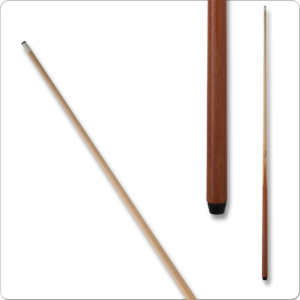
Yukon YUK01 One-Piece Cue
$42.40 Select options This product has multiple variants. The options may be chosen on the product page -
-
-
Sale!
-
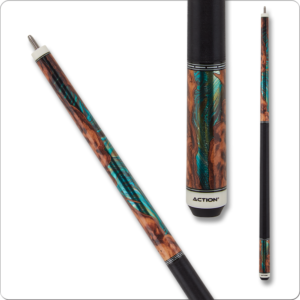
Action ACT160 Fractal Cue
Original price was: $259.00.$233.10Current price is: $233.10. Select options This product has multiple variants. The options may be chosen on the product page -
Sale!
-
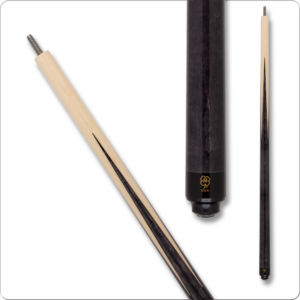
McDermott TITANIUM Sneaky Pete Pool Cue
Original price was: $520.00.$468.00Current price is: $468.00. Select options
A traditional maple shaft hits with a softer, more flexible response because the grain runs through the entire taper. That feel is part of why classic playing cues from McDermott, Joss, and Pechauer are still loved by feel-first players. The trade-off is squirt. Maple deflects the cue ball more on off-center hits, especially with extreme English. Carbon fiber shafts are constructed in layers around a hollow core, then coated and finished. The result is a stiffer, lower-deflection profile that requires less aim adjustment when you put English on the ball.
Carbon also weighs less in the front end of the shaft, which shifts the cue’s balance point slightly back toward the butt. Most players adapt within a few practice sessions, but if you are switching from a heavy front-loaded maple shaft, expect a real transition period.
Stiffness, Tip Diameter, and Why It Matters
Carbon shafts in 2026 generally come in three diameter buckets: 11.7 to 11.8 mm for finesse-focused 9-ball and 10-ball players, 12.3 to 12.5 mm for general all-around play, and 12.75 mm and up for break work or for players coming from thicker maple tapers who do not want to retrain their bridge. Smaller does not equal better. A 12.5 mm diameter still hits well below the deflection of a typical maple shaft, and the larger contact area is more forgiving on uneven cloth.
The Cuetec Cynergy Family: The Pro-Tour Workhorse
The Cuetec CTCF Cynergy Cue Shaft 12.5mm is one of the most popular individual carbon shafts we sell, and for good reason. It is medium-stiff in flex profile, which means it hits with a bit more “give” than the ultra-rigid carbon shafts on the market, and that translates into a more familiar feel for players moving over from a higher-end maple shaft like a Pechauer P-series or a McDermott i-shaft. The Cynergy line uses Cuetec’s proprietary ultra low-deflection profile, paired with a 5/16 x 18 joint that fits a wide range of cue butts.
For league night, this is a fit-and-forget shaft. You can apply outside English on long position routes without the heavy correction required on maple, and the dampening reduces the vibration spike on hard center-ball strokes. If you tend to break with your playing cue, the diameter holds up to harder strokes than smaller-tipped carbon options. Cuetec also keeps replacement ferrules and tips stocked on the channel, so service after a couple seasons of league wear is not a problem.
Predator REVO: The Reference Standard
The Predator REVO Carbon Fiber Shaft – Radial is the shaft that built the modern carbon market. The 12.4 mm REVO is what most pros at the top of the WPBA and Predator Pro Billiard Series rankings actually play with. It is stiffer than the Cynergy, has a thinner front end, and produces some of the lowest deflection numbers of any production shaft. Players who already aim with carbon-fiber math built into their stroke can put more spin on the ball with less squirt correction than nearly any alternative on the market.
The trade-off is honesty: a stiffer shaft is less forgiving of a sloppy stroke. If your cue ball control on long shots is still inconsistent, the REVO will tell you about it. Players who have plateaued at intermediate level often see real improvement after committing to one for a full season because the feedback loop is so clear. Pair the REVO with a Predator BLAK series butt or a custom playing butt with a matching radial joint and you have an end-to-end pro setup.
Mezz Ignight: Asian Tour Influence Comes to the Stateside Market
The Mezz ZZIG Ignight Carbon Shaft is what you reach for if you grew up watching Asian heyball stars and admired the kind of touch shots that come from a slightly different feel philosophy. Mezz tunes the Ignight for a balanced, slightly softer hit profile compared to the REVO, with a specific focus on consistent deflection across the entire taper rather than just at the tip. The hit feels alive without losing the squirt advantage of carbon construction.
The Ignight is also one of the better carbon shafts for players who play a lot of safety battles and need to feel the cue ball at slow speeds. The dampening profile gives you cleaner audio and tactile feedback at half-speed shots, which matters in defensive matches where pace control wins games. We see the Ignight in cases of players who lean toward 10-ball and 14.1 over the high-pace 9-ball game.
Jacoby Black V4: American-Made Mid-Stiff Option
The Jacoby BLACK V4 12.3mm is the value-conscious choice for players who want a domestic option from a brand with a long pedigree in custom cuemaking. Jacoby’s BLACK series uses a hybrid construction approach with carbon over a wood core, which gives it a hit profile somewhere between full-carbon and traditional maple. For players who like the low-deflection benefit but cannot get comfortable with the harder feel of a full-carbon REVO or Cynergy, the V4 is often the cue that makes them stop chasing equipment and start practicing.
The 12.3 mm tip diameter is right in the sweet spot for most all-around play. Jacoby also makes the same shaft in 11.8 mm for finesse-leaning players, so you can step up or down without changing the rest of your cue setup.
How to Decide Between Them
If your highest priority is matching what the touring pros use, start with the Predator REVO. If you want carbon-fiber benefits with a more forgiving feel, the Cuetec Cynergy or Jacoby Black V4 will get you there for less money. If you play a lot of slow-speed safety pool or split your time across game formats, the Mezz Ignight is the underrated pick that often surprises players in head-to-head testing. We have full inventory of all four families, plus Lucasi, Spartan, and Pechauer carbon options. Browse the complete carbon fiber shaft category to compare specs, or visit the broader pool cues collection to spec a full carbon-ready cue.
One Piece of Advice Before You Buy
Carbon shafts are not magic. They make small improvements measurable, but they do not fix stroke flaws. Before dropping four-hundred-plus on a top-tier shaft, hit a hundred long-rail draw shots with whatever you currently play. If you cannot hit center cue ball under your bridge consistently, no carbon shaft will save your run-out percentage. Once your stroke is solid, though, a properly chosen carbon shaft can shave aim adjustments out of your game and let you commit to spin without flinching, and that is where the real scoring percentage gains show up over a season.
If you want help matching a carbon shaft to your existing cue, joint type, or playing style, our team can pull options that physically fit your butt and ship the same week. Reach out through the contact page and we will walk you through it.

About Corey Bernstein
Corey Bernstein is a competitive pool player, billiards equipment specialist, and co-owner of Quarter King Billiards in Wilmington, North Carolina. With over a decade of experience in the sport, Corey has competed in regional APA and BCA sanctioned tournaments and maintains an intimate knowledge of cue construction, shaft technology, and table mechanics. As a certified dealer for brands including Predator, McDermott, Jacoby, Viking, Lucasi, Meucci, Joss, and Cuetec, Corey personally tests and evaluates every cue that comes through the shop. His hands-on approach to the business means he has racked thousands of hours behind the table — breaking in shafts, comparing tip compounds, and dialing in the nuances that separate a good cue from a great one. When he is not behind the counter or on the table, Corey is researching the latest advances in low-deflection technology, carbon fiber shaft construction, and cue ball physics. His articles on Quarter King Billiards combine real-world playing experience with deep product knowledge to help players at every level find the right equipment for their game.