 844 408 3056

 Hot Deal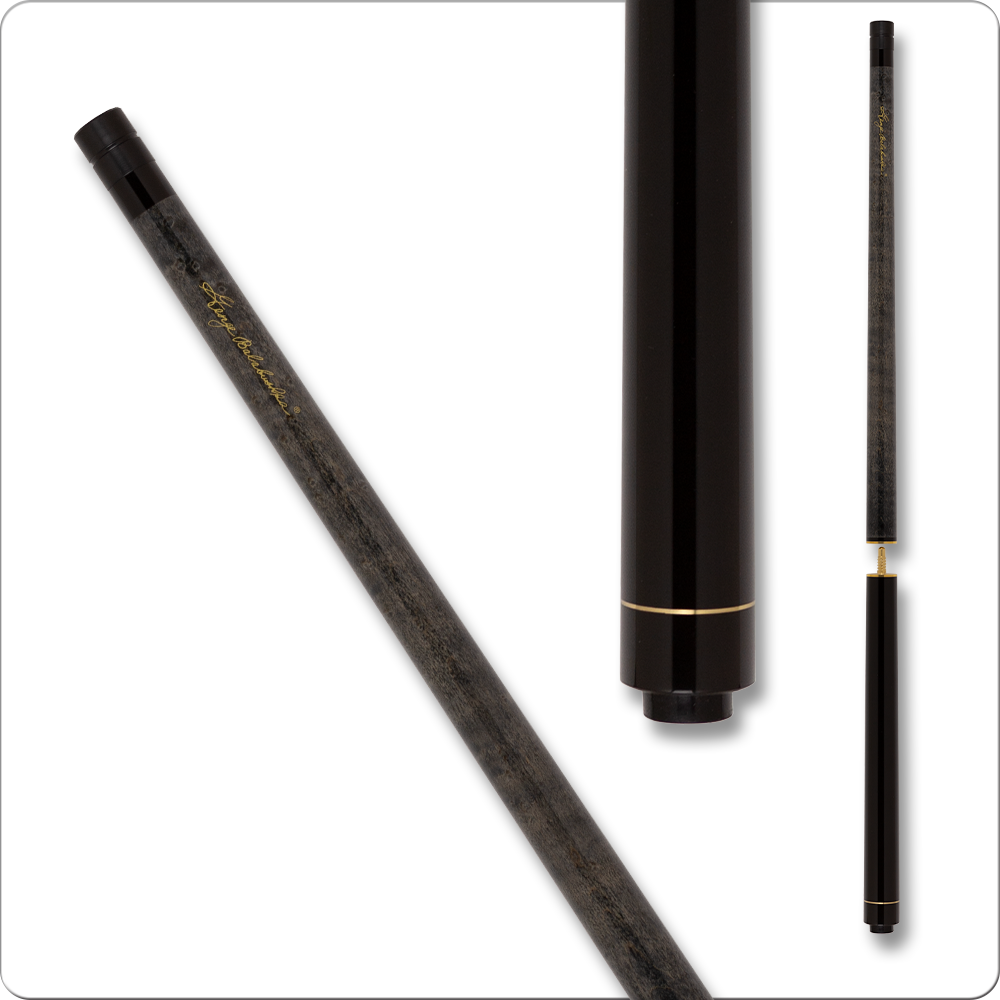
If you have spent more than five minutes around a pool hall, you have heard the name Balabushka. George Balabushka is the man who almost single-handedly created the modern American custom cue, and the cues that carry his name today still trade on that legacy. Pick one up, and you can feel the history in the joint, the wrap, and the balance point. The 2026 Balabushka lineup is small, focused, and unapologetically traditional, which is exactly why serious players keep coming back to it.
You can browse the full Balabushka collection at Quarter King’s Balabushka Pool Cues page, or step back and compare it against the broader Pool Cues category if you are still cross-shopping brands. This guide walks through what makes a Balabushka tick, and three specific cues from the GB-series and Duo break-jump line that deserve a spot on your short list this year.
What makes Balabushka different
George Balabushka started building cues in Brooklyn in the 1950s, and within a decade his work had become the unofficial standard for high-level pool. He was the first builder to really treat the pool cue as a precision instrument, blending Brunswick-style construction with custom inlay work and tighter tolerances than anything else on the market. When the movie The Color of Money put Paul Newman on screen with a Balabushka in 1986, the legend went mainstream. Since then, the brand has been carried forward by builders licensed to keep that aesthetic alive while updating the construction underneath.
What you actually buy today is a cue built around traditional sneaky-pete and full-spliced silhouettes, with hand-cut points, thin-wrap leather or Irish linen, and a stainless steel piloted joint. The hit is firm and direct, the kind of feedback older players grew up on and younger players are rediscovering as they move away from low-deflection carbon. Balabushka also leans heavily into the GB numbering convention started decades ago, so a GB05 today is meant to channel the look of the same model from the original Brooklyn shop.
Most of the line lands between $850 and $1,600, with break-jump options starting under $600. That puts Balabushka squarely in the serious-amateur and league-pro bracket. You are not paying for marketing, you are paying for a cue with a real bloodline and the build quality to back it up.
Three Balabushka cues worth your attention in 2026
Balabushka Duo GBJBKN Break Jump (No Wrap) – $585
Most cuemakers treat break-jump cues as an afterthought. Balabushka treats this one like a real piece of the lineup. The Balabushka Duo GBJBKN Break Jump is a two-in-one design with a quick-release joint that lets you pull the upper section off and play it as a dedicated jump cue. The no-wrap forearm gives you a clean, slick grip surface that some break-cue players strongly prefer for that explosive follow-through.
At $585, it sits at the entry point of the Balabushka catalog, but it does not feel entry-level. The phenolic tip is engineered for power transfer on the break, the balance is forward enough to drive the cue ball without forcing your stroke, and the build holds up to the kind of abuse a hard breaker puts on equipment. If you have been splitting one playing cue across breaking, jumping, and shooting and your scores are suffering for it, this is the cue that solves three problems at once.
Balabushka GB26 Cue – $852.39
The Balabushka GB26 is the cue I would point a serious league player toward as their first real Balabushka. It is priced at $852.39, which is the lowest entry into the proper GB-series playing cues, and the build follows the classic Balabushka template: stained maple forearm with hand-cut points, Irish linen wrap, and a tight piloted stainless joint that delivers that firm, traditional hit.
What makes the GB26 work as a daily driver is balance. The cue lands right around 19 ounces with the standard shaft, and the weight feels neutral in the bridge. You can grind through long racks without your back arm going dead, and the linen wrap absorbs hand sweat without getting slick or sticky. This is the cue you buy when you are ready to stop apologizing for your equipment and start blaming your stroke instead.
Balabushka GB23 Cue – $1,575
If the GB26 is the entry into the world, the Balabushka GB23 is the showcase. At $1,575 it is one of the most visually distinctive cues in the whole 2026 lineup, with a contrasting points-and-veneers design that draws on the original Brooklyn-shop aesthetic. The inlay work is hand-fit, not press-laid, and you can see it in how clean the borders sit against the surrounding wood.
Visuals aside, the GB23 plays like a tournament cue. The forward balance loads the bridge with a subtle weight that helps groove a long, smooth stroke, and the joint construction transmits enough feedback that you can hear and feel a soft hit on the cue ball as easily as a power stroke. This is a cue that is going to outlast the trend cycle. Twenty years from now it will look like it does today, which is a hard thing to say about most cues at any price.
How to choose between them
The decision tree is straightforward. If you do not yet have a dedicated break and jump setup and you keep losing position because your playing cue is bouncing the cue ball, the Duo GBJBKN is the one. It solves that problem for the same money you would spend on a bare-bones break cue from another brand. If you have your break and jump cues already and you are upgrading your everyday playing cue from a starter to something you can actually grow into, the GB26 is the right call. And if you have been playing for a decade or more, you know your stroke, and you are ready for a cue that you can hand down, the GB23 is built for that role.
Whichever way you go, you are buying into a specific tradition. Balabushka is not chasing carbon-fiber trends or low-deflection marketing. The brand is doubling down on what made it famous: real wood, real craftsmanship, and a hit that has been winning matches since before most of us were born. Browse the full lineup on the Balabushka Pool Cues page and pick the one that matches the player you want to be next year.

About Corey Bernstein
Corey Bernstein is a competitive pool player, billiards equipment specialist, and co-owner of Quarter King Billiards in Wilmington, North Carolina. With over a decade of experience in the sport, Corey has competed in regional APA and BCA sanctioned tournaments and maintains an intimate knowledge of cue construction, shaft technology, and table mechanics. As a certified dealer for brands including Predator, McDermott, Jacoby, Viking, Lucasi, Meucci, Joss, and Cuetec, Corey personally tests and evaluates every cue that comes through the shop. His hands-on approach to the business means he has racked thousands of hours behind the table — breaking in shafts, comparing tip compounds, and dialing in the nuances that separate a good cue from a great one. When he is not behind the counter or on the table, Corey is researching the latest advances in low-deflection technology, carbon fiber shaft construction, and cue ball physics. His articles on Quarter King Billiards combine real-world playing experience with deep product knowledge to help players at every level find the right equipment for their game.