 844 408 3056

 Hot Deal
The carbon fiber shaft debate has been the most active equipment conversation in pool for the past few years, and in 2026 it has only gotten louder. Players at every level are switching, and manufacturers are flooding the market with options at wildly different price points. So the real question is not whether carbon fiber shafts work. They do. The question is whether they are right for you, and whether the premium over a quality maple shaft is actually justified by how you play.
This guide breaks down the comparison across every dimension that matters: deflection, feel, durability, maintenance, price, and who should actually buy which.
What is a carbon fiber pool cue shaft?
A carbon fiber shaft replaces the traditional solid maple taper with a hollow composite tube made from layers of carbon fiber and resin. The internal structure is engineered to be extremely stiff yet lightweight, which changes how the shaft behaves at contact and through the follow-through. The tip end is still fitted with a leather tip and ferrule, and the joint threads match standard piloted or quick-release connections, so most carbon shafts fit existing cues without modification.
Deflection: the biggest real difference
Deflection, often called cue ball squirt, is how far the cue ball veers off the target line when you use side spin. On a 13mm maple shaft at moderate speed, measured deflection is roughly 1.5 to 1.8 inches off center line on a half-table shot. Most quality carbon fiber shafts bring that number down to 0.7 to 1.0 inches under the same conditions.
Why does that matter in practice? If you rely heavily on english, especially for pattern play and shape on multi-rail routes, low-deflection carbon fiber gives you a more consistent reference point. You apply spin, you predict the result. The adjustment curve is real but short. Most players recalibrate within two or three solid sessions.
Players who shoot center ball the vast majority of the time may feel almost no difference in shot accuracy between a well-made maple shaft and a carbon fiber alternative. The deflection gap is real, but it only becomes a clear advantage if spin is a regular part of your shot selection.
Feel and feedback
This is where the debate usually comes back to personal preference. Maple shafts produce more vibration at contact, which many players read as a tactile signal for hit quality. That ping or muted thud through the grip hand tells experienced players whether contact was solid or slightly off. Carbon fiber shafts dampen that feedback significantly. The stroke feels smoother and quieter, which some players describe as precise and others describe as dead.
Neither description is wrong. It is genuinely a different sensory experience, and whether you like it usually depends on how long you have been playing on maple. Newer players tend to adapt to carbon fiber faster because they have fewer comparison habits burned in.
Durability and maintenance
Carbon fiber wins this category without much argument. Maple is a natural material that responds to humidity. In humid climates or seasonal changes, maple shafts can warp slightly, develop flat spots, or take on a slight bow that degrades consistency. One hard drop can crack a maple shaft near the ferrule. Proper conditioning with shaft slicker or fine sandpaper is a regular maintenance task for maple players.
Carbon fiber does not warp, does not absorb moisture, and resists dents far better than wood. The smooth composite surface picks up chalk dust and hand oil, but a quick wipe restores it completely. Most carbon shafts will outlast the maple alternatives by years under the same use conditions.
Price breakdown in 2026
A quality maple shaft from a respected maker sits in the $100 to $280 range. The Schon CXXS shaft at $240 is a good benchmark for a traditional maple option that delivers consistent taper and reliable feel without drama.
Carbon fiber shafts start around $350 for hybrid designs that use a carbon tube with a wood outer wrap. Full carbon fiber shafts from performance-focused brands land in the $449 to $695 range. The Miki ZZIGW Ignite Shaft at $449 is a strong mid-tier option for players who want true carbon fiber performance without the top-end pricing. At the premium tier, the Whyte Carbon WCFP shaft at $600 delivers a 11.75mm taper designed for players who want maximum accuracy on spin-heavy shots.
Browse the full carbon fiber shaft collection at Quarter King Billiards to compare specs side by side.
Who should choose carbon fiber
-
-
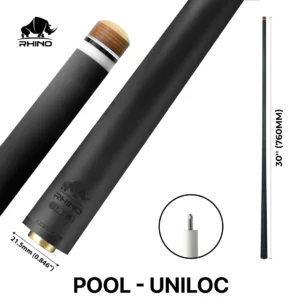
Rhino – 30″ / Uni-loc Carbon Pool Cue Single Shaft
$199.00 Select options This product has multiple variants. The options may be chosen on the product page -
Sale!
-
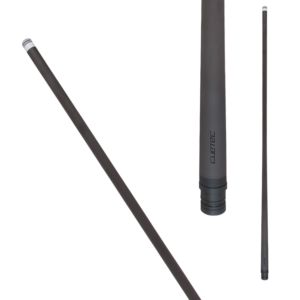
Cuetec CTCF Cynergy Cue Shaft – 12.5mm
Original price was: $499.00.$449.00Current price is: $449.00. Select options This product has multiple variants. The options may be chosen on the product page -
Sale!
-
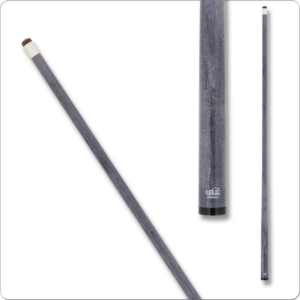
Pechauer JPBI Black Ice Break Shaft
Original price was: $300.00.$270.00Current price is: $270.00. Select options This product has multiple variants. The options may be chosen on the product page -
-
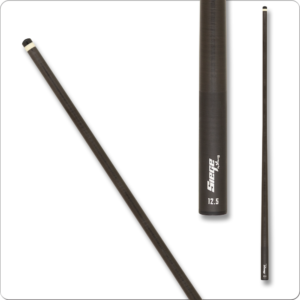
Viking Siege VIKCF2 Carbon Fiber Shaft – 12.5mm
$500.00 Select options This product has multiple variants. The options may be chosen on the product page
Who should stick with maple
- Recreational players who mostly shoot center ball and play once or twice a week
- Players who genuinely value the tactile feedback from a wood shaft and have trained around it for years
- Players on a tighter budget where the extra investment would be better spent on table time or instruction
- Players still building foundational stroke mechanics, where equipment consistency matters less than repetition volume
Carbon fiber in break cues
Carbon fiber technology has also moved strongly into break cues, and this is actually where the durability and stiffness advantages are most immediately useful. Break shots put enormous stress on the shaft at contact. Carbon fiber dissipates that stress more evenly than maple and holds up to thousands of hard breaks without the micro-damage that degrades maple over time.
The Bull Carbon White Break Cue at $399 is purpose-built around this advantage and has become a go-to option for players who want consistent break power without worrying about shaft wear.
Making the right call
The carbon fiber vs. maple debate does not have a universal right answer, but it does have a right answer for your game. If english is a regular tool in your shot selection, if you play in varied conditions, or if you want the most durable shaft you can buy, carbon fiber is worth the premium in 2026. If you are building stroke fundamentals, play recreationally, or prioritize the traditional feel of wood, a well-made maple shaft remains a fully competitive choice.
Either way, the shaft you trust is the shaft that makes you a better player. Explore the full shaft collection at Quarter King Billiards to find the right fit for your cue and your game.
FAQ
Do carbon fiber shafts actually improve accuracy?
For players who use side spin regularly, yes. Lower deflection means more predictable cue ball paths on english shots, which translates directly to better position play and pattern execution.
How long does it take to adjust from maple to carbon fiber?
Most players recalibrate within two to four practice sessions. The feel is different but consistent, so the adjustment is usually faster than players expect.
Are carbon fiber shafts worth it for beginners?
Not necessarily. Beginners benefit more from consistent practice volume than equipment upgrades. A solid maple shaft in the $100 to $200 range is fine while stroke mechanics are still being built.

About Corey Bernstein
Corey Bernstein is a competitive pool player, billiards equipment specialist, and co-owner of Quarter King Billiards in Wilmington, North Carolina. With over a decade of experience in the sport, Corey has competed in regional APA and BCA sanctioned tournaments and maintains an intimate knowledge of cue construction, shaft technology, and table mechanics. As a certified dealer for brands including Predator, McDermott, Jacoby, Viking, Lucasi, Meucci, Joss, and Cuetec, Corey personally tests and evaluates every cue that comes through the shop. His hands-on approach to the business means he has racked thousands of hours behind the table — breaking in shafts, comparing tip compounds, and dialing in the nuances that separate a good cue from a great one. When he is not behind the counter or on the table, Corey is researching the latest advances in low-deflection technology, carbon fiber shaft construction, and cue ball physics. His articles on Quarter King Billiards combine real-world playing experience with deep product knowledge to help players at every level find the right equipment for their game.