 844 408 3056

 Hot Deal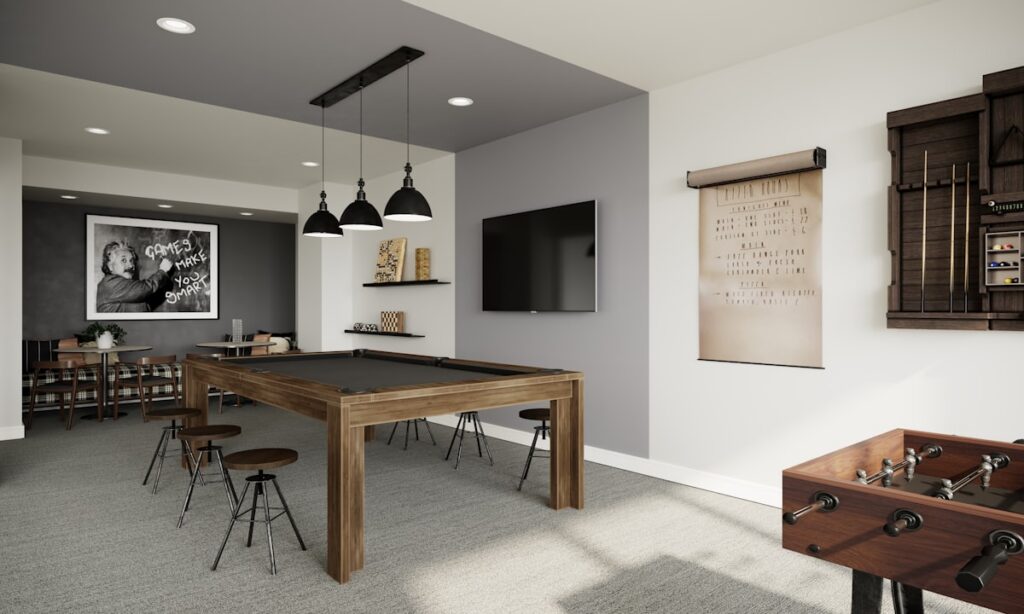
Pool is having a genuine moment in 2026. The combination of streaming tournaments, social media exposure, and a broader shift toward at-home entertainment has pushed home billiards room setups into mainstream conversation. Search traffic around pool table rooms and home billiards setups is up significantly year over year, and for good reason. A well-designed billiards room is one of the most-used and most-appreciated home investments a player can make.
Getting it right requires more than picking a table and sliding it into a spare room. This guide covers every decision you need to make before, during, and after setup so your room is actually playable from day one.
Step 1: Choose the right room size
This is the most common place where home billiards room projects go wrong. Pool tables look large in a showroom but feel even larger when surrounded by drywall. The rule you need to internalize is that it is not just the table footprint that matters. It is the table footprint plus cue clearance on all four sides.
A standard 57-inch cue requires at least 58 inches of clearance from the table edge to any wall or obstacle. For an 8-foot table (standard playing surface), the absolute minimum room size is approximately 13 feet by 17 feet. A 9-foot table pushes that to at least 14 feet by 18 feet. If your room falls short, the solution is not to shorten your cue on every rail shot. The solution is to either use the right room or use shorter cues strategically, which most experienced players prefer to avoid.
When in doubt, measure the room, mark the table footprint on the floor with tape, and walk the perimeter with a cue in hand. That five-minute check prevents years of frustration.
Step 2: Pick the right table for your space
Home tables come in 7-foot, 8-foot, and 9-foot playing surface sizes. For a home environment where multiple skill levels will use the table, an 8-foot table is the most versatile choice. It is the size used in most bar leagues and intermediate-level competition, so it has real crossover value for players who also compete outside the home.
Table quality breaks down into three main areas: slate thickness, frame construction, and cloth grade. For home use, a one-inch slate is the standard worth starting with. Thinner slate warps more easily over time, especially in rooms with any humidity fluctuation. A solid wood frame built around the slate assembly is significantly more stable than particleboard construction.
Step 3: Invest in quality cloth
Table cloth is one of the most underrated variables in home billiards room quality. The cloth affects ball speed, spin response, and how consistent the playing surface feels from session to session. Budget tables often ship with low-thread-count wool blend cloth that plays inconsistently and wears unevenly within the first year.
Upgrading to competition-grade cloth makes a dramatic difference in play quality. The Championship Challenger Cloth at $149 for a 9-foot installation is a professional-grade option that plays consistently, holds its nap longer, and gives the table a finished look that holds up over years of regular use.
Step 4: Get the lighting right
Lighting is the element that separates a functional billiards room from one that actually looks and plays great. Pool table lighting needs to illuminate the full playing surface evenly without creating hot spots or glare. The standard recommendation is a dedicated billiard light fixture centered over the table, hanging low enough that the bottom of the fixture sits 32 to 36 inches above the cloth.
Natural light from windows creates problems because it shifts angle throughout the day and causes shadows on one end of the table. Rooms where pool will be played seriously should have controllable ambient lighting that does not compete with the over-table fixture. LED fixtures have become the dominant choice in 2026 because they deliver consistent color temperature, run cool above the playing surface, and are easy to dim.
Step 5: Set up cue storage and accessories
Leaning cues against the wall between sessions is one of the fastest ways to introduce warps. Wall-mounted cue racks are the right solution for any serious home setup. They keep cues vertical or at the correct angle, protect the tips, and turn your equipment into a visual feature of the room rather than a clutter problem.
Cue cases serve a different but equally important function: protecting your playing cue when it is not in use or when it travels. A 2×2 hard cue case in the $70 range is the right starting point for anyone with a dedicated playing cue and a break or jump cue. Hard cases protect against drops and environmental damage in a way that soft cases cannot.
Every home billiards room also needs:
- A quality cue ball that matches what you play on outside the home. The Diamond cue ball is a consistent match-quality choice at $49.95.
- At least four pieces of chalk easily reachable from every position at the table
- A table brush for clearing the cloth before each session
- A triangle rack and a diamond rack for 9-ball
Step 6: Choose your flooring
Hardwood and laminate floors are the easiest to work with around a pool table. They do not trap chalk dust, they are easy to sweep, and the firm surface keeps the table level without settling. If your room is carpeted, that is fine, but be aware that low-pile carpet can shift the table’s leveling over time and will collect chalk dust that migrates onto the cloth during play.
Area rugs under the table are a popular aesthetic choice and work well as long as the rug is thin enough not to create uneven legs. A thick pile rug under one side of the table will tilt the playing surface subtly but measurably. Level your table after any flooring change and check it seasonally.
Step 7: Manage the atmosphere
Temperature and humidity control matter more than most people expect. Wood components in pool tables respond to humidity changes, and so does the cloth. For a room with serious play, keeping humidity between 40 and 55 percent year-round is the target. A small dehumidifier or humidifier depending on your climate is a low-cost investment that extends the life of the table and cloth significantly.
Temperature is simpler. Keep the room between 60 and 80 degrees Fahrenheit during use. Extreme cold stiffens the cloth and slows ball speed in ways that will throw off your calibration when you play elsewhere.
Budget planning for a complete home setup
A quality home billiards room on a practical budget looks roughly like this in 2026:
- 8-foot table with one-inch slate: $1,200 to $2,500 depending on brand and finish
- Professional cloth upgrade: $100 to $200 installed
- Billiard lighting fixture: $150 to $400
- Cue rack (wall-mounted): $40 to $120
- Quality cue ball set: $50 to $100
- Playing cues for the room: Varies, but a quality house set runs $200 to $600
- Cases and accessories: $150 to $300
A complete, functional, well-equipped home billiards room lands in the $2,000 to $4,500 range depending on table choice and finishing details. That cost amortizes quickly for a household that would otherwise spend $30 to $60 per session at a pool hall.
Browse the full range of billiards equipment and accessories at Quarter King Billiards to outfit your room from a single source, with expert selection at competitive pricing.
Final takeaway
The difference between a home billiards room that gets used constantly and one that collects dust is almost always setup quality. Get the room size right, invest in good cloth, light the table properly, and store your equipment correctly. Those decisions are made once and pay off for years.
Pool is a game that rewards environment. Build the right one.
FAQ
What is the minimum room size for a home pool table?
For a standard 8-foot table with 57-inch cues, you need at least 13 feet by 17 feet of clear space. Smaller rooms work with shorter cues but will limit your game development.
Should I get a 7-foot or 8-foot home pool table?
An 8-foot table is the better choice for most serious players because it matches the size used in most leagues and tournaments. A 7-foot table works in tighter spaces and is fine for recreational use.
How often should I replace pool table cloth?
Quality cloth on a home table used a few times per week typically lasts 3 to 5 years before wear affects play consistency. Cheap cloth may need replacing in 12 to 18 months.

About Corey Bernstein
Corey Bernstein is a competitive pool player, billiards equipment specialist, and co-owner of Quarter King Billiards in Wilmington, North Carolina. With over a decade of experience in the sport, Corey has competed in regional APA and BCA sanctioned tournaments and maintains an intimate knowledge of cue construction, shaft technology, and table mechanics. As a certified dealer for brands including Predator, McDermott, Jacoby, Viking, Lucasi, Meucci, Joss, and Cuetec, Corey personally tests and evaluates every cue that comes through the shop. His hands-on approach to the business means he has racked thousands of hours behind the table — breaking in shafts, comparing tip compounds, and dialing in the nuances that separate a good cue from a great one. When he is not behind the counter or on the table, Corey is researching the latest advances in low-deflection technology, carbon fiber shaft construction, and cue ball physics. His articles on Quarter King Billiards combine real-world playing experience with deep product knowledge to help players at every level find the right equipment for their game.