 844 408 3056

 Hot Deal
Bank shots have a reputation for being luck, and that reputation is mostly unfair. A ball that comes off a rail and drops looks like magic to a beginner, but the good bankers at your local room are not guessing. They are reading angles, accounting for speed and spin, and repeating a stroke they trust. Learn the same framework and the bank goes from a desperation shot to a real option you can call with confidence.
The physics starts simple and then gets interesting. In an ideal world with no spin and medium speed, a ball rebounds off a rail at the same angle it arrives, the way light bounces off a mirror. That mirror model is where every banker begins. The reason banks feel unpredictable is that real tables and real strokes add variables to that clean picture, and most missed banks come from ignoring those variables rather than from bad aim.
The Mirror System, and Where It Breaks Down
The most common way to aim a bank is the mirror or cross-side method. Picture the pocket you want reflected on the far side of the target rail, then aim the object ball toward that imaginary mirrored pocket. The rail redirects the ball back toward the real pocket. For straightforward one-rail banks at medium speed, this gets you close enough to make the shot a lot more often than hoping.
The catch is that the mirror model assumes no spin and neutral speed, and those assumptions rarely hold. Hit the bank hard and the ball tends to shorten the angle, coming off the rail flatter than the mirror predicts. Hit it soft and the angle lengthens. Add sidespin and you shift the rebound line in the direction of the spin. Cloth condition, humidity, and how new the rails are all nudge the result too. None of this makes banking random. It just means the mirror is a starting point you adjust from, not a law.
Speed Is the Variable You Control First
If you only fix one thing about your banking, make it speed. Amateurs tend to slam banks out of nerves, and hard banks shorten unpredictably, which is why they rattle out. A smooth, medium stroke keeps the rebound closer to the geometry you aimed for and gives the ball a better chance to grab the rail and come back true. Firm enough to reach the pocket, gentle enough to stay honest, is the range you are hunting for.
Controlling speed that precisely depends on a stroke you can repeat, and a stroke you can repeat depends on a cue that gives you honest feedback. A vague, mushy hit hides the small errors that wreck a bank. A cue with a solid, consistent response lets you feel exactly how firm you struck the ball, so you can reproduce the good ones. This is where a well made playing cue quietly earns its keep, and it is why the bankers you admire almost never play with whatever is hanging on the wall.
Featured Pechauer Products
Pechauer has built cues in Wisconsin for decades, and the brand is known for a firm, feedback-rich hit that suits players who care about touch and speed control. That character is exactly what helps on banks and delicate position play. Here are four Pechauer cues we stock at Quarter King Billiards across a range of price points.
-
Sale!
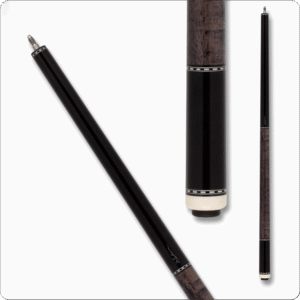
-
Pechauer JP25R04 Pro Series Cue
Original price was: $500.00.$450.00Current price is: $450.00. Select options -
Sale!
-
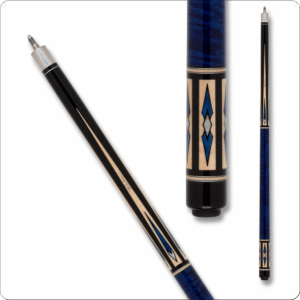
Pechauer JP25R10 Pro Series Cue
Original price was: $760.00.$684.00Current price is: $684.00. Select options
The Pechauer Pro H Sneaky Pete is a smart pick for a developing player who wants a real cue that hits like a full custom without shouting about it. Sneaky Petes carry the plain look of a house cue with the guts of a quality build, which is perfect for practicing banks where you want feedback but not distraction. It is also the friendliest price in this group, so it is easy to recommend as a first serious cue.
Step up to the Pechauer JP25R10 Pro Series and you get more of the refinement that longtime Pechauer players talk about, with balance and finish that hold up on league night and in tournaments. The Pechauer JP21G with its Irish linen wrap sits near the top of this selection and rewards a player who has developed enough touch to notice the difference. Any of the three gives you the consistent hit that makes speed control repeatable, which is the whole point when you are banking.
A Simple Practice Routine for Banks
Reading about banks will not fix them. Repetition will. Set an object ball a diamond off the rail and a diamond off the pocket, and bank it cross-side using the mirror line at medium speed. Shoot it ten times and pay attention not to whether it drops but to where it hits relative to your aim. If it is coming up short, you are probably hitting too hard or adding unintended spin. If it is drifting long, ease off even more or check that your tip is truly centered.
Once one-rail banks feel repeatable, add sidespin on purpose and watch how it moves the rebound line. Learning to widen or tighten a bank with a touch of english is what separates players who can only shoot the natural angle from players who can adjust to the table in front of them. Keep a note of how your regular table plays, because a room with fast, lively rails banks very differently from an old table with dead cushions.
Banking well is a blend of geometry, speed, and trust in your equipment. Get the mirror line in your head, keep your speed smooth, and put a cue in your hands that tells you the truth about your stroke. Compare the full Pechauer collection or browse the wider pool cues selection if you want to feel the difference a consistent hit makes. Do that work and the bank shot stops being a prayer and starts being a weapon.
Kick Shots Use the Same Skill
Once banking clicks, kick shots start to make sense too, because they are the same idea running in reverse. On a bank you send an object ball off a rail into a pocket. On a kick you send the cue ball off a rail to hit an object ball you cannot reach in a straight line, usually to escape a safety. The mirror system, the speed adjustments, and the effect of spin all carry over. Players who practice banks tend to become better kickers almost by accident, which pays off every time an opponent tries to hook you.
The reason both shots reward the same equipment is that both punish an inconsistent hit. When you are kicking to make contact and hopefully play safe in return, you need to trust that the cue ball leaves the tip the way you intended. A cue that hits the same every time turns a two-rail kick from a wild gamble into a calculated escape. That is the quiet argument for playing with a real cue rather than a house stick even when you are just practicing.
Tips and Table Time Matter Too
Equipment consistency starts at the tip. A tip that is properly shaped and holds chalk grips the cue ball predictably, while a glazed or mushroomed tip adds unwanted spin that throws banks and kicks offline. Keep your tip maintained and you remove one more variable from the equation. Pair that with a quality Pechauer cue and honest table time, and the improvement compounds. There is no substitute for shooting the same bank a few dozen times and learning exactly how your regular table sends the ball back to you.
One last habit separates good bankers from great ones: they keep score of their own attempts. Track how many banks you make out of every ten in practice, note the tables where you struggle, and adjust your aim and speed based on what the numbers tell you rather than on feel alone. That honest feedback loop turns scattered practice into steady, measurable improvement over a few weeks.

About Corey Bernstein
Corey Bernstein is a competitive pool player, billiards equipment specialist, and co-owner of Quarter King Billiards in Wilmington, North Carolina. With over a decade of experience in the sport, Corey has competed in regional APA and BCA sanctioned tournaments and maintains an intimate knowledge of cue construction, shaft technology, and table mechanics. As a certified dealer for brands including Predator, McDermott, Jacoby, Viking, Lucasi, Meucci, Joss, and Cuetec, Corey personally tests and evaluates every cue that comes through the shop. His hands-on approach to the business means he has racked thousands of hours behind the table — breaking in shafts, comparing tip compounds, and dialing in the nuances that separate a good cue from a great one. When he is not behind the counter or on the table, Corey is researching the latest advances in low-deflection technology, carbon fiber shaft construction, and cue ball physics. His articles on Quarter King Billiards combine real-world playing experience with deep product knowledge to help players at every level find the right equipment for their game.