 844 408 3056

 Hot Deal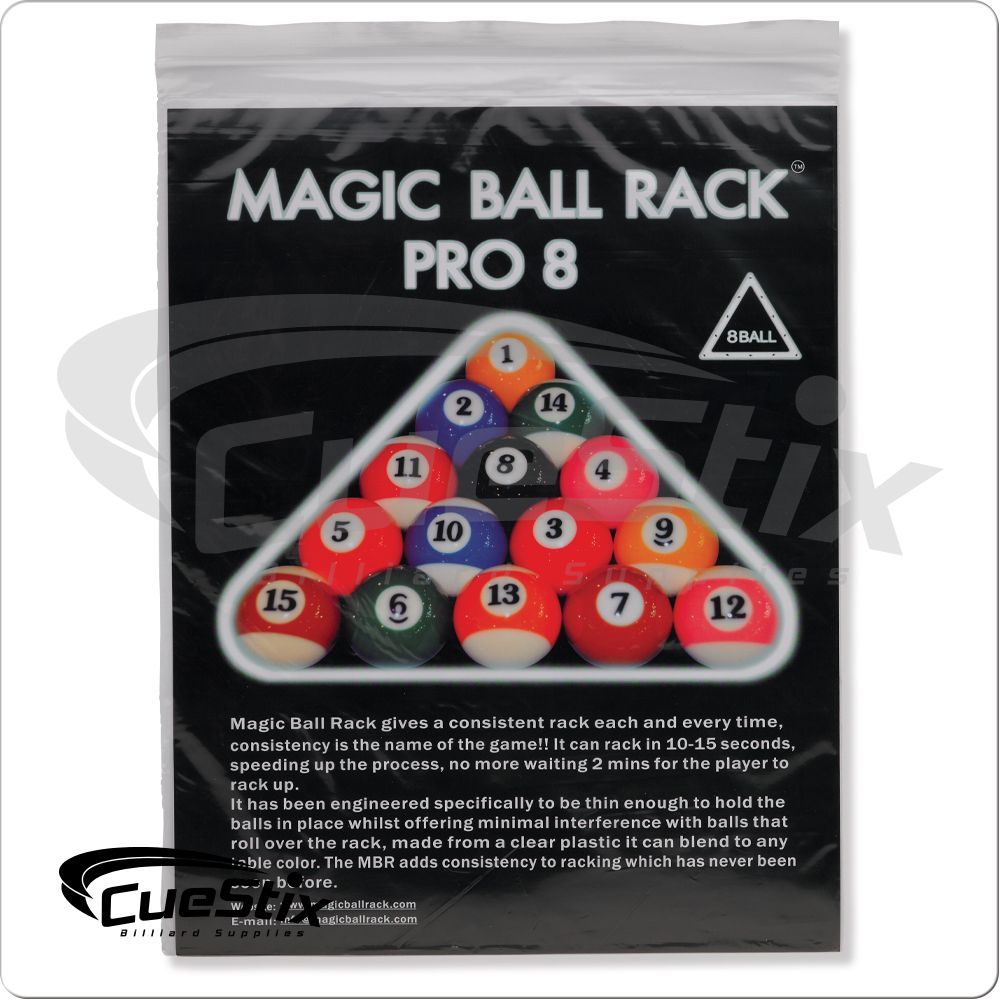
One of the liveliest pool conversations on Reddit today came from a simple question: does Matchroom’s 9-ball format create enough randomness on the break? The post showed the cue ball and 2-ball finishing in a similar zone after roughly 25 breaks, and that was enough to spark the usual split. One side saw proof that the modern format is too solved. The other saw proof that good players are just doing a better job controlling the opening shot.
The truth is more useful than either extreme. Repeated break patterns do not automatically mean the format is broken, and they also do not mean the break is pure skill with no built-in volatility. What they really show is that top-level nine-ball has become a contest of controlled chaos. Organizers are trying to narrow the cheap outcomes, while players are trying to widen their reliable advantages.
If you play league, tournaments, or even serious weekend sets, this debate matters more than it first appears. The break is still the fastest way to change the pressure in a rack, and understanding what is controllable versus what is not will save you a lot of wasted practice.
What a Repeating Cue Ball and 2-Ball Pattern Actually Tells You
If the cue ball and 2-ball keep landing in roughly familiar lanes, the first takeaway is not “the game is solved.” The first takeaway is that players are hitting the rack with a repeatable contact point, repeatable speed, and a plan for cue-ball behavior. That is not a flaw in the format. That is what good players do when the conditions reward discipline.
Modern pro nine-ball is designed to reduce the old auto-pilot break. Tight rack control, a break box, and stricter expectations around the opening shot all push players toward precision instead of wild power. When that works, the cue ball stops wandering as much. That is the point.
Where people get confused is assuming cue ball control should automatically produce full rack predictability. It does not. You can control the first collision far better than you can control every ball that opens from it.
Where the Randomness Still Lives
Even in a tightly managed format, there is still real uncertainty. A tiny difference in rack tightness changes energy transfer. A tiny difference in tip contact changes cue ball drift. A tiny difference in speed changes how the one or two most sensitive balls leak out of the pattern. That is before you factor in cloth wear, humidity, table cut, ball cleanliness, or whether the spread produces a clear first shot.
In other words, modern Matchroom-style nine-ball does not remove randomness. It relocates it. Instead of “Did the wing ball fly in again?” the question becomes “Did I control the rack well enough to earn the best version of the spread?”
That is a healthier question for the sport because it rewards preparation without guaranteeing outcomes. You can do everything right and still wind up with a cluster, a funny kiss, or no clean lane to the next ball. That uncertainty is still very real. It is just happening one layer deeper than casual viewers expect.
Why Organizers Want Controlled Chaos, Not Pure Chaos
The goal of a modern pro format is not to make every break look different. The goal is to keep the break important without making it automatic. Fans want offense, but they also want racks to be won by decision-making, recovery, and execution after the break, not just by who found a loophole first.
That is why this current debate pairs so naturally with our recent breakdown of how long-set nine-ball still exposes the best break managers. At the highest level, the best breaker is rarely the person smashing hardest. It is the person who keeps earning playable layouts without losing cue-ball shape.
That same idea also shows up in our guide to breaking in 8-ball and our piece on when a break-cue upgrade actually makes sense. The core lesson is simple: the opening shot is a system, not a stunt.
What Players Should Practice Instead of Complaining About Format
If you want to get better from this conversation, stop arguing at the abstract level and start measuring three concrete things.
First, measure cue-ball finish. Put your phone on a tripod and track where the cue ball stops over 20 breaks. If your cue ball is all over the table, the format is not your problem.
Second, measure first-shot quality. Count how often you get a realistic opening shot with shape. Making a ball is not enough if you are jacked up, frozen, or straight in with no route.
Third, measure your misses in setup rather than power. Most amateur breaks fail because of poor rack quality, off-center tip contact, or a loose pre-shot routine, not because the player needs more violence.
That is also where the right equipment actually helps. A clean template like the Magic Rack reduces guesswork when you are trying to learn patterns honestly. A dedicated breaker such as the Players JB528 Heavy Hitter Jump/Break Cue gives you a more repeatable hit than trying to hammer your playing cue into the rack every time. And if your bridge hand gets sticky during long practice, the Rhino Pool Glove helps keep speed and line more consistent.
Why This Is a Good Topic for the Quarter King Blog
Search interest around Matchroom, nine-ball break rules, and modern break strategy stays strong because players constantly want a straight answer. They do not just want “yes” or “no” on randomness. They want context. They want to know whether they should copy what they are seeing on stream, whether a template rack is worth buying, and whether pro-level break talk translates to their own game.
That makes this a smart SEO topic, but it is also a genuinely helpful one. The best blog posts in billiards answer the question behind the question. In this case, the deeper question is not whether the format is perfect. It is whether players understand what the format is trying to test.
The Real Answer
So, does Matchroom’s 9-ball break format create enough randomness? Probably more than the clean cue-ball screenshots make it seem, and less than players who miss the rack want to believe. That is exactly why the debate never dies.
The better answer is this: the modern format rewards repeatable break mechanics, but it still leaves enough uncertainty to test the rest of the rack. That is not bad design. That is competitive design. And if you study it the right way, it gives you a better roadmap for your own game than another thousand words of complaining ever will.

About Corey Bernstein
Corey Bernstein is a competitive pool player, billiards equipment specialist, and co-owner of Quarter King Billiards in Wilmington, North Carolina. With over a decade of experience in the sport, Corey has competed in regional APA and BCA sanctioned tournaments and maintains an intimate knowledge of cue construction, shaft technology, and table mechanics. As a certified dealer for brands including Predator, McDermott, Jacoby, Viking, Lucasi, Meucci, Joss, and Cuetec, Corey personally tests and evaluates every cue that comes through the shop. His hands-on approach to the business means he has racked thousands of hours behind the table — breaking in shafts, comparing tip compounds, and dialing in the nuances that separate a good cue from a great one. When he is not behind the counter or on the table, Corey is researching the latest advances in low-deflection technology, carbon fiber shaft construction, and cue ball physics. His articles on Quarter King Billiards combine real-world playing experience with deep product knowledge to help players at every level find the right equipment for their game.