 844 408 3056

 Hot Deal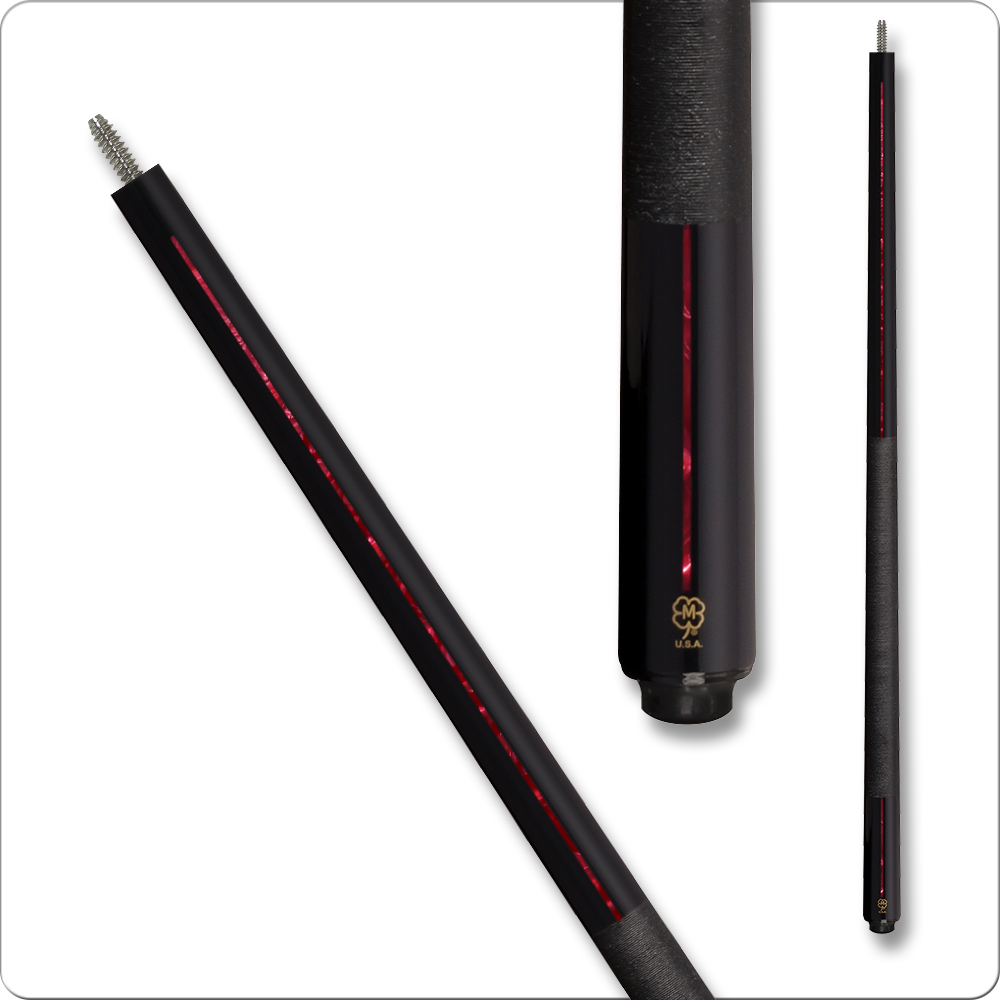
Sidespin gets all the attention. Talk to most league players and they will tell you the cue ball is hardest to control when they are putting English on it. The real answer is the opposite. Sidespin is forgiving because the squirt and swerve mostly cancel out at normal speeds. Vertical English, the part of the cue ball you hit above or below center, is where the position game is actually built, and it is where amateur players lose 80% of their position errors. Stop. Draw. Follow. The three fundamentals, and the three things that almost nobody is allowed to practice for as long as they should before being handed a more complicated lesson.
This guide breaks down the three core vertical English shots, the tip heights that actually produce them on a 9-foot table, the speed control that holds the action together, and the cues that are best suited to learning each one. The mechanics are universal but the feel is equipment-dependent, and getting both right is the difference between knowing what draw is and actually being able to draw the ball six feet on demand.
The Three-Tip Anchor System
Every coach has a different name for the same idea. The cue ball has a vertical axis. The center of the cue ball is height zero. The top of the cue ball is roughly one and a half tips above center, because beyond that you miscue. The bottom of the cue ball is roughly one and a half tips below center. Inside that range, every vertical English shot lives in one of three positions.
Center ball, zero tips: Stop shot. The cue ball stops dead on contact with the object ball when struck firmly with no vertical English at all. Center ball is also the home position for every other shot. You should be able to hit center ball, repeatedly, at three different speeds, before working on draw or follow.
One tip above center: Natural follow. The cue ball rolls forward after contact. Anything beyond one tip is overspun follow, which is what most amateur players call follow, and which causes the cue ball to dive into the rail unpredictably on long shots.
One tip below center: Natural draw. The cue ball pulls back along the shot line after contact. Anything more aggressive than one and a half tips below center invites a miscue. The cue ball does not care that you are aiming a hair lower. The leather of your tip does.
Every coach in 2026 teaches some version of this three-tip anchor system. The names change but the geometry does not.
The Stop Shot: Why Center Ball Is Hard
The stop shot looks like the simplest shot in pool. It is the hardest one to repeat. The reason is that center ball is not a height, it is a small window. Hit a hair high and you get a slow roll-forward. Hit a hair low and you get a stun-back that leaves the cue ball drifting along the contact line. Both look like stop shots at first glance and both wreck position by a half-diamond.
The way to actually own the stop shot is to drill it at three speeds across three distances. Set the cue ball one diamond from the object ball, two diamonds, and three diamonds. At each distance, stroke the same firmness three times. The cue ball should stop dead, three out of three, at each distance. When you can do this with a 9-foot table on a fast cloth, you have center ball. You will use this shot more often than any other in the next 10,000 racks.
Any cue with a reliable shaft and a fresh tip can drill stop shots. The reason the McDermott G Series has been the best-selling production cue for two decades is that the McDermott G521R G Series Cue hits center ball cleanly and consistently from the moment it comes out of the box. The G-Core construction gives you the warm, full hit a developing player needs to feel center ball through their bridge hand.
The Draw Shot: The Hardest Fundamental in Pool
Draw is the single biggest separator between players who win their local leagues and players who do not. It is also the most misunderstood shot in the game. The biggest mistake amateur players make on a draw shot is hitting too low. The second biggest mistake is hitting too hard. The third biggest mistake is following through up.
Draw is produced by backspin that survives the slide of the cue ball across the cloth long enough to reach the object ball. The cue ball is moving forward while spinning backward, and at the instant of contact with the object ball, the backspin reverses the forward motion. Too much speed, and the spin runs out before the cue ball arrives. Too little speed, and the backspin friction wears off into a regular roll. The sweet spot is a level cue, one and a half tips below center, with a confident but not violent stroke.
The follow-through matters more than the strike. Your cue should finish low, with the tip ending closer to the cloth than where it started. A short, choppy stroke produces nothing. A long, smooth stroke with a level cue and a low finish produces the draw shot that wins matches.
The cues that teach draw best are the ones with a slightly softer, more forgiving hit, because a hard hit on a draw shot is the fastest way to skip the cue ball off the cloth and lose all the spin. The Pechauer JP25R04 Pro Series Cue is one of the best learning cues for draw because the Pro Series shaft is calibrated for clean, low-tip strikes with the cue level. The Pechauer JP21G Pool Cue with its Irish linen wrap is another favorite for the same reason. Both produce the kind of pickup on the lower half of the cue ball that lets the spin do the work.
The Follow Shot: Easy to Hit, Hard to Time
Follow is the easiest of the three to make work and the hardest to time correctly. Hitting one tip above center, with a level cue and a confident stroke, produces forward roll. Anyone can do this on demand within a week. The problem is that follow distance is not controlled by the height of the strike. It is controlled by the speed of the stroke and by the rail behavior after the cue ball gets where you wanted.
The instructive drill for follow is the long rail follow. Set the cue ball on the head spot, the object ball on the foot spot, and pocket the object ball in the corner with one tip of follow. The cue ball should travel along the long rail in a predictable arc to the head of the table. The amateur version of this drill is to focus on the strike. The pro version is to focus on the speed and read what the cue ball does after it touches the first rail.
Modern hybrid cues with a slightly stiffer mid-section play follow shots beautifully because the energy transfers cleanly through the cue ball without the squirt that a softer shaft introduces. The Lucasi LZD1 Custom Cue is one of the cleanest follow cues in the under-$700 category. Lucasi’s hybrid construction lets you transfer energy in a straight line through the cue ball without the cue ball jumping forward unpredictably, which is exactly what a follow shot needs.
How Speed Holds the Whole System Together
If there is one thing that distinguishes a 7-handicap from a 4-handicap, it is not aim and it is not tip selection. It is the ability to dial in three or four different stroke speeds and use the right one for the situation. Vertical English is a stroke-speed game. A draw shot at one speed travels two diamonds. A draw shot at a faster speed travels eight. The tip position is the same. The speed is the variable.
The drill that builds stroke speed is the lag drill. Put the cue ball on the head string. Stroke it the length of the table and back, with the goal of having it stop one diamond short of where it started. Do it 10 times in a row. Now do it again with the goal of stopping at the head string itself. Then again with the goal of stopping past the head string by one diamond. When you can hit those three targets cold in 10 strokes, you have a stroke speed library that supports vertical English.
The lag drill is also the single best stroke diagnostic in pool. If your cue ball drifts left or right on the way back, your stroke is not straight. If it bounces off the rail at a weird angle, your tip is too low or too high at the strike. If you cannot get consistent distances, your grip pressure is varying. All of those things show up on the lag drill before they show up in a match.
The Equipment Side of Vertical English
A great cue does not give you draw. A poor cue can take it away from you. Below are the production cues stocked at Quarter King that are best matched to each of the three vertical English fundamentals. Match the cue to the part of the game you are working on now, and the rest will catch up later.
For learning stop and center ball: The McDermott Pool Cues category, particularly the G Series. The hit is warm and full, which lets you feel center ball through the bridge hand and develop the muscle memory for a level cue.
For learning draw: The Pechauer Cues category, particularly the JP and JP-R Pro Series. The Pechauer Pro shaft is built for clean, low-tip strikes and rewards a long, smooth follow-through, which is exactly what a learning draw stroke needs.
For learning follow: The Lucasi Pool Cues category, particularly the Hybrid line. The energy transfer is clean and direct, which makes follow distance predictable from the first stroke.
For all three at once on a working budget: The Jacoby Pool Cues category. The Magnetic and Earth series cues land in the $350 to $500 range and play surprisingly close to cues at twice the price. The Jacoby build is balanced enough that you can drill draw, stop, and follow on the same cue across the same practice session without retraining your hand.
What to Practice Tomorrow
Spend half an hour at your table tomorrow on three drills. Twenty stop shots at three distances. Twenty draw shots at one diamond, two diamonds, and three diamonds back. Twenty follow shots up the long rail with a consistent target distance. Do not work on aiming. Do not work on banks. Do not work on safeties. Just work on vertical English.
The players who put in 100 hours on these three drills before the end of summer 2026 will end the year a full handicap level higher than they started, and the change will be visible to every opponent before it is visible to them. The catalog at Quarter King is built around the cues that make those drills repeatable, including the complete Pool Cues category across every price tier. Pick the build that fits your hand, then put in the reps. The cue ball will do the rest.

About Corey Bernstein
Corey Bernstein is a competitive pool player, billiards equipment specialist, and co-owner of Quarter King Billiards in Wilmington, North Carolina. With over a decade of experience in the sport, Corey has competed in regional APA and BCA sanctioned tournaments and maintains an intimate knowledge of cue construction, shaft technology, and table mechanics. As a certified dealer for brands including Predator, McDermott, Jacoby, Viking, Lucasi, Meucci, Joss, and Cuetec, Corey personally tests and evaluates every cue that comes through the shop. His hands-on approach to the business means he has racked thousands of hours behind the table — breaking in shafts, comparing tip compounds, and dialing in the nuances that separate a good cue from a great one. When he is not behind the counter or on the table, Corey is researching the latest advances in low-deflection technology, carbon fiber shaft construction, and cue ball physics. His articles on Quarter King Billiards combine real-world playing experience with deep product knowledge to help players at every level find the right equipment for their game.