 844 408 3056

 Hot Deal
If you’ve been paying attention to professional pool tournaments lately, you’ve probably noticed something: Predator cues are everywhere. From the U.S. Open to regional tour stops, more players are switching to Predator than ever before. And it’s not just about sponsorship deals—there’s real technology and performance driving this surge.
Let me break down exactly why Predator pool cues have become the go-to choice for serious players in 2026.
The REVO Shaft Revolution
The biggest game-changer Predator brought to the table is their REVO shaft technology. Unlike traditional maple shafts, REVO shafts use a carbon fiber composite construction that completely eliminates warping. You heard that right—zero warping.
For anyone who’s ever dealt with a warped shaft (and if you play regularly, you have), this is huge. No more rolling your shaft on the table before a match. No more seasonal adjustments. The REVO shaft plays the same whether it’s humid summer weather or dry winter conditions.
But the real benefit goes beyond just consistency. The REVO shaft has the lowest deflection rating of any production shaft on the market. What does that mean for your game?
Low Deflection That Actually Works
When you apply english (sidespin) to the cue ball, traditional shafts deflect the path of the ball. You have to compensate by aiming slightly off-center, which adds complexity to every shot. Predator’s low-deflection technology minimizes this effect dramatically.
The REVO 12.9mm shaft, for example, lets you aim almost exactly where you want the cue ball to go, even with heavy english. For position play and advanced shot-making, this is a massive advantage. You spend less mental energy calculating deflection and more time focusing on speed and spin.
Players who switch to a REVO shaft often report that their accuracy improves within the first few sessions. The learning curve is minimal because the shaft behaves more intuitively.
Uni-Loc Joint: The Standard That Won
Predator didn’t just innovate with shafts—they also established the Uni-Loc joint system, which has become an industry standard. The quick-release joint uses a stainless steel mechanism that locks tight without tools and provides exceptional hit feedback.
What makes Uni-Loc special:
- Fast changes: Swap shafts in seconds without fumbling with threads
- Solid hit: The metal-to-metal connection transfers energy cleanly
- Wide compatibility: Many other manufacturers now produce Uni-Loc compatible shafts
- Durability: The joint holds up to thousands of install/removal cycles
This standardization means that if you buy a Predator cue with a Uni-Loc joint, you’re not locked into one shaft forever. You can mix and match with other premium shafts, experiment with different tip sizes, or keep a backup shaft ready for action.
Tournament Dominance and the Predator Championship Series
Walk into any major tournament venue in 2026, and you’ll see Predator everywhere—not just in players’ hands, but in the infrastructure itself. Predator has invested heavily in the sport through their Championship Series, which now includes events across North America, Europe, and Asia.
Here’s what that means for the average player:
The top pros are using Predator cues at the highest levels of competition, which creates a feedback loop of innovation. When Efren Reyes, Shane Van Boening, or rising stars like Jeffrey De Luna compete with Predator equipment, they’re testing it under the most demanding conditions imaginable. That real-world data flows back into product development.
But Predator isn’t just sponsoring players—they’re sponsoring the sport. Their Championship Series offers substantial prize pools and provides a clear path for amateur players to compete at higher levels. This grassroots-to-pro pipeline has built incredible brand loyalty.
Build Quality That Justifies the Price
Let’s be honest: Predator cues aren’t cheap. A REVO-equipped cue can easily run $800-$1,500 or more. So what are you actually paying for?
Premium Materials
Predator uses high-grade maple for their butts, with exotic wood inlays (bocote, cocobolo, birdseye maple) that aren’t just decorative—they’re structurally integrated. The finish work is meticulous, with multiple coats of sealer and a glass-smooth final coat that feels incredible in your hands.
Precision Manufacturing
Every Predator cue is built to tight tolerances. The weight balance, the straightness of the shaft, the symmetry of the inlays—everything is dialed in. When you pick up a Predator cue, you can feel the difference immediately.
I’ve seen players bring in their 10-year-old Predator cues for service, and aside from normal wear on the tip and ferrule, they look and play like new. That longevity matters when you’re investing serious money.
PREDATOR CUES & GEAR AT QUARTER KING
-
-
-
-
-
-
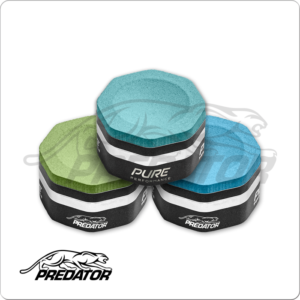
Predator CHPURE Pure Chalk – Single
$19.94 Select options This product has multiple variants. The options may be chosen on the product page
The Low-Deflection Movement They Started
Before Predator introduced their 314 shaft back in the late ’90s, low-deflection technology was mostly theoretical. Players had to deal with significant cue ball deflection, and the workaround was simply to practice until the compensation became second nature.
Predator changed that equation. The 314 shaft used a different internal core and a thinner profile to reduce deflection by about 50% compared to traditional shafts. It wasn’t perfect, but it proved the concept worked.
Fast forward to today, and nearly every major cue manufacturer offers some form of low-deflection shaft. But Predator remains the benchmark. The REVO shaft represents the culmination of decades of R&D, and it shows.
Who Should Play With a Predator Cue?
Here’s my honest take from years behind the counter at Quarter King:
You’ll benefit from a Predator cue if:
- You’re serious about improving your position play
- You compete in tournaments (even local leagues)
- You practice regularly and want consistent equipment
- You’re willing to invest in quality that lasts
You might want to start elsewhere if:
- You’re just getting into pool and still developing fundamentals
- You play casually a few times a year
- You’re not ready to spend $800+ on a cue
For beginners, I usually recommend starting with a solid mid-range cue to develop your stroke, then upgrading to something like a Predator once you know your preferences. Check out our pool cues category for options at every level.
The Competition Is Catching Up (But Predator Stays Ahead)
To be fair, Predator isn’t the only game in town anymore. Manufacturers like Cuetec, Mezz, and Pechauer have all developed excellent low-deflection shafts. The technology gap has narrowed.
But Predator continues to innovate. Their recent REVO updates include improved tip technology, refined weight distribution, and even better feedback. They’re not resting on their reputation—they’re pushing forward.
Plus, Predator’s commitment to the sport through sponsorships, events, and player development creates an ecosystem that benefits everyone. When Predator thrives, the sport thrives.
Final Thoughts
Predator pool cues are dominating in 2026 because they’ve earned it. The combination of proven technology (REVO shafts, Uni-Loc joints), tournament validation, and genuine build quality creates a compelling package.
Are they the right choice for every player? No. But if you’re serious about your game and want equipment that performs at the highest level, Predator deserves a close look.
Stop by Quarter King Billiards and we’ll help you find the perfect cue for your game—whether that’s a Predator or something else. We carry a range of options, and we’re here to give you honest advice based on your skill level and goals.
SHOP PREDATOR AT QUARTER KING
-
Sale!
-
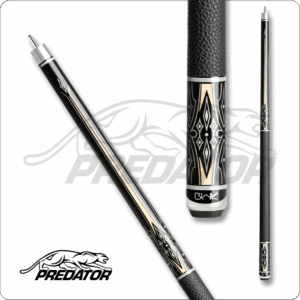
Predator Black 55 – PREBLK55
Original price was: $3,009.00.$2,650.00Current price is: $2,650.00. Select options -
-
-
-
-
-
The right cue makes all the difference. Let’s find yours.