 844 408 3056

 Hot Deal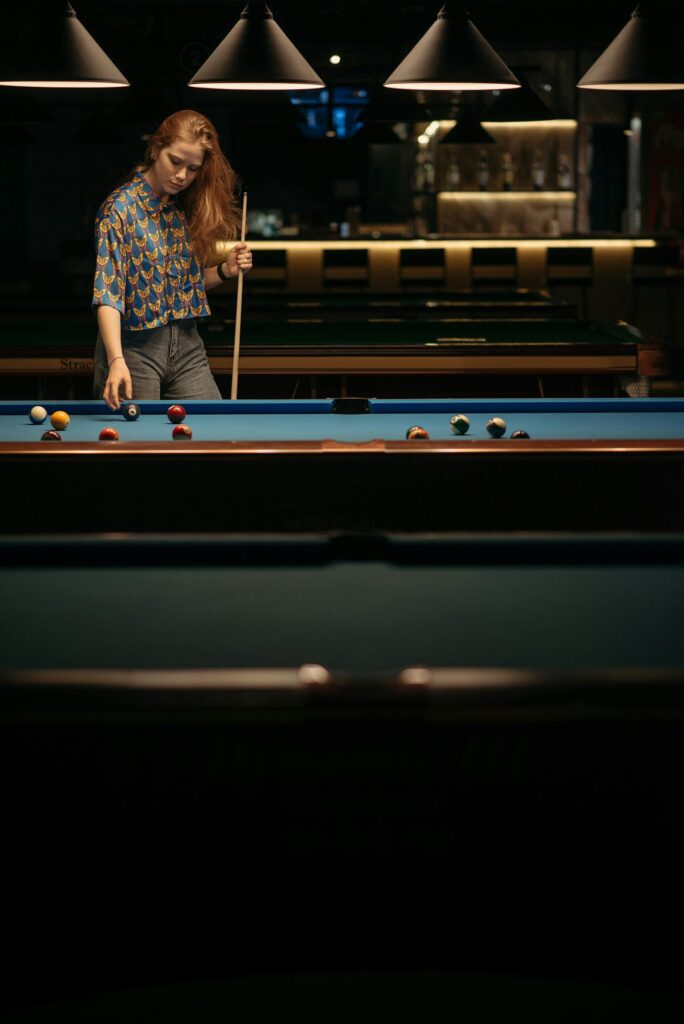
Women’s pool is the fastest-growing demographic in American billiards in 2026. The WPBA tour calendar is fuller than it has been in a decade, regional women-only events are filling out, and APA, USAPL, and BCAPL leagues across the country are all reporting more new women signing up than at any point since the early 2000s.
If you are a woman thinking about joining a pool league this year — or you have a friend who keeps saying she wants to play but does not know where to start — this guide is the practical version of what we tell new league players who walk into the Quarter King Billiards showroom every week.
Why Women’s Pool Is Surging in 2026
Three things are pushing the wave:
- Women’s pro events are visible again. The WPBA Iron City Invitational, WPBA Signature events, and Matchroom’s Women’s Nineball Tour are all streamed regularly. New players are finally watching elite women win on a stage that looks like the men’s stage.
- Local rooms are running women-only nights. Pool rooms across the southeast have launched ladies leagues and “first Tuesday” practice nights. They are low-pressure and the entry is more welcoming than walking into a mixed-league bar on a Thursday.
- Equipment finally fits. Light, well-balanced production cues are everywhere now — players no longer have to start with a 21 oz house cue that does not match their build or stroke.
You can read more about how these on-table results have looked in our recent recap of the WPBA Iron City Invitational VI, which had several first-time deep runs from newer pros and a few classic comeback wins worth studying.
Step 1: Pick the League Format That Matches Your Goals
Most American women joining leagues in 2026 land in one of four formats. Each has a different vibe:
APA (American Poolplayers Association)
Largest amateur league in the country. Handicapped 8-ball and 9-ball, so a brand-new player can compete on the same team as a strong player and still contribute. Very social. Most teams play one night per week. Best place to start if you are new.
USAPL / BCAPL
More structured, more competitive 8-ball / 9-ball. Tighter rules, fewer house-rule shortcuts. The best fit if you have played casually for a while and want to compete in regionals or nationals.
VNEA
Strong in the Midwest and a few pockets in the southeast. 8-ball focus, also handicapped. Good people, often family-oriented teams.
Local Women-Only Leagues
Often run out of a single pool room or two-room circuit. Lower stakes, fewer rules debates, easier on a first-night player. Ask the pool room you would actually want to play in if they run one.
If you are unsure, the Quarter King team can point you to women-friendly leagues running in the Wilmington area — local APA divisions in particular have been adding ladies’ divisions every season.
Step 2: Pick the Right Cue (Don’t Overspend, Don’t Underspend)
The single most common mistake new league players make is picking a cue based on how it looks instead of how it weighs and balances. Heavier is not better. More expensive is not better. The right cue is the one your stroke can repeat.
For most adult women starting league, the sweet spot in 2026 is:
- Weight: 18.5 to 19.5 oz. If you are smaller-framed or have a quicker stroke, 18.5 to 19 oz. If you are tall or have a longer stroke, 19 to 19.5 oz.
- Shaft diameter: 12.5 mm to 12.75 mm for traditional maple shafts. Thinner shafts (11.75–12 mm) are usually carbon fiber and a different price tier.
- Wrap: Irish linen or sport wrap if your hands sweat under pressure. Smooth no-wrap if you prefer a clean glide.
- Tip: Medium hardness layered tip from the factory. Avoid soft tips on a first cue — they need more maintenance than is worth it.
If you want a deeper breakdown of how those numbers actually feel in the hand, our pool cue weight selection guide goes through every common weight at length.
Before you buy, hold three or four different cues at the showroom. Pick the one that feels balanced when you cradle it about 18 inches from the butt. If the tip end “falls” on its own, the cue is butt-heavy and you will fight it on draw. If the butt end falls, it is tip-heavy and your stroke will feel loose. Even balance is what you want.
Step 3: Get a Case That Will Actually Travel
You will hate carrying a cue without a case after one night. A 1×2 or 2×2 case (one or two butts, two or four shafts) is enough for a league bag. If you also plan to bring a break cue, jump into a 3×4 or 3×5.
If you want a case with personality, our Lizard Vibrant Series 3×5 with pink accents and similar Lizard cases are popular pick-ups for new league players who want a case that actually looks like theirs. There are plenty of straight-black and leather options too — pick what you will be happy carrying every Tuesday for years.
Step 4: Build a 30-Minute Practice Routine Before Your First Match
You do not need a coach. You need a routine. Five drills, six minutes each, in this order:
- Lag drill (6 min) — Hit the cue ball from the head string, off the foot rail, and try to stop it on the head rail. Repeat ten times. This builds speed control faster than any other single drill.
- Center-ball stop shot (6 min) — Cue ball to object ball, full hit. Cue ball should stop dead. Tells you exactly how clean your stroke is.
- Straight follow / draw (6 min) — Same shot, but apply top spin (cue ball follows) or bottom spin (cue ball draws back). Most beginners over-hit this. Learn to draw with stroke length, not muscle.
- Long-rail position (6 min) — Pot a ball into a corner with the cue ball ending up on the long rail at a planned spot. Real games are won on shape, not on potting.
- Eight-ball break (6 min) — Set the rack, break, see what happens. You are not trying to make a ball — you are trying to spread the rack and put the cue ball in the middle of the table.
Thirty minutes of this two or three times a week beats two hours of casual play once a week. Every time.
Step 5: Show Up and Be Honest About Where You Are
The single biggest thing new league players get wrong on night one is pretending to know more than they do. Tell your captain you are new. Ask for the easiest matchup the team has. Watch the better players on your team between your turns. Take notes if you have to.
Most leagues handicap by skill level so a brand-new player is not expected to win against a veteran. Lose calmly, win calmly, ask for advice between matches, and treat the first two months as paid lessons.
What You Actually Need on Night One
- One playing cue (18.5–19.5 oz, medium tip).
- One break cue or shared house break cue (optional but recommended after the first month).
- A 1×2 or 2×2 case.
- Your own chalk — keep one in the case so you never have to share a borrowed cube with a sticky tip.
- A small towel or microfiber cloth for the shaft. Wipe before each rack.
- A glove if your bridge hand sticks — this is preference, not a requirement. Our glove vs talc breakdown covers when to use which.
Bottom Line
The barrier to women’s pool in 2026 is lower than it has been in twenty years. The pro game is visible, local rooms are running women-friendly nights, and equipment is light, balanced, and easy to find. If you have been thinking about joining a league, this is the right year.
If you are local to Wilmington, NC, stop into the Quarter King Billiards showroom — we will help you pick a cue that matches your stroke, point you to active women’s leagues in the area, and answer any questions before you commit. If you are not local, the same advice applies: pick the cue that fits, find the league that matches your goals, and treat the first two months as the best money you have spent on yourself in a long time.

About Corey Bernstein
Corey Bernstein is a competitive pool player, billiards equipment specialist, and co-owner of Quarter King Billiards in Wilmington, North Carolina. With over a decade of experience in the sport, Corey has competed in regional APA and BCA sanctioned tournaments and maintains an intimate knowledge of cue construction, shaft technology, and table mechanics. As a certified dealer for brands including Predator, McDermott, Jacoby, Viking, Lucasi, Meucci, Joss, and Cuetec, Corey personally tests and evaluates every cue that comes through the shop. His hands-on approach to the business means he has racked thousands of hours behind the table — breaking in shafts, comparing tip compounds, and dialing in the nuances that separate a good cue from a great one. When he is not behind the counter or on the table, Corey is researching the latest advances in low-deflection technology, carbon fiber shaft construction, and cue ball physics. His articles on Quarter King Billiards combine real-world playing experience with deep product knowledge to help players at every level find the right equipment for their game.