 844 408 3056

 Hot Deal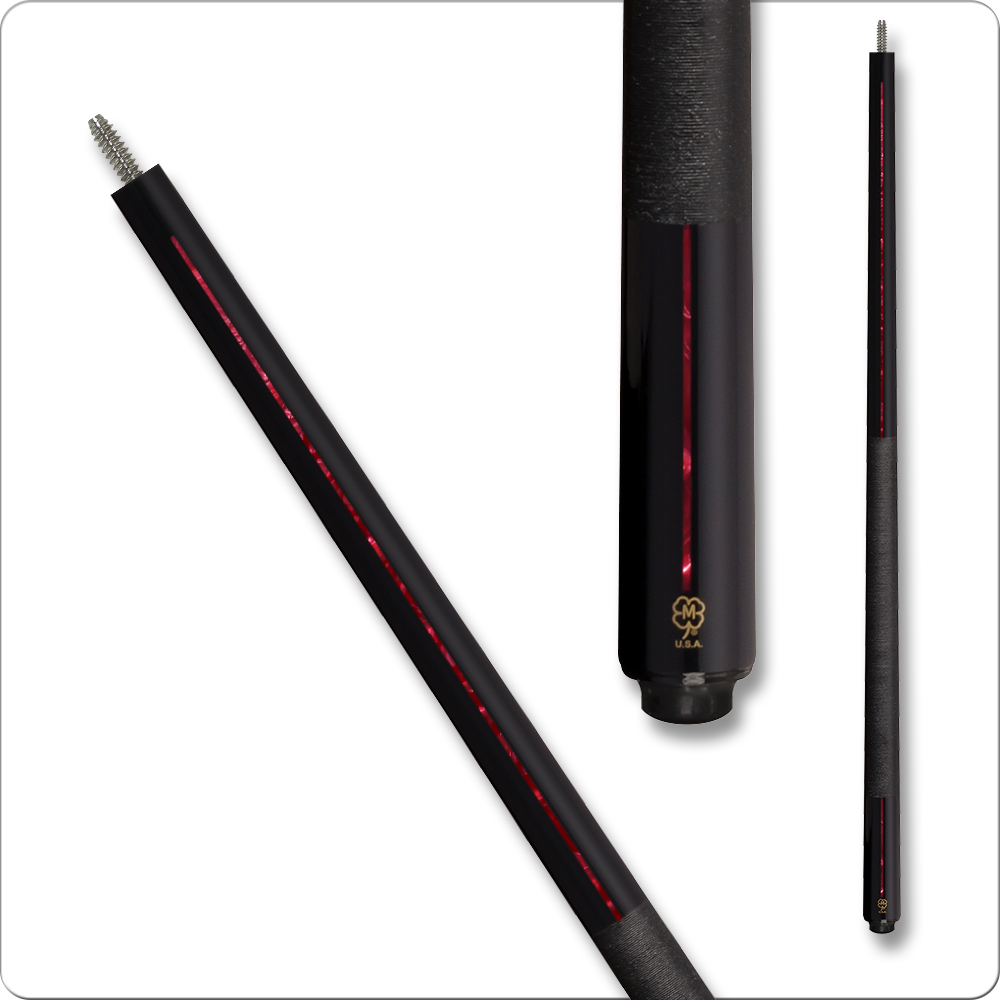
Few shots in pool draw a crowd faster than a cue ball that bends around a blocker and pockets a ball that looked completely dead. Masse and curve shots sit at the intersection of physics and showmanship, and most amateur players treat them as circus tricks they will never own. That is a mistake. The half masse, the modest curve around the edge of an obstructing ball, is a legitimate tournament tool that wins racks at every level of play. This guide breaks down how curve and masse shots actually work, how to practice them without destroying your table, and which equipment choices make the learning curve far less painful.
What Actually Makes the Cue Ball Curve
A cue ball curves when two conditions combine: the cue is elevated above level, and the tip strikes the ball off center. Hit a level stroke with left spin and the cue ball squirts and drifts but travels an essentially straight line. Raise the butt of the cue and apply that same left spin, and the spin axis tilts. The ball leaves the tip on one line, and as friction with the cloth takes hold, the tilted spin pulls it onto a second line. The result is a visible arc.
The amount of curve scales with three inputs. More elevation means more curve. More side spin means more curve. Softer speed gives friction more time to act, which also means more curve. A shot with 15 degrees of elevation, moderate spin, and soft speed produces a gentle bend of a few inches. A shot with the cue at 60 degrees or more and maximum spin produces the full masse you see in trick shot shows, where the cue ball travels forward, stops, and snaps back at a sharp angle.
The Three Levels of the Shot
Level one: the swerve you already cause by accident
Every player who uses side spin with even slight elevation, which describes almost every shot off the rail, is already curving the cue ball a small amount. This is why long shots with outside English sometimes miss in ways that make no sense. Recognizing unintentional swerve is the first step. Once you can see it, you can start using it on purpose.
Level two: the half masse around a blocker
This is the money shot. The cue ball sits a hand span behind an obstructing ball, your target waits beyond it, and a kick off the rail gives away the inning. Elevate the cue to roughly 30 or 40 degrees, aim at the edge of the blocker, and strike down on the cue ball at 4 o’clock or 8 o’clock depending on which way you need the bend. The ball squeezes past the obstruction and arcs back onto the target line. With a few hours of practice, the half masse around a single ball becomes a percentage play rather than a prayer.
Level three: the full masse
At 60 to 90 degrees of elevation the cue ball can be made to reverse direction entirely. Full masse shots demand a dedicated practice surface, real instruction, and in most pool halls, permission. Many rooms ban them outright because a botched downward stroke can leave a divot or tear. Learn the half masse first. The full masse is a graduate course, and honestly, the half masse wins far more games.
Technique Fundamentals That Keep the Cloth Safe
The stroke for an elevated shot is shorter and more compact than a normal stroke. Choke up on the butt, raise your bridge into a stable elevated tripod, and keep the back arm relaxed. The single most common fault is a long, hard follow through that drives the tip down into the slate. The stroke should be a crisp tap, with the tip striking the ball and stopping, not plowing through into the cloth. Speed comes from the wrist snap, not from muscling the whole arm.
Chalk matters more on these shots than anywhere else in pool. You are striking far from center with an elevated cue, which is exactly the recipe for a miscue. Chalk before every single attempt, no exceptions. A high grip chalk like Taom V10 holds the tip on the ball at offsets that would slip with a worn cube of bargain chalk. Predator Pure chalk is another favorite for spin heavy play, and you can compare options across the full chalk selection at Quarter King Billiards.
A Practice Progression That Works
Start with the swerve drill. Place the cue ball one diamond off the foot rail, elevate to about 20 degrees, and hit a soft stroke with maximum left spin toward the far corner pocket. Watch where the ball lands versus where you aimed. Repeat with right spin. Your goal is to predict the landing zone within a ball’s width, because prediction is the entire skill.
Next, the gate drill. Set two object balls a fist apart to form a gate, with the cue ball two diamonds away and offset so the straight line is blocked by a third ball. Curve the cue ball through the gate. Widen or narrow the gate to tune difficulty. Ten successful gates in a row at one setting earns a narrower gate.
Finally, the rescue drill. Throw three balls on the table at random, place a blocker directly between the cue ball and the lowest numbered ball, and play the half masse to make contact. You are not trying to pocket anything at first. Legal contact and a safe leave is the win condition, which mirrors how the shot is actually used in matches.
Equipment: What Helps and What Does Not
You do not need a dedicated masse cue to learn curve shots, but your playing cue choice does affect the experience. A firm hit and a slightly harder tip transmit the downward stroke cleanly and resist mushrooming under repeated off center impact. A classic maple playing cue like the McDermott G521R G Series gives you the kind of solid, honest feedback that makes it easier to feel exactly how much of the ball you caught. Players who prefer a modern platform get similar benefits from a stiff carbon shaft, and the Scorpion SCO122 sneaky pete with carbon fiber shaft delivers that stiffness at a price that will not make you nervous about practicing downward strokes with it.
Whatever cue you use, keep the tip well shaped. A nickel radius dome gives the off center contact patch these shots demand. A flat, glazed tip is the fastest route to a miscue and a skid mark on the cloth.
If you are still playing with a warped house cue, fix that before anything else. Curve shots amplify every flaw in equipment, and a straight, well tipped cue from the pool cue collection at Quarter King Billiards removes the variables that make the learning process frustrating.
A Word on Rules and Etiquette
Before you uncork a curve shot in competition, know your environment. Under standard WPA and BCA rules, masse shots are fully legal as long as you strike the cue ball with the tip and do not double hit. Many amateur leagues follow the same rules, but individual venues are a different story. Bar tables and rooms with older cloth often post house rules against elevated shots, and a few leagues restrict them for lower skill levels specifically to protect equipment. Asking the room owner takes ten seconds and saves an argument. If you practice the compact stroke described above, you will also have an honest answer when they ask whether you can play the shot without damaging anything.
Know When to Use It and When to Kick Instead
The half masse is the right call when the blocker sits close to the cue ball, the target is within a few feet, and a kick would give up table control. It is the wrong call on long distance escapes, on tables with slow or dirty cloth where the curve becomes unpredictable, and in rooms that prohibit elevated shots. A smart player owns both tools, the kicking systems for distance and the curve for close quarters, and chooses based on percentages rather than ego.
Put in two focused sessions a week on the progression above and the shot that once looked like a trick becomes one more answer in your toolkit. The next time an opponent leaves you what they think is a lock safety, you will have a response they did not plan for.

About Corey Bernstein
Corey Bernstein is a competitive pool player, billiards equipment specialist, and co-owner of Quarter King Billiards in Wilmington, North Carolina. With over a decade of experience in the sport, Corey has competed in regional APA and BCA sanctioned tournaments and maintains an intimate knowledge of cue construction, shaft technology, and table mechanics. As a certified dealer for brands including Predator, McDermott, Jacoby, Viking, Lucasi, Meucci, Joss, and Cuetec, Corey personally tests and evaluates every cue that comes through the shop. His hands-on approach to the business means he has racked thousands of hours behind the table — breaking in shafts, comparing tip compounds, and dialing in the nuances that separate a good cue from a great one. When he is not behind the counter or on the table, Corey is researching the latest advances in low-deflection technology, carbon fiber shaft construction, and cue ball physics. His articles on Quarter King Billiards combine real-world playing experience with deep product knowledge to help players at every level find the right equipment for their game.