 844 408 3056

 Hot Deal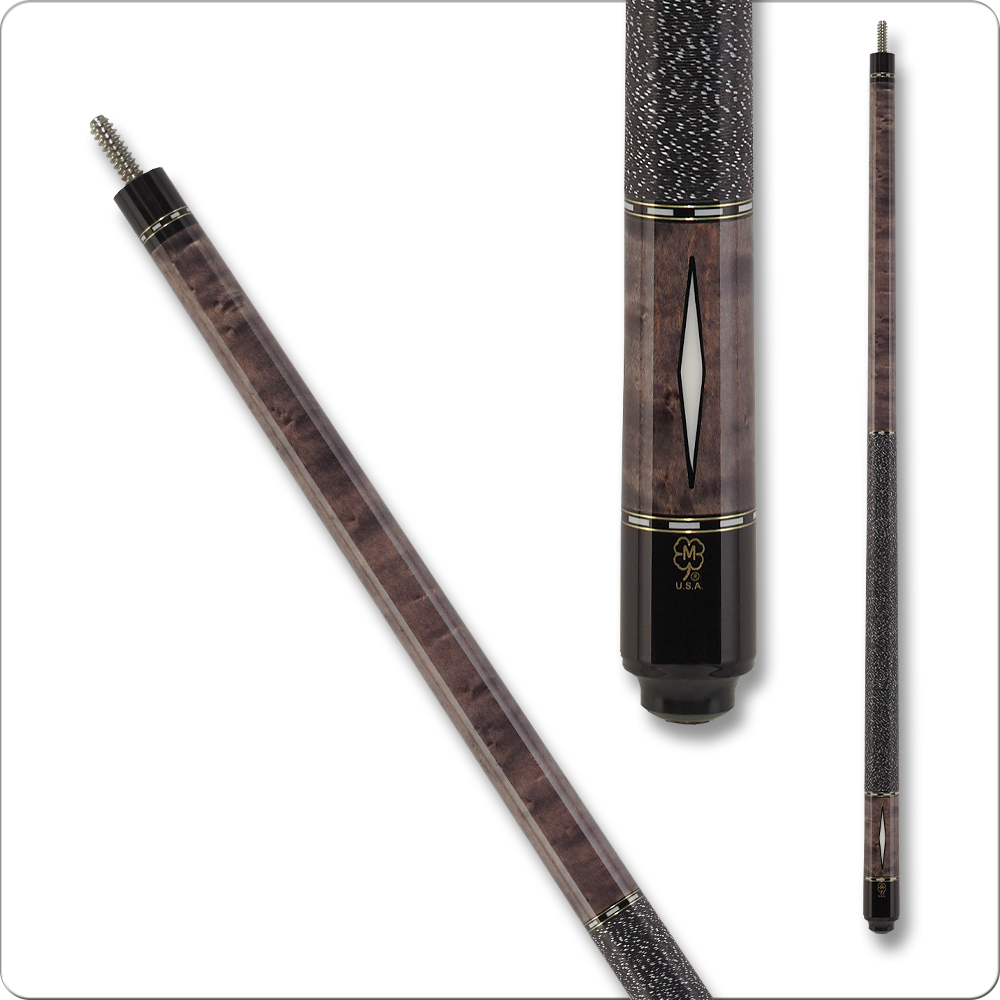
Ask a room full of league players what separates them from the person who runs three racks in a row, and most will point to potting. They are looking at the wrong end of the shot. The players who string racks together are not making harder balls than you. They are arriving at each shot with the cue ball already sitting where they need it, so every pot is a routine one. That skill has a name. It is called playing shape, and it comes down to controlling cue ball speed and understanding where the cue ball goes after contact.
This is the part of pool that rewards study more than raw talent. Once you understand the tangent line and learn to control speed, your whole game gets quieter and more predictable. Here is how it works and how to practice it.
The tangent line is the map
When the cue ball strikes an object ball with no spin, it leaves along the tangent line, which runs at ninety degrees to the line between the two ball centers at contact. That single geometric fact is the foundation of all position play. Before you shoot, picture that line. It tells you where the cue ball wants to travel by default, and it is the reference point for every adjustment you make from there.
Most position mistakes are not aiming errors at all. They are cue ball control errors, where the player pots the ball but sends the cue ball three feet past where they wanted it. Learn to see the tangent line on every shot and you stop being surprised by where the cue ball ends up. You start steering it on purpose.
Speed is the throttle
If the tangent line is the map, cue ball speed is the throttle, and it is the single most underrated skill in amateur pool. Draw and follow bend the cue ball off the tangent line, but speed decides how far it travels along whatever path it takes. Two players can pick the same shot and the same spin, and the one with better speed control will land on the next ball while the other floats out of line.
Practice thinking in terms of natural rolling distance. A soft stun shot barely moves the cue ball off the tangent line. Add follow and a firmer stroke and it curves forward and rolls farther. The goal is to build a mental library of how far the cue ball travels at a given speed with a given spin, so you can call your shape before you get down on the shot. That library is built through reps, not talk.
Featured Playing Cues at Quarter King Billiards
Consistent shape starts with a cue that gives you the same feedback every time. Low-deflection shafts make sidespin more predictable, and a well-balanced cue helps you stroke at a repeatable speed. These four are proven position-play tools across a range of budgets.
-
Sale!
-
McDermott G302 Cue
Original price was: $605.00.$544.50Current price is: $544.50. Select options This product has multiple variants. The options may be chosen on the product page -
Sale!
-
McDermott G324 Cue
Original price was: $730.00.$657.00Current price is: $657.00. Select options This product has multiple variants. The options may be chosen on the product page
Why the cue matters for shape
Speed control depends on a cue that responds the same way on every stroke. A quality playing cue with a consistent taper and a good tip lets you feel the difference between a soft roll and a firm stun, which is exactly the feedback you need to dial in distance. When you upgrade from a warped house cue to a straight, balanced gamer, most players immediately find their speed becomes easier to repeat.
Low deflection is the other piece. When you use sidespin to move the cue ball around, a low-deflection shaft sends it closer to your aim line, so your position play with english stays predictable. The McDermott G302 and the McDermott G324 pair classic playability with McDermott shaft technology, and you can see the whole McDermott range to find the wrap and price that fit. If you want carbon fiber, the Cuetec Cynergy CT134 Ghost delivers a stiff, ultra-low-deflection hit at an approachable price, while the Predator Aspire 1-3 brings Predator low-deflection performance into a value playing cue.

Three drills that build position sense
The stop shot ladder
Set the cue ball and an object ball a foot apart and stop the cue ball dead on contact. Move them farther apart and do it again. Then again. Being able to stop the cue ball at any distance means you own center-ball contact and pure speed, which is the base every other shape skill is built on. If you cannot stop it cleanly, your speed is not yet repeatable.
The tangent line target game
Place an object ball near a pocket and put a coin or a piece of chalk on the tangent line a few feet away. Pot the ball with a stun stroke and try to roll the cue ball to the marker. This trains your eye to see the tangent line and your stroke to control how far the cue ball travels along it. Move the marker closer and farther to work every speed.
The two-ball position pattern
Throw two balls out, pot the first, and try to leave a straight, makeable shot on the second. Do not worry about perfect. Worry about being on the correct side of the ball so your next shot is easy. Playing shape is less about landing on a dime and more about never leaving yourself a hard shot. String this into three and four ball patterns as you improve.
The mistakes that keep you stuck
The most common shape error is overplaying the shot. Beginners reach for draw or heavy english when a soft rolling stun would have parked the cue ball perfectly. Extra spin adds risk without adding value, and it makes your speed harder to judge. When two paths get you to the same place, take the one that uses the least spin and the least speed. Simple shots are repeatable shots.
The second mistake is playing for a spot instead of an area. Trying to freeze the cue ball on an exact inch leads to overthinking and disappointment. Strong players aim for a zone, usually the side of the ball that keeps the next shot straight and the one after that available. Give yourself a two foot window and you will relax, stroke freely, and ironically land closer to ideal more often.
The third mistake is ignoring the rails. A cue ball dying into a rail and floating back out is one of the most reliable ways to gain position, yet amateurs avoid it because it looks risky. Learn how far the cue ball rebounds off a cushion at a given speed and the whole table opens up, since a rail can turn a dead-end leave into an easy angle on the next ball.
Think one ball ahead, then two
Position play only pays off when you plan a step ahead. Before you shoot the current ball, you should already know which ball is next and which side of it you want to be on. That single habit, deciding the next shot before you shoot the current one, is what turns isolated pots into runs. Start with just one ball of foresight. Once that feels natural, look two balls ahead and plan the shape that keeps your pattern flowing.
None of this requires pro talent. It requires a clear picture of the tangent line, honest speed control, and a cue you trust to do the same thing every time. Build those three and the game slows down, the table opens up, and the runs start to come.
Put it together at the table
Shape is a habit, not a trick. Before every shot, look at the tangent line, decide where you want the cue ball, and choose the speed and spin that get it there. Miss your position and ask why, then adjust the next attempt. Do that for a few sessions and you will notice you are shooting easier balls than you used to, because you are arriving in line instead of scrambling. Pair that discipline with a straight, low-deflection cue from the Quarter King Billiards cue collection and your consistency will climb faster than any potting drill alone can take it.

About Corey Bernstein
Corey Bernstein is a competitive pool player, billiards equipment specialist, and co-owner of Quarter King Billiards in Wilmington, North Carolina. With over a decade of experience in the sport, Corey has competed in regional APA and BCA sanctioned tournaments and maintains an intimate knowledge of cue construction, shaft technology, and table mechanics. As a certified dealer for brands including Predator, McDermott, Jacoby, Viking, Lucasi, Meucci, Joss, and Cuetec, Corey personally tests and evaluates every cue that comes through the shop. His hands-on approach to the business means he has racked thousands of hours behind the table — breaking in shafts, comparing tip compounds, and dialing in the nuances that separate a good cue from a great one. When he is not behind the counter or on the table, Corey is researching the latest advances in low-deflection technology, carbon fiber shaft construction, and cue ball physics. His articles on Quarter King Billiards combine real-world playing experience with deep product knowledge to help players at every level find the right equipment for their game.