 844 408 3056

 Hot Deal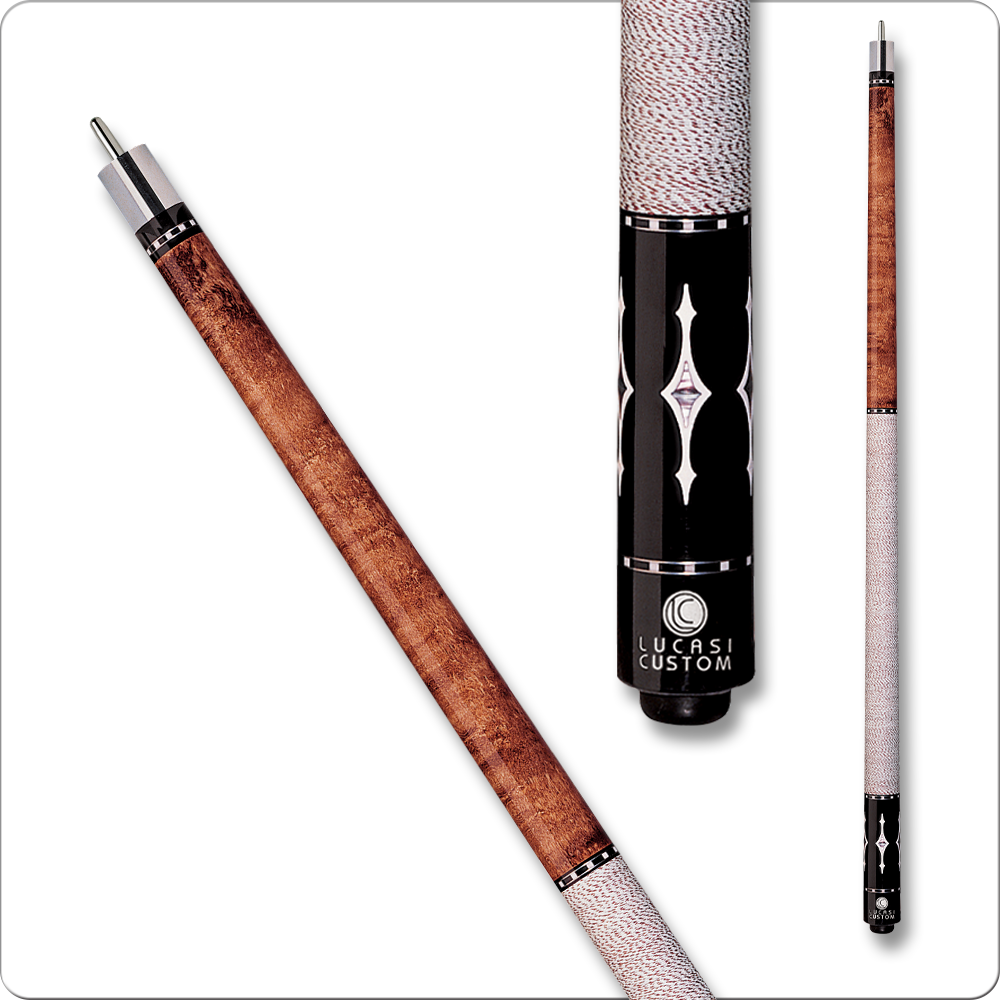
The Westgate Las Vegas just sent home a few thousand happy league players. The 2026 APA Poolplayer Championships ran from April 26 through May 2 inside the Westgate Pavilion, and for league pool, this is the biggest week of the year. There were team trophies on the line in the Masters and the 8-Ball and 9-Ball division formats, plus singles brackets running across the 8-Ball Classic and 9-Ball Shootout. The 9-Ball Shootout alone seated 625 players this year, which speaks to how deep amateur pool has gotten and why every regional APA chapter is sending bigger fields.
Here is what stood out for league players watching from home, and what it should change about the cue you carry to your next match.
What Just Happened at Westgate
The Masters team final closed with Dino Bots of Phoenix taking down Locally Hated of Madison, Alabama. Dino Bots collected the $10,000 first-place purse, with $5,000 going to the runner-up. Masters is the elite-tier APA team format and is widely seen as the most demanding bracket on the property, since rosters carry only the top skill levels and matches play race-to-7 with no handicap padding to lean on. Watching how those players close out hill-hill racks is a clinic in shot selection, especially the way they pick safeties over low-percentage cuts when the table layout allows it.
The 9-Ball Shootout finals were decided on Saturday with a winner taking $10,000 in cash and prizes. With 625 entrants, anyone who cashed pulled themselves through five or six full days of pool inside one ballroom. Stamina, cue maintenance, and a calm pre-shot routine matter more than raw firepower in a field that big. League directors have been saying it for years, but this year’s headcount drives the point home.
Beyond Masters and the Shootout, the Poolplayer Championships also crowned division champions in the standard 8-Ball and 9-Ball team brackets, the Ladies 8-Ball, the Jack & Jill, the 8-Ball Doubles, the 9-Ball Doubles, and the Wheelchair Championships. Mini-Mania ran alongside the main bracket, which is where a lot of the off-table buzz happens during the week.
Why APA Format Rewards Specific Cue Choices
APA play uses a skill-level based handicap that pegs each player at a number from 2 to 7 in 8-Ball and from 1 to 9 in 9-Ball. Higher-skill players need more wins per match, which means they cannot give away cheap balls late in a rack. That structure rewards a cue that does three things well: it stays consistent across long sessions, it produces predictable cue ball action on draw and follow strokes, and it transfers feel from the bridge hand to the tip without amplifying small stroke errors. Big custom cues are gorgeous in a case, but a working league cue should be something you grab on a Tuesday night without thinking.
That is why the favorites at Westgate every year cluster around a familiar group of brands and price points. A few stand out across the entire pool cue catalog at Quarter King Billiards.
Lucasi Hybrid for the SL5 to SL7 Player
If your handicap has crept north of a 5 in 8-ball or a 6 in 9-ball, you are getting positions that punish a cue with too much deflection. The Lucasi LZE9 Custom Cue is the kind of mid-tier piece league rooms are full of for good reason. Hybrid wood and the slim taper give you stop-shot control at three diamonds without forcing you to swing harder. It pairs well with cases in the 2×4 to 3×5 range, which is what most APA travelers carry.
Pechauer JP for Players Who Hate Surprises
Pechauer is a name you see in APA finals every cycle. The Pechauer JP21G with Irish linen wrap and the speed joint is a benchmark. Speed joint construction takes some of the variability out of screwing the cue together between racks, which sounds small until you have done it forty times in one match. Pechauer’s stock taper is firm enough to break with if you have to, though most APA players still carry a dedicated break cue for tournament play.
McDermott G-Core for Long Sessions
The McDermott G521R G Series Cue uses the G-Core inner shaft that softens unwanted vibration without dropping the feel of contact. After hour six on Westgate’s Diamond tables, that matters. Players talk about the last two racks of every long match feeling like the first ones again with a G-Core shaft because the hand and forearm are not absorbing as much extra energy.
Cuetec AVID for Carbon Fiber on a Budget
Carbon fiber is no longer a top-shelf only feature. The Cuetec AVID CT326NW with no wrap brings a low-deflection composite shaft into a working league cue at a fair price. For an SL3 or SL4 trying to break into the upper tier, dropping deflection by even 30 percent versus an old maple shaft removes a whole category of stroke errors. That is the change that takes a 4 to a 5.
Predator P3 for Players Already in the Top Bracket
If you finished second in your local APA qualifier and are looking at next year’s Poolplayer Championships, the Predator P3 Black No Wrap PREP3BN is the modular butt platform that many pros use as their daily driver. P3 lets you tune balance and weight to match how you want to hit. SL7s and Masters-team players need that level of customization once their stroke flaws are mostly cleaned up, because by then it is the cue answering small questions for them, not the other way around.
Schon When You Want to Reward a Title Run
If your team made it deep, the Schon CX52 is the kind of cue that ends up in the case after a championship banner gets hung up. Schon’s CX series is a working pro custom built in the United States, and the resale market on them barely moves because owners do not let them go.
What This Year Should Change About Your Next League Night
Three takeaways from a week in Las Vegas.
First, every Masters final at Westgate this year was decided by a safety battle, not a runout. If your APA handicap is a 5 or above, your single best practice investment is one defensive shot per session, every session, until the lock-up motion is automatic. Cue choice matters here because a low-deflection shaft like the AVID or P3 lets you hit a soft kill safety closer to the rail without skidding the cue ball into a free shot for the opponent.
Second, the 9-Ball Shootout had 625 entrants. That is the new normal for big amateur fields in 2026. If you are bringing a cue you have owned for ten years, get the tip checked before your next regional qualifier. A scuffed and shaped layered tip outperforms a worn solid leather tip by a wide margin on draw and English.
Third, Dino Bots winning Masters is a reminder that organized teams beat individually loaded teams. The cue is just one piece of that. If your APA squad is rebuilding for next year, recruit a steady SL3 before you chase another SL7. The math of the 23-rule will reward it.
For league players ready to upgrade now that the Vegas dust has settled, browse the full pool cue lineup and the case selection at Quarter King Billiards. Most APA league cues at the SL5 and above level live in the $400 to $900 range, and the cases that protect them are an afterthought no one regrets paying for once a flight gets rerouted.
How Westgate’s Diamond Tables Test Your Cue
One thing first-time APA Nationals players underestimate is the equipment shock. Diamond Pro Am tables and Pro Am Plus tables play differently than the bar boxes most league nights are run on. The cushions are firmer, the cloth is faster, and the rails come back with more energy. A cue that gets the job done on a 7-foot Valley with worn cloth will feel completely different on a freshly clothed Diamond. Players who run laps on Diamond at home before they ship cues to Vegas have a real edge, and so do players who carry a backup shaft so a tip change mid-tournament does not blow up their week.
The Mezz ZZAS31 Pool Cue is one of the cues that travels to Westgate every year and comes back with stories. Mezz’s Hybrid Pro shaft is on a lot of Asian tour pros, and the brand has filtered down into the upper tier of US league play because the joint and tip combination holds up to long sessions on tight Diamond pockets. If you are thinking about your first Asian-made cue, that is a useful entry point.

About Corey Bernstein
Corey Bernstein is a competitive pool player, billiards equipment specialist, and co-owner of Quarter King Billiards in Wilmington, North Carolina. With over a decade of experience in the sport, Corey has competed in regional APA and BCA sanctioned tournaments and maintains an intimate knowledge of cue construction, shaft technology, and table mechanics. As a certified dealer for brands including Predator, McDermott, Jacoby, Viking, Lucasi, Meucci, Joss, and Cuetec, Corey personally tests and evaluates every cue that comes through the shop. His hands-on approach to the business means he has racked thousands of hours behind the table — breaking in shafts, comparing tip compounds, and dialing in the nuances that separate a good cue from a great one. When he is not behind the counter or on the table, Corey is researching the latest advances in low-deflection technology, carbon fiber shaft construction, and cue ball physics. His articles on Quarter King Billiards combine real-world playing experience with deep product knowledge to help players at every level find the right equipment for their game.