 844 408 3056

 Hot Deal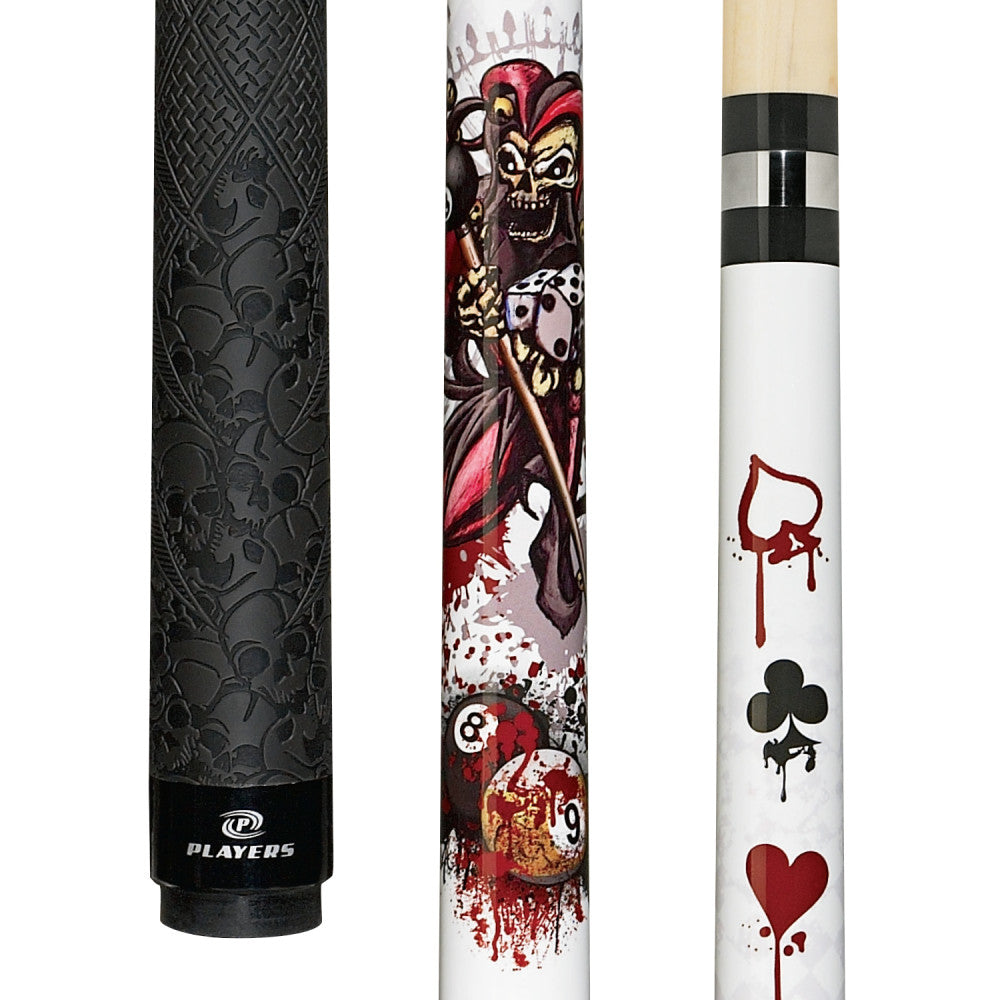
Robbie Capito was one rack away. Twelve to ten in a race to thirteen, the green jacket hanging somewhere backstage in Frisco, and a 256 player field already reduced to two men and one table. What happened over the next three racks is the reason people stay in their seats until the last ball drops.
Francisco Sanchez Ruiz beat Capito 13-12 on Sunday to win the 2026 US Open Pool Championship at the Embassy Suites in Frisco, Texas. It is his second US Open title, four years after his first in 2022, and it makes him only the tenth player in the 49 year history of the event to win it more than once. The victory pays $100,000 and moves the Spaniard to third in the world rankings. The final aired on ESPN2, which meant a lot of people who do not normally watch pool got a look at what a hill-hill nine ball match actually feels like.
Most tournament recaps stop there. We would rather pull the match apart, because the things that decided it are the same things that decide your Tuesday night league match. Nothing that happened in the last three racks required world class shotmaking. It required composure, pattern discipline, and a willingness to keep playing the percentages while the scoreboard screamed at you.
How the match actually swung
Capito won the lag and the two players traded the lead for the first ten racks. Sanchez Ruiz led 4-2, then 5-4, then 7-6. Capito answered every time. The Hong Kong player leveled at 7-7 out of a safety battle, and the match sat dead even after fourteen racks.
Then came the run that should have ended it. Sanchez Ruiz scratched off the break, Capito capitalized, and three consecutive racks put him ahead 10-8. That is the point in a race to thirteen where a lot of players start managing their disappointment instead of managing the table.
Sanchez Ruiz did the opposite. He hit a 3-9 combination to get to 10-9, then won the next rack to level at 10-10. Capito pushed back to 11-10 and then 12-10, sitting on the hill with a first US Open title one rack away. A missed 5-ball gave Sanchez Ruiz a lane back in, and he took it to reach 12-11.
The deciding rack is worth studying. Sanchez Ruiz called a push out. Capito took on the 2-ball rather than giving it back, missed, and left the table open. Sanchez Ruiz cleared. That is the whole match: one player used a rule the game gives him for free, the other tried to force a shot that was not really there.
The push out is a weapon, not a white flag
Amateur players treat the push out as an admission that the break went badly. It is not. It is the one moment in nine ball where you get to redesign the rack, and Sanchez Ruiz used it in the biggest rack of his season.
The mechanics are simple. After the break, if you do not have a shot you like, you can push the cue ball anywhere on the table without having to hit a rail or the lowest ball. Your opponent then chooses to shoot or to give the shot back to you. The skill is not in the stroke, it is in choosing a destination that is genuinely awkward for a player who wants to accept it, and genuinely acceptable for you if it comes back.
Practice it like this. Break, and any time the layout is worse than a comfortable stop shot, push the cue ball rather than firing at a low percentage cut. Then look at the table honestly and ask whether you would take the shot if it were handed to you. If the answer is a fast yes, you pushed too soft. If the answer is no, you did it right.
Safeties won more racks than run outs did
Read the rack by rack account of that final again and count how often the phrase safety battle appears. The 7-7 rack came out of one. So did the 11th rack, where Sanchez Ruiz played an outstanding safety on the 7-ball and forced a foul. Two players at the absolute top of the sport spent a meaningful chunk of a televised final not running out.
League players tend to think a rack is either a run out or a failure. It is neither. Most racks are negotiations, and the player who negotiates better wins the majority of them over a long night. If you have not built a safety habit, start with the simplest version: when you cannot see a clean route to your next two balls, ask what the safest place for the cue ball is instead of what the flashiest shot is.
Your break is a variable, not a constant
Sanchez Ruiz scratched off the break in the fourteenth rack and handed Capito the initiative. Capito had a dry break in the fourth and handed it right back. These are two of the best breakers alive, and both of them coughed up racks on the opening shot.
The lesson is not that the break is unimportant. It is that break results scatter, and building your whole game plan around a monster break is fragile. A controlled break that puts the cue ball near center table with one or two balls made will out earn a wild break over the length of a match, because the wild version gives away racks you never got to play.
Featured Players Cues at Quarter King Billiards
-
-
-

-
-
-
What a hill-hill final says about equipment
Here is the uncomfortable part for anyone hoping a purchase fixes their game. Nothing in that final was decided by gear. It was decided by a push out, a missed 5-ball, and a player who kept his stroke while trailing 12-10.
What equipment does is remove variables. A cue that fits your hand, weighs what you expect, and hits the same way in rack forty as it did in rack one lets you spend your attention on the table instead of on your equipment. That is the entire job. A cue does not need to cost four figures to do it, and for most league and bar players a well built production cue in the $150 to $300 range is the honest answer.
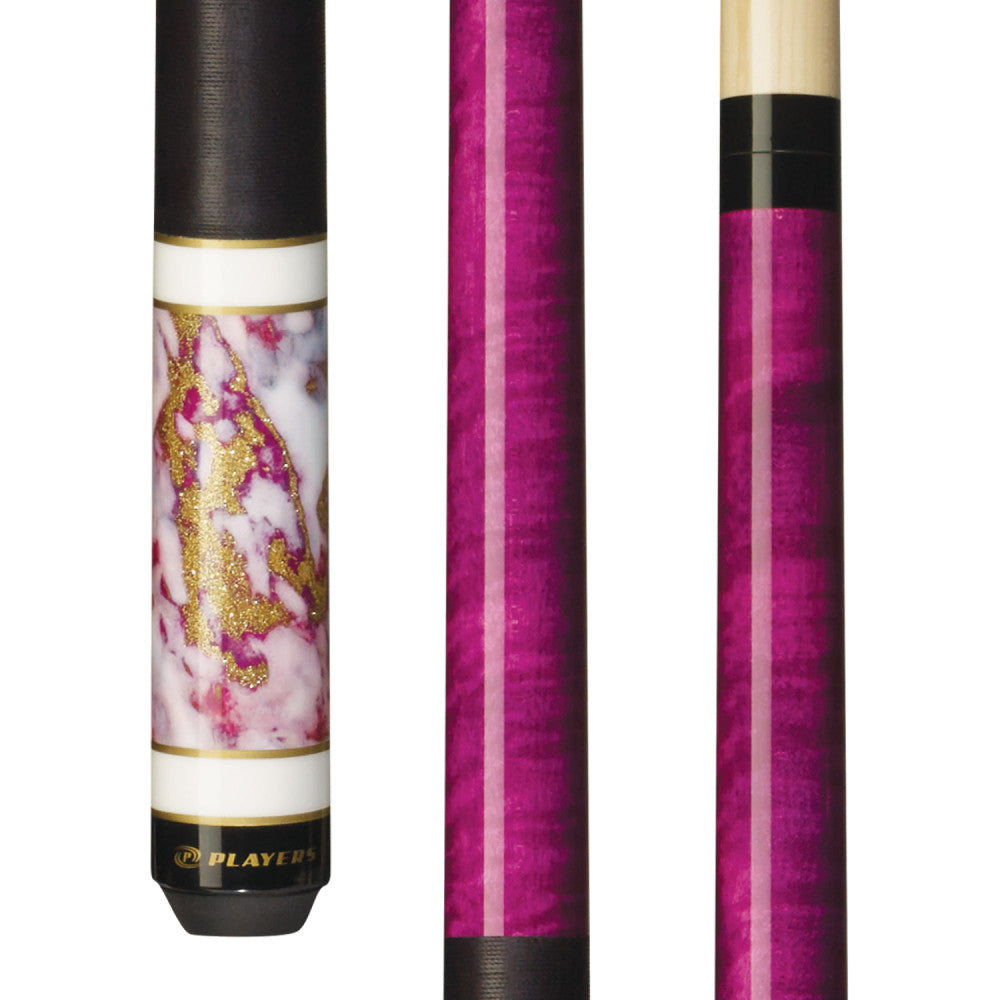
Three practical fit decisions matter more than any marketing claim. First, wrap. The Players Illustrious Purple with black linen wrap gives you the traditional Irish linen feel that stays grippy when your hands sweat, which is exactly what happens when the match tightens. Second, grip texture. The Players Jester Sport Grip uses a rubberized sport grip instead, which some players prefer because it never needs the maintenance linen eventually does. Third, wrapless. The Players 4 Point Crimson Wrapless puts bare finish under your hand, which suits players who slide their grip and dislike any texture change.
None of those is better than the others. They are three answers to a question only your hand can settle, which is why trying the styles matters more than reading about them. If you want the leatherette middle ground, the Players Black and Ivory with leatherette wrap sits between linen and bare finish.
Three things to work on this week
First, push outs. Break ten racks, and every time the layout is not clean, push instead of forcing. Track how many of those racks you eventually win compared with your usual approach.
Second, the score does not change the shot. Sanchez Ruiz played the same percentage pool at 12-10 down that he played at 4-2 up. Pick one match this week and consciously refuse to change your shot selection based on the score. Most players tighten up when ahead and gamble when behind, and both habits cost racks.
Third, count your safeties. Keep a rough tally of how many racks you won without ever having a full run out. If that number is close to zero, you are leaving a large piece of the game on the table.
The World Nineball Tour heads to Manila next for the Reyes Cup, October 15 to 18, where Capito joins Team Asia for his debut and Sanchez Ruiz lines up for Team Rest of the World alongside Shane Van Boening. Those two are not finished with each other.
If your own cue has started to feel like a variable rather than a constant, browse the full pool cues collection at Quarter King Billiards, or start with the Players cue lineup if you want proven production quality without a custom cue budget.

About Corey Bernstein
Corey Bernstein is a competitive pool player, billiards equipment specialist, and co-owner of Quarter King Billiards in Wilmington, North Carolina. With over a decade of experience in the sport, Corey has competed in regional APA and BCA sanctioned tournaments and maintains an intimate knowledge of cue construction, shaft technology, and table mechanics. As a certified dealer for brands including Predator, McDermott, Jacoby, Viking, Lucasi, Meucci, Joss, and Cuetec, Corey personally tests and evaluates every cue that comes through the shop. His hands-on approach to the business means he has racked thousands of hours behind the table — breaking in shafts, comparing tip compounds, and dialing in the nuances that separate a good cue from a great one. When he is not behind the counter or on the table, Corey is researching the latest advances in low-deflection technology, carbon fiber shaft construction, and cue ball physics. His articles on Quarter King Billiards combine real-world playing experience with deep product knowledge to help players at every level find the right equipment for their game.