 844 408 3056

 Hot Deal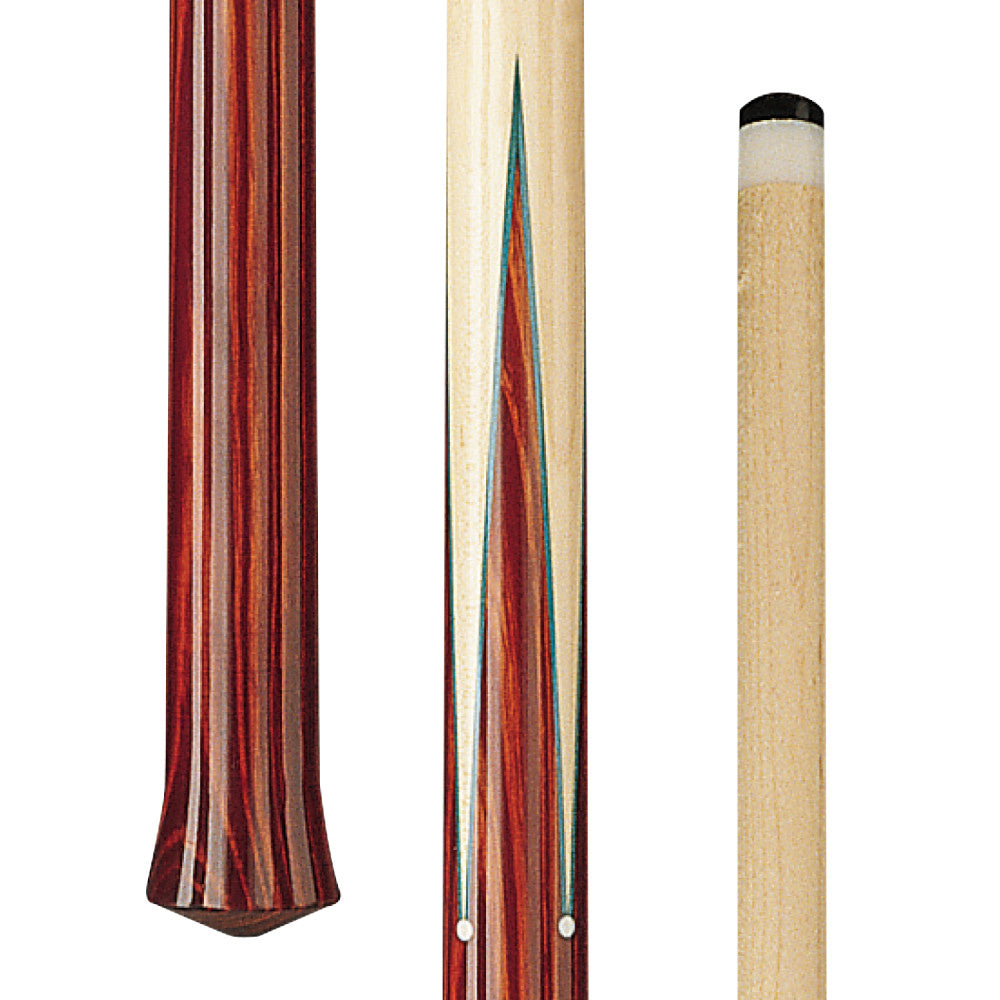
Your opponent hooks you behind the 8-ball with the 3-ball sitting three diamonds up the long rail. Somebody at the next table says jump it. Somebody else says kick it. You have about twenty seconds to decide, and the wrong choice hands over ball in hand.
This is the most common decision in pool that almost nobody practices deliberately. Players drill draw shots and break speed for hours, then guess their way through the one situation that happens several times a night and routinely decides the rack. The decision is not a matter of taste. There is a reasonably clear framework, and once you have it, the shot stops feeling like a coin flip.
Start with the obstruction, not the target
Most players look at the ball they need to hit and work backward. Reverse it. Look at the blocking ball first and measure how much of the cue ball it actually covers.
If the blocker is more than roughly a ball and a half away from the cue ball, a jump is realistic for most players with a proper jump cue. Inside that distance, the elevation required climbs fast, the margin for a miscue climbs with it, and a foul becomes the likely outcome rather than the unlucky one. Under about a ball’s width of separation, treat the jump as off the table regardless of what you saw on a highlight reel.
Then check what is behind the blocker. A jump that clears the obstruction and lands on the far side with nothing to stop it is a jump that runs your cue ball into a rail, then another rail, then wherever it feels like going. Clearing the ball is only half the shot. Controlling where you land is the other half, and it is the half that separates a legal hit from a legal hit that also leaves your opponent nothing.
When the kick is simply the better shot
Kicking beats jumping more often than most league players believe, and it beats it in four specific situations.
The first is when the target ball sits near a rail. A one rail kick into a ball hugging the cushion has a large margin of error, because the rail itself helps funnel the cue ball into contact. A jump at the same ball has to be precise in two dimensions instead of one.
The second is when you need a safety rather than a hit. Kicks let you kill speed and leave the cue ball buried. Jumps launch the cue ball with energy that has to go somewhere, and it usually goes somewhere helpful for your opponent.
The third is when the cloth is worn or the table is unfamiliar. Jump shots are more sensitive to rail height, cloth condition, and how a particular table plays. A mirror system kick is more forgiving of an unfamiliar room.
The fourth is when you are simply better at kicking. If you have put in reps on the mirror system and two rail kicks and you have never practiced jumping, the higher percentage shot is the one you have actually rehearsed. Honest self assessment beats theory.
Featured Jump Cues at Quarter King Billiards
-
-
-
-
-
-
-
Sale!

-
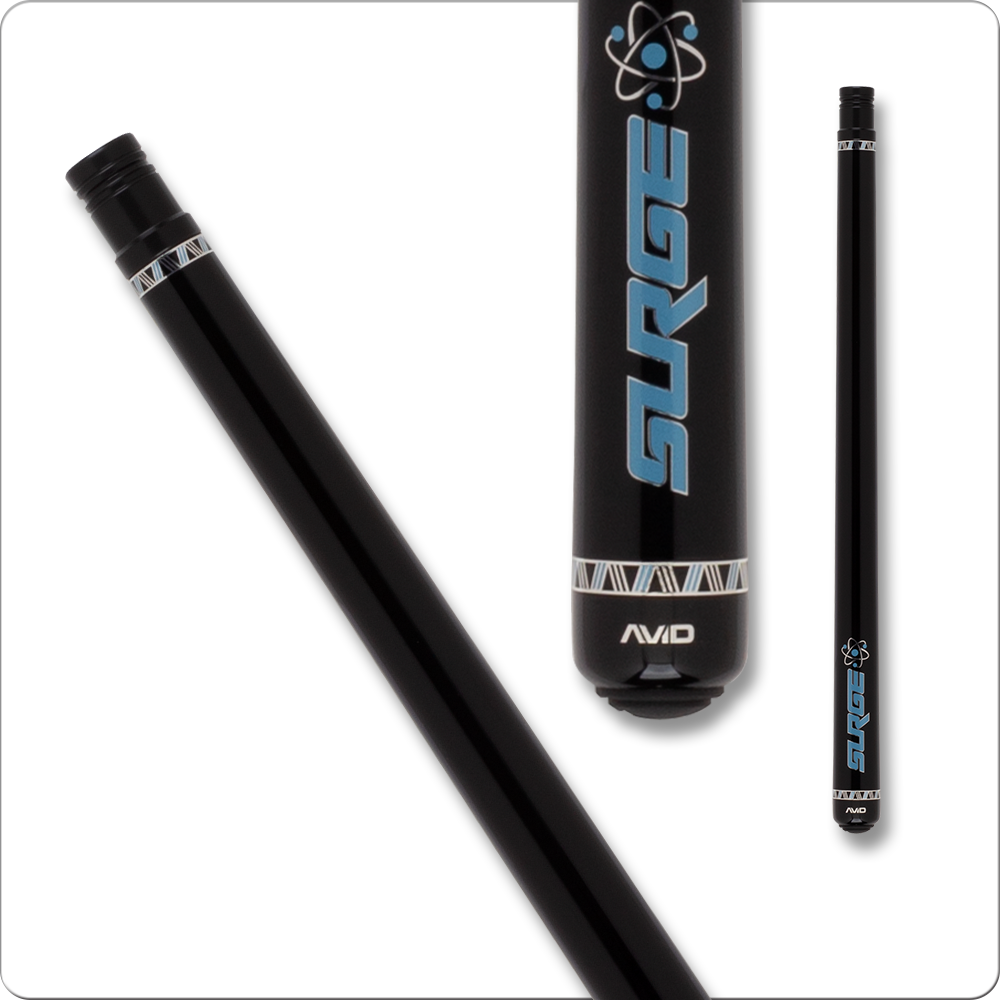
Cuetec AVID CT339 Surge Jump Cue
Original price was: $309.00.$279.00Current price is: $279.00. Select options
Why a playing cue makes a bad jump cue
Players who try to jump with their regular cue and fail usually conclude they cannot jump. What actually happened is that they used the wrong tool.
A jump cue is short and light on purpose. The short length lets you elevate the butt steeply without the back of the cue running into your chest or the ceiling. The light weight lets the cue accelerate quickly through a short stroke, which is what pinches the cue ball against the cloth and pops it up. A 19 ounce playing cue at 58 inches fights you on both counts. The physics are not on your side, and no amount of technique makes up for it.
Tip and ferrule material matter too. Jump cues use hard tips and hard ferrules because a soft tip absorbs the energy you are trying to deliver in a very short contact window. That is also why you should never try to fix your jumping by putting a jump tip on your playing cue. You will ruin the feel of every normal shot to gain a shot you take twice a night.
How to choose the jump cue that suits you
There are three practical formats and they solve different problems.
Dedicated jump cue
A purpose built jump cue does one job and does it well. The Lucasi L-2000JC Jump Cue and the Players E-JC Jump Cue both sit under $220 and are built around the light, short geometry that makes jumping repeatable. If you already own a break cue you like, a dedicated jumper is the cleanest addition.
Jump cue with a technical edge
The Cuetec AVID CT339 Surge is the step up for players who jump often enough that consistency matters more than the price gap. Cuetec builds it for players who want the shot to feel the same every time rather than being a small adventure.
Jump and break combination
The Pure X HXT 5-in-1 Jump/Break Cue converts between configurations so one cue covers breaking and jumping. The advantage is obvious if you carry a two butt case and do not want to give up a slot. The tradeoff is that a converting cue is a compromise at both jobs by definition, and the conversion takes a few seconds you may not want to spend under a shot clock. Players who break hard and jump rarely usually prefer this format. Players who jump often usually end up with a dedicated cue.
The technique, in four steps
Elevate the butt to somewhere between 45 and 60 degrees for most jumps. Steeper than that only when the blocker is close and you need height quickly.
Grip the cue lightly and hold it further back than feels natural. A tight grip kills the acceleration the shot depends on.
Aim at the center of the cue ball or slightly above center relative to your elevated stroke line. Hitting low is the classic beginner error and it produces a scoop, which is a foul in most rule sets and a bad habit in all of them.
Stroke short and fast rather than long and hard. The cue ball leaves the cloth because it is pinched between tip and slate, not because you hit it a long way. New jumpers almost universally use too much backswing and too little acceleration.
Know the rules before you elevate
Two rule points catch players out. The first is the scoop. If your tip contacts the cloth under the cue ball and lifts it rather than pinching it downward, that is a foul under world standardized rules and in most league rule sets, even though the ball travels and the hit looks fine to a casual observer. The tell is a small divot in the cloth and a cue ball that rises almost vertically. If a house pro tells you that you scooped one, they are probably right.
The second is house policy. Some rooms and some private tables prohibit jump shots outright, usually because of past damage to cloth or rails. Ask before you elevate in an unfamiliar room, particularly on a table with newer cloth. Nobody enjoys the conversation that follows a torn cloth.
While you are at it, retire the myth that jumping ruins the cue ball. A properly executed jump with a hard jump tip is no rougher on a ball than a firm break. What damages equipment is the mishit that catches the cloth, and the fix for that is technique rather than avoidance.
Build the decision into practice
Set up ten hooks against a friend and play each one twice, once as a jump and once as a kick. Score them the same way you would score a real rack: a legal hit that leaves your opponent an easy out is not a success. After twenty attempts you will know which shot is genuinely yours, and the twenty seconds you get at the table will no longer feel like guesswork.
Ready to add one to your case? Browse the full jump cue selection, or look through the wider pool cues collection at Quarter King Billiards if you are building out a complete setup.

About Corey Bernstein
Corey Bernstein is a competitive pool player, billiards equipment specialist, and co-owner of Quarter King Billiards in Wilmington, North Carolina. With over a decade of experience in the sport, Corey has competed in regional APA and BCA sanctioned tournaments and maintains an intimate knowledge of cue construction, shaft technology, and table mechanics. As a certified dealer for brands including Predator, McDermott, Jacoby, Viking, Lucasi, Meucci, Joss, and Cuetec, Corey personally tests and evaluates every cue that comes through the shop. His hands-on approach to the business means he has racked thousands of hours behind the table — breaking in shafts, comparing tip compounds, and dialing in the nuances that separate a good cue from a great one. When he is not behind the counter or on the table, Corey is researching the latest advances in low-deflection technology, carbon fiber shaft construction, and cue ball physics. His articles on Quarter King Billiards combine real-world playing experience with deep product knowledge to help players at every level find the right equipment for their game.