 844 408 3056

 Hot Deal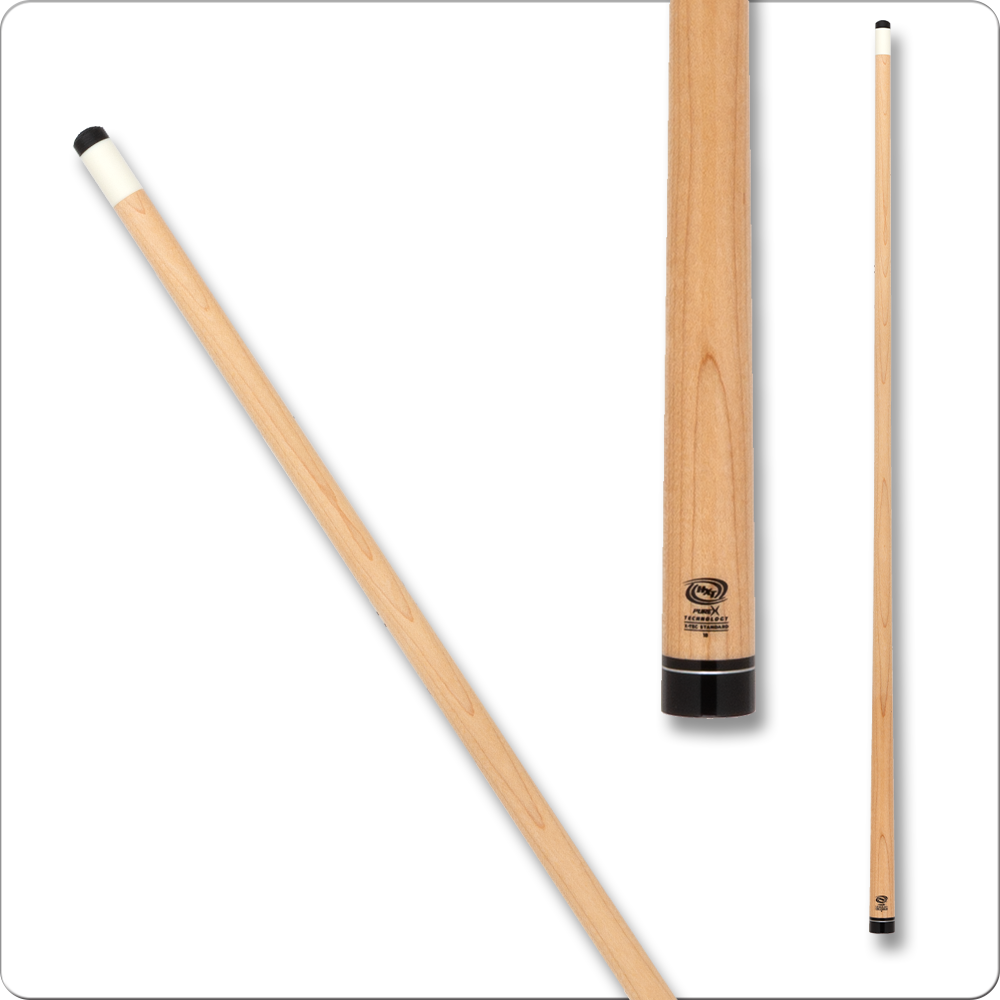
Every player has a shot that quietly ruins their night. For most people it is not the long straight in, and it is not the tough draw shot. It is the thin cut. The object ball sitting three inches off the side rail, the cue ball almost parallel to it, and a cut angle somewhere past 60 degrees. You know you are supposed to make it. You make it maybe four times out of ten. Then you spend the rest of the rack trying not to leave yourself another one.
Thin cuts and rail shots fail for reasons that have almost nothing to do with aim. Once you understand what is actually going wrong, the fix is mechanical and it holds up under pressure.
The Contact Point Illusion
On a half ball hit, your eye and your brain agree on where contact happens. On a thin cut they stop agreeing. At cut angles beyond about 55 degrees, the visible contact point is on the far edge of the object ball, curving away from you, and your eye cannot see it directly. You are aiming at a point you are inferring, not a point you are looking at.
Most players compensate by aiming at the edge of the ball they can see, which is not the same thing. The result is a hit that is thicker than intended by a hair, which on a thin cut means the object ball travels several inches off line by the time it reaches the pocket.
The practical fix is to stop aiming at the object ball entirely and start aiming the cue ball’s center at a ghost position. Picture where the cue ball must sit at the moment of contact, imagine that phantom ball, and send the center of your cue ball to the center of the phantom. On thin cuts, that phantom ball will feel like it is barely overlapping the object ball at all. Trust it. Your instinct will tell you it is too thin. Your instinct is wrong.
Throw Is Working Against You More Than You Think
Two balls in contact do not separate cleanly. Friction drags the object ball slightly off the geometric tangent, and that effect is called throw. On a straight in shot throw is irrelevant. On a thin cut with a centerball hit, throw can move the object ball a couple of degrees, which is the entire margin on a shot down the rail.
Throw gets worse when the balls are dirty, when the shot is slow, and when there is any inside english on the cue ball. It gets better with outside english, with speed, and with clean equipment.
That gives you two levers. The first is a touch of outside english, which reduces the friction between the balls and cancels most of the throw. The second is a firmer stroke. A thin cut hit at a lag speed will throw noticeably. The same shot hit at a solid medium speed throws far less.
The catch with outside english is that it introduces deflection, which is the cue ball squirting off line as the shaft flexes at contact. Which brings us to the equipment part of this conversation.
Why Shaft Technology Matters on These Shots and Not on Others
A low deflection shaft does not make you a better aimer. What it does is shrink the correction you have to make when you apply sidespin. With a heavy traditional maple shaft, half a tip of outside english on a long thin cut can push the cue ball an inch or more off your intended line, and you have to consciously compensate for that. With a low deflection shaft, that same half tip pushes it far less, so the compensation is smaller and, more importantly, more consistent from shot to shot.
That consistency is the whole point. Almost anyone can learn to compensate for deflection. What separates players is whether the compensation is the same amount every time.
Featured Players Cues With HXT Low Deflection Shafts
Players builds the HXT shaft into cues that sit well under the price of a boutique low deflection setup, which makes them the honest recommendation for a league or tournament player who wants the technology without a $700 conversation.
-
Sale!
-
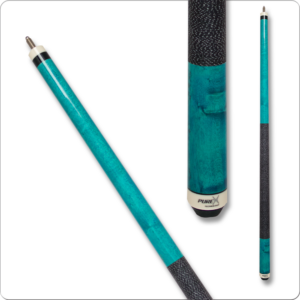
Players HXTC10 Pool Cue, HXT Low-Deflection Shaft
Original price was: $362.00.$325.80Current price is: $325.80. Select options This product has multiple variants. The options may be chosen on the product page -
Sale!
-
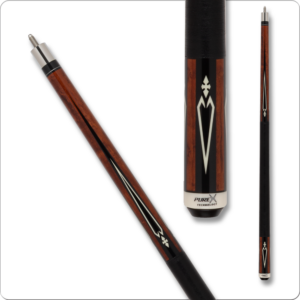
Players HXT15 Pool Cue, HXT Low-Deflection Shaft
Original price was: $362.00.$325.80Current price is: $325.80. Select options This product has multiple variants. The options may be chosen on the product page -
Sale!

-
Players HXT101 Pool Cue
Original price was: $329.00.$296.10Current price is: $296.10. Select options -
Sale!
-
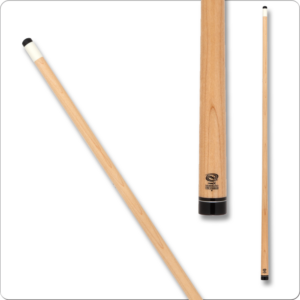
Players HXT-18SR Pool Cue
Original price was: $219.00.$189.00Current price is: $189.00. Select options
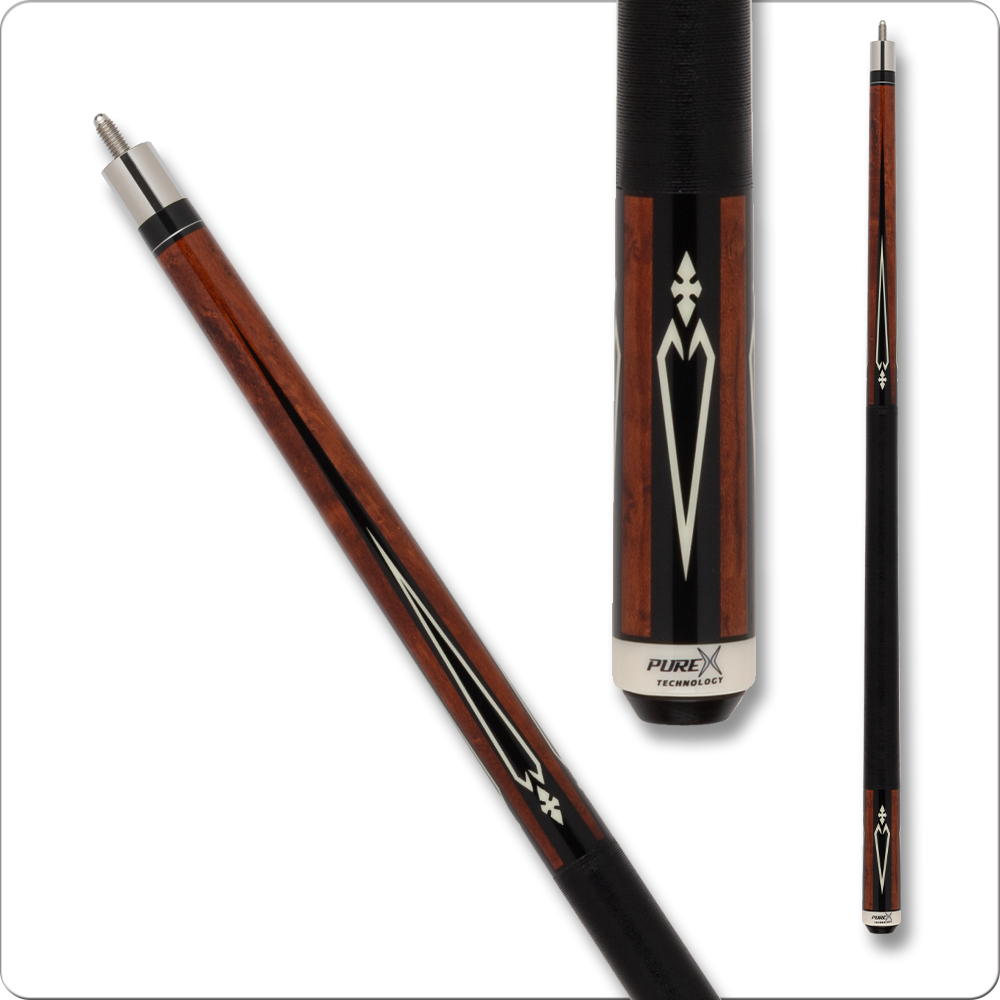
The Players HXT-18SR Pool Cue at $189 is the cheapest genuine entry into low deflection we stock, and for a player currently fighting a house cue on rail shots it is a real jump. The Players HXT101 Pool Cue at $296.10 adds a nicer build without changing the shaft performance.
Move up to the Players HXT15 Pool Cue or the Players HXTC10 Pool Cue, both at $325.80, and you are buying better wood, better wraps, and a cue that holds resale value. All of them run the same HXT shaft, so the shot making difference between the $189 cue and the $325 cue is smaller than the price gap suggests.
Rail Cut Shots Are a Different Animal
When the object ball is frozen or nearly frozen to the rail, the geometry changes. You are no longer just cutting a ball, you are managing a collision that involves the cushion.
Hit the Ball and the Rail Together
On a frozen rail cut, the reliable aim is to contact the object ball and the cushion at essentially the same instant. If you hit the rail first, the cue ball rebounds into the object ball at a bad angle and the ball goes nowhere useful. If you hit the ball too full, the object ball comes off the rail and back out into the table.
Slightly favoring the rail is the safer error. A cue ball that grazes the cushion a fraction early still tends to push the object ball down the rail toward the pocket. A hit that is too thick sends it out into the open, which is a miss and a sellout at the same time.
Speed Keeps It on the Rail
A frozen rail shot hit softly will wobble off the cushion and drift away from the rail. The same shot hit with medium pace hugs the rail all the way to the pocket. When in doubt, add pace, then plan position around the fact that the cue ball is going to travel.
Watch for the Double Kiss
The classic disaster on rail cuts is the cue ball rebounding off the cushion and catching the object ball a second time. It usually happens when the cue ball is also near the rail and you use running english that brings it back into the object ball’s path. On those shots, a touch of reverse english or a slightly thinner hit gets the cue ball out of the way.
A Drill That Actually Fixes Thin Cuts
Set the object ball one diamond up the long rail from the corner pocket, frozen to the cushion. Put the cue ball at the opposite end, also near that same rail, so you are shooting a long thin cut down the rail. Shoot ten. Record makes.
Then repeat the same setup with the object ball one inch off the rail instead of frozen. Ten more. The off rail version is harder for most players, because the cushion is no longer helping to guide the ball, and that is exactly where the aiming error shows up.
Do this for ten minutes twice a week. Nothing else on a practice table has a better return on time, because rail shots come up constantly in 8 ball and in every safety exchange in 9 ball.
Housekeeping That Costs Nothing
Two free improvements before you spend money. First, wipe the balls. Dirty object balls throw dramatically more than clean ones, and cheap ball cleaner solves it. Second, chalk properly on every thin cut. Thin hits with sidespin are exactly the shots that miscue, and a miscue on a rail shot is not just a miss, it is usually ball in hand for your opponent. Our cue tips section covers what to do when the tip itself has gone glassy and stops holding chalk.
If the cue is the limiting factor, the whole pool cues catalog is worth a look, but start with the Players HXT range. On thin cuts and rail shots specifically, it is the cheapest measurable upgrade in the shop.

About Corey Bernstein
Corey Bernstein is a competitive pool player, billiards equipment specialist, and co-owner of Quarter King Billiards in Wilmington, North Carolina. With over a decade of experience in the sport, Corey has competed in regional APA and BCA sanctioned tournaments and maintains an intimate knowledge of cue construction, shaft technology, and table mechanics. As a certified dealer for brands including Predator, McDermott, Jacoby, Viking, Lucasi, Meucci, Joss, and Cuetec, Corey personally tests and evaluates every cue that comes through the shop. His hands-on approach to the business means he has racked thousands of hours behind the table — breaking in shafts, comparing tip compounds, and dialing in the nuances that separate a good cue from a great one. When he is not behind the counter or on the table, Corey is researching the latest advances in low-deflection technology, carbon fiber shaft construction, and cue ball physics. His articles on Quarter King Billiards combine real-world playing experience with deep product knowledge to help players at every level find the right equipment for their game.