 844 408 3056

 Hot Deal
Everybody practices draw. Set the cue ball two feet from an object ball, aim low, hit it, and watch the cue ball come screaming back. Then you get to a real table in a real match, the shot is six feet long, and the cue ball crawls backward eight inches before quitting. The draw did not fail at the moment of contact. It died in transit, and the reasons are almost always the same four.
What draw actually is
When you strike below the center of the cue ball, you give it backspin. The ball then slides down the table with the bottom surface rotating backward against the cloth. Friction fights that rotation the entire way. Every inch the cue ball travels, the cloth strips a little backspin off it.
At some point the backspin runs out and the ball starts rolling forward naturally. That transition is the whole game. If the cue ball arrives at the object ball still spinning backward, it draws. If it arrives rolling, it follows. If it arrives at the moment between the two, it stops.
This is why the same stroke draws beautifully at two feet and does nothing at seven. Distance is the enemy, and the fix is not hitting harder.
Reason one: you are not hitting as low as you think
Most players who believe they are striking the bottom of the ball are striking a third of the way down. Under pressure the stroke rises. The safe usable contact point is roughly one tip width below center, and the very bottom of the usable range sits just above where the tip would start sliding off the curve of the ball.
A way to check this without a coach: chalk up, shoot a draw shot, then look at the cue ball. The chalk mark tells you exactly where you hit. Do that five times in a row and the mark almost never lands where the player expected. If your marks cluster near center, your problem is not power.
Reason two: you decelerate into the ball
Draw needs the tip to still be accelerating, or at least moving at full speed, at the instant of contact. Players who are nervous about a low hit slow down right before impact to steer the tip. That deceleration is invisible to the shooter and fatal to the shot.
The tell is a long backswing followed by a short punch. What you want is a smooth backswing, a brief pause, and a stroke that continues past the ball. Follow through matters here for a mechanical reason and not a mystical one. A stroke aimed at a point six inches beyond the cue ball cannot be decelerating at contact.
Reason three: your cue is elevated
Every degree of butt elevation converts some of your backspin into downward force. The cue ball hops a little, lands, and the hop scrubs off spin. On shots over the rail, or with the bridge hand crowded by another ball, elevation is unavoidable and draw becomes much harder.
On open shots there is no excuse. Drop the back hand, lower the bridge, and get the cue as close to parallel with the bed as the rail allows. A flat cue at medium speed beats an elevated cue at high speed every time.
Reason four: your tip has stopped working
This is the reason nobody wants to hear and the only one you can fix with a purchase. A tip that has been hit for a year is compressed, glazed, and mushroomed. It holds less chalk, deforms less on impact, and gives you a shorter dwell time on the ball. All three reduce spin.
Soft and medium tips deform more on contact and generally produce more spin for the same stroke. Hard tips deform less, last longer, and transfer more energy forward, which is why break cues use them. If your playing cue wears a rock hard tip and you are fighting for draw, that is a real part of your problem.
Featured cue tips at Quarter King Billiards
-
-
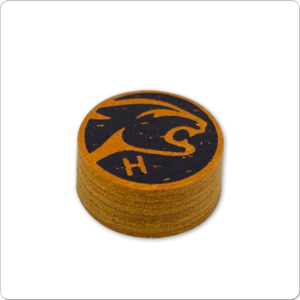
Predator Victory QTPRE Tip – Single
$29.00 Select options This product has multiple variants. The options may be chosen on the product page -
-
-
-
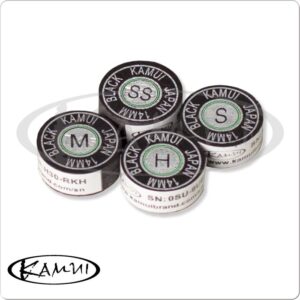
Kamui Black QTKBLK Tip – Single
$28.80 Select options This product has multiple variants. The options may be chosen on the product page -
-
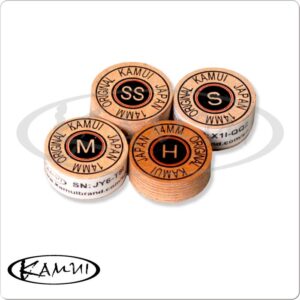
Kamui Original QTKAM Tip – Single
$26.00 Select options This product has multiple variants. The options may be chosen on the product page
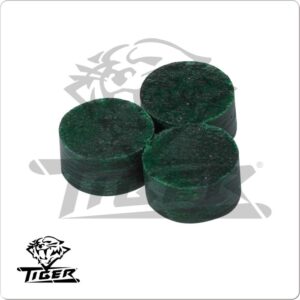
The Kamui Black at $28.80 is the spin player’s default and holds its shape well through a season of league. The Kamui Original at $26 is the softer, cheaper entry into the same family. Predator Victory at $29 is built for consistency across hardness grades, which matters if you want the same feel every time you replace it. And the Tiger Emerald at $14.50 is the value pick that still gives you real chalk retention.
Three drills that fix draw faster than hitting harder
The stop shot ladder
Before you chase draw, own the stop shot. Place the object ball one diamond away and stop the cue ball dead. Then two diamonds. Then three. Keep going until you can stop it from the full length of the table. A stop shot at seven feet requires the same low hit and the same clean stroke as a draw shot, with none of the ego. When you can stop from anywhere, draw is a small adjustment rather than a leap.
The one diamond draw
Set the object ball on the second diamond and the cue ball a diamond behind it. Pocket the object ball and draw the cue ball back exactly one diamond. Not as far as possible. Exactly one diamond. Then two. Then three. Controlled draw wins games. Maximum draw wins nothing.
The ghost ball line check
Draw shots miss more often than follow shots because the low hit magnifies any unintended sidespin. Shoot ten draw shots straight into a pocket from three feet. If the object ball is drifting one way consistently, you are applying side without knowing it, and your bridge or your stance alignment is the cause.
Three myths worth dropping
“Hit it harder”
Speed adds distance to the cue ball’s travel, which gives the cloth more time to strip the backspin. Past a certain point, extra force reduces draw rather than increasing it, because the ball spends longer sliding before it reaches the object ball. Smooth beats violent.
“Scoop under the ball”
You cannot get under a cue ball that is sitting on the cloth. Attempts to do it produce an elevated cue, a miscue, or a foul. The lowest legal contact point is well above the point where the tip would slide off, and every extra millimeter of ambition costs accuracy.
“A new cue will fix it”
A low deflection shaft helps with side spin, not with draw. Vertical spin does not care about squirt. Replacing a dead tip is the equipment fix for draw. Replacing the whole cue is not.
Table conditions change everything
A new, fast, worsted cloth holds backspin much longer than a napped bar box cloth that has been played on for three years. The exact same stroke will produce twice the draw on a well maintained nine foot table. This is not a flaw in your technique. It is why traveling players spend the first rack of every match learning the table rather than firing.
Humidity matters too. A damp room slows the cloth and kills draw. If your basement table plays short in August and long in January, that is the reason.
Put it together
Draw is not a power shot. It is a low contact point, a level cue, an accelerating stroke, and a tip that still grips. Three of those cost nothing. The fourth costs about the price of a league night.
Start with the stop shot ladder this week. Once you can stop the cue ball from anywhere on the table, add a diamond of draw at a time and you will have real position play rather than a party trick.
If your tip is past saving, the cue tips category has soft through hard in every major brand, and the wider accessories range covers the shapers and burnishers that keep a new tip working. If the cue itself is the limiting factor, the full pool cues catalog is the place to start, and a proper case is what keeps a good shaft from warping between sessions.

About Corey Bernstein
Corey Bernstein is a competitive pool player, billiards equipment specialist, and co-owner of Quarter King Billiards in Wilmington, North Carolina. With over a decade of experience in the sport, Corey has competed in regional APA and BCA sanctioned tournaments and maintains an intimate knowledge of cue construction, shaft technology, and table mechanics. As a certified dealer for brands including Predator, McDermott, Jacoby, Viking, Lucasi, Meucci, Joss, and Cuetec, Corey personally tests and evaluates every cue that comes through the shop. His hands-on approach to the business means he has racked thousands of hours behind the table — breaking in shafts, comparing tip compounds, and dialing in the nuances that separate a good cue from a great one. When he is not behind the counter or on the table, Corey is researching the latest advances in low-deflection technology, carbon fiber shaft construction, and cue ball physics. His articles on Quarter King Billiards combine real-world playing experience with deep product knowledge to help players at every level find the right equipment for their game.