 844 408 3056

 Hot Deal
The 49th US Open Pool Championship reached its quarter-final stage today at the Embassy Suites in Frisco, Texas, the first time the sport’s oldest American major has been staged in the Lone Star State. Two hundred and fifty six players entered on August 25 chasing a share of $500,000. Four matches on Saturday decide who survives into Sunday’s semi-finals, where the format stretches to a race to 11 and then a race to 13 for the title.
And yet the story that has traveled furthest out of Frisco this week is not a run-out. It is an argument about a cube of chalk.
What actually happened between Krause and Appleton
In the second round, Denmark’s Mickey Krause trailed Darren Appleton 8-4 and came back to win the match on the hill. Afterward Krause told the World Nineball Tour that Appleton had objected loudly to the chalk Krause was using, which was standard Master. Appleton, who plays with Taom, responded publicly and did not walk any of it back. His complaint was residue. In his telling, Master sheds particles onto the cue ball and the cloth, and those particles cause bad contacts. He said flatly that the chalk “should be banned” and clarified that his anger was aimed at the product rather than the player.
Both men agree on one detail worth holding onto. At 8-4, on what was effectively match ball, Appleton got a skid on the five. He missed. Krause won four of the next five racks and closed it out. A tournament run worth thousands of dollars turned on a single bad contact, and the two players involved could not agree on whether the chalk caused it.
That is the whole argument in miniature, and it applies to your Tuesday league night just as much as it applies to a ESPN+ broadcast table.
Skid, cling, kick: the thing everyone is arguing about
A skid, also called a cling or a kick, is a contact between the cue ball and an object ball where friction spikes for a fraction of a second. Instead of the balls separating along the normal tangent path, they grab each other. The object ball comes off thinner or fatter than the aim line predicted, and the cue ball behaves like it hit a piece of tape.
The leading explanation is contamination at the contact point. Chalk dust, hand oil, and cloth fiber build up on the balls. When a chalk-loaded spot on the cue ball meets a chalk-loaded spot on the object ball, the coefficient of friction jumps. Slow rolling shots skid more than firm shots because there is less momentum to overcome that momentary grab.
So the question players fight about is not whether chalk residue exists. It is how much your particular chalk sheds, and whether that shedding is your opponent’s problem too.
The three families of pool chalk
Low residue chalk
This is the category Taom built and the one Appleton was defending. The design goal is grip on the tip with minimal transfer to the ball and the cloth. Players who chalk aggressively and play long sessions on light cloth tend to notice the difference first, because there is simply less blue dust migrating onto everything. Predator’s Pure chalk chases the same target.
High grip premium chalk
Kamui built its reputation on maximum hold. The trade is that a chalk engineered to bite hard on a leather tip usually leaves more of itself behind. Break specialists and heavy spin players often accept the residue because the miscue insurance is worth more to them than a clean cue ball.
Classic Master
Master is the chalk most of us learned on, and it is still on the rail at the majority of rooms in America. It works, it costs almost nothing per cube, and it is the reference point every other chalk gets measured against. It is also the highest shedding of the three families, which is precisely what set Appleton off.
Featured chalk at Quarter King Billiards
-
-
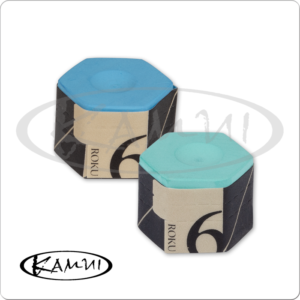
Kamui Roku CHKR Chalk – Single
$30.00 Select options This product has multiple variants. The options may be chosen on the product page -
-
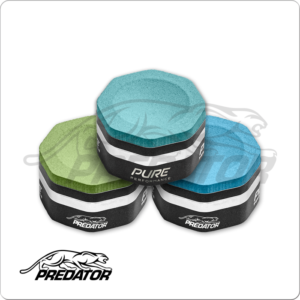
Predator CHPURE Pure Chalk – Single
$19.94 Select options This product has multiple variants. The options may be chosen on the product page -
Sale!
-
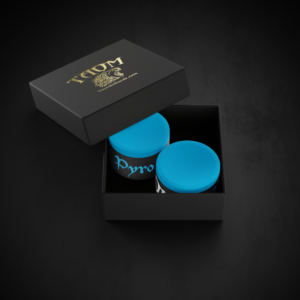
TAOM Pyro Chalk BLUE – Single
Original price was: $25.00.$19.99Current price is: $19.99. Add to cart -
-
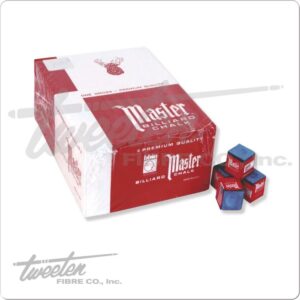
MASTER CHALK (BOX OF 144 CUBES)
$71.99 Select options This product has multiple variants. The options may be chosen on the product page
The TAOM Pyro Chalk in blue at $19.99 is the direct answer to the residue complaint, and it is the family Appleton plays with. Predator Pure Chalk sits at $19.94 and targets the same low transfer behavior. If grip matters more to you than cleanliness, the Kamui Roku at $30 is the heavy hold option. And if you run a room, a league, or a garage table where six people share one cube, the box of 144 Master cubes at $71.99 is still the most rational purchase in billiards.
Sharking is a separate problem, and Frisco has had that too
The chalk fight was not the only flashpoint this week. Earl Strickland’s win over Eklent Kaci produced its own round of accusations, and a separate incident between two other players spilled onto social media on Friday. Pool has always had a wide tolerance for gamesmanship compared with snooker, and that tolerance is exactly why disputes escalate. When the norms are unwritten, everyone gets to believe their own version.
The useful distinction is between equipment choices and behavior. Using a legal chalk that your opponent dislikes is an equipment choice. Talking during a stroke, moving in a player’s sight line, or slamming a cue on the rail is behavior. Referees can rule on the second category immediately. The first category needs an actual rule change, and no governing body has written one.
How to keep this off your own table
Almost every skid argument in league play is preventable with three habits.
Wipe the cue ball
Ask the room for a clean towel and wipe the cue ball between racks. On a heavily chalked table this single habit removes most of the contamination that causes cling. If your room has a ball cleaning machine, use it before a match instead of complaining after one.
Chalk over the tray, not over the table
Turn away from the bed of the table when you chalk. Most of the dust that ends up on the cloth is put there by players chalking directly above the playing surface out of habit.
Chalk less than you think
A properly shaped tip holds chalk. Grinding the cube into the tip before every single shot puts more material into the air and onto your hands than the tip can actually use. Chalk before shots with meaningful spin, before the break, and after any shot where you felt the tip slip.
What this week should actually change about your game
Nothing about the Krause and Appleton exchange tells you which chalk is best. It tells you that at the highest level of the sport, players believe contact quality is worth arguing about in public, on the record, during the biggest tournament of their year. If professionals think a fractional change in friction is worth a fight, the amateur habit of treating chalk as an afterthought looks pretty strange.
Buy a cube that suits the way you play. If you spin the ball hard, buy grip. If you play long sessions and care about the table, buy low residue. Then wipe the cue ball, chalk away from the cloth, and let your opponent use whatever they want.
The rest of the US Open runs through Sunday, when the semi-finals and final are played across two sessions and the championship match goes out on ESPN2. Quarter-finalists have already banked $15,000. Whoever lifts the trophy takes home $100,000, and defending champion Aloysius Yapp arrived in Texas as world number one after beating Fedor Gorst 13-11 in last year’s final.
If the week has you looking at your own setup, the accessories section covers chalk, gloves, tip tools and cue care, and the full pool cues catalog runs from bar box starters to production customs. Our earlier chalk shootout compares these four head to head if you want the deeper breakdown.

About Corey Bernstein
Corey Bernstein is a competitive pool player, billiards equipment specialist, and co-owner of Quarter King Billiards in Wilmington, North Carolina. With over a decade of experience in the sport, Corey has competed in regional APA and BCA sanctioned tournaments and maintains an intimate knowledge of cue construction, shaft technology, and table mechanics. As a certified dealer for brands including Predator, McDermott, Jacoby, Viking, Lucasi, Meucci, Joss, and Cuetec, Corey personally tests and evaluates every cue that comes through the shop. His hands-on approach to the business means he has racked thousands of hours behind the table — breaking in shafts, comparing tip compounds, and dialing in the nuances that separate a good cue from a great one. When he is not behind the counter or on the table, Corey is researching the latest advances in low-deflection technology, carbon fiber shaft construction, and cue ball physics. His articles on Quarter King Billiards combine real-world playing experience with deep product knowledge to help players at every level find the right equipment for their game.