 844 408 3056

 Hot Deal
Run your fingers down the shaft of a cue that has been played for a month without cleaning and you will feel it: a faint tackiness near the ferrule, a gray-blue tint in the grain, and a stroke that does not glide through the bridge the way it did when the cue was new. None of that is wear. It is chalk dust, skin oil, and humidity bonded into the wood, and it comes off in ten minutes if you use the right products in the right order.
Shaft care is the least glamorous part of owning a good cue and the part that most affects how it plays day to day. This guide walks through what is actually on a dirty shaft, the three-step process for a wood shaft, the very different rules for carbon fiber, what to never do, and which products earn a place in a case pocket.
What Is Actually on Your Shaft
Chalk is the obvious one. Every stroke throws a little chalk dust down the shaft, and the fine particles work into the open grain of maple. On their own they would brush off. The problem is the second ingredient, which is the oil and sweat from your bridge hand. That oil carries the chalk into the pores and holds it there, and the combination is what turns a white maple shaft blue-gray from the ferrule to about a foot back.
The third ingredient is moisture. Humidity raises the grain of a wood shaft, which makes the surface microscopically rougher, which catches more chalk and oil. A shaft that feels sticky in August and fine in January is telling you exactly this. Sealing the shaft after cleaning is how you interrupt that cycle.
A dirty shaft is not just cosmetic. A tacky surface drags in the bridge, and the small hesitation it causes at the end of the backswing shows up as a jerky stroke. Players often blame their fundamentals for a problem that is really a maintenance problem.
Wood Shafts: Clean, Burnish, Seal
Step One: Clean
Start with a purpose-made shaft cleaner rather than a household product. The Tiger Crystal Cleaner is the workhorse here. It is formulated to get into the pores of maple and lift the chalk and oil out, and it comes with a scuffer pad for shafts that have gone a long time between cleanings. Apply a small amount to a clean cloth, work from the ferrule toward the joint in long strokes, and keep turning the cloth so you are not just redistributing the grime. You will see the cloth go blue almost immediately.
The Cue Doctor Cue Cleaner and Conditioner does the same job with a conditioning element built in, which is a good choice for a shaft that has dried out. The Shaft Mate Conditioning System is the budget option at $12.95 and works well for regular light cleaning between deep cleans.
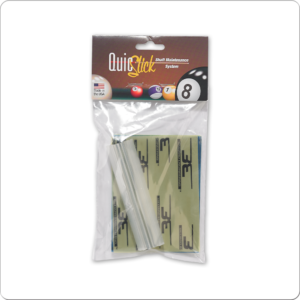
For players who want a single kit, the QuicSlick Shaft Maintenance System packages cleaning and polishing into one applicator, with refills sold separately, so it lives in the case and gets used because it is convenient.
Step Two: Burnish
Cleaning lifts the grain slightly. Burnishing lays it back down and closes the surface so it is smooth and slick. This is the step most players skip, and it is the reason their shaft feels rough for a day after cleaning. The Tiger Smoother and Burnisher is a two-in-one pad that smooths and then polishes, and it also adds a light seal against moisture while it works. The Porper Shaft Polisher is a double-sided suede pad that does the same thing for under five dollars. Either one works. The technique is the same: wrap it around the shaft, apply firm pressure, and run it up and down quickly enough to generate a little heat. The friction is what closes the grain.
Step Three: Seal
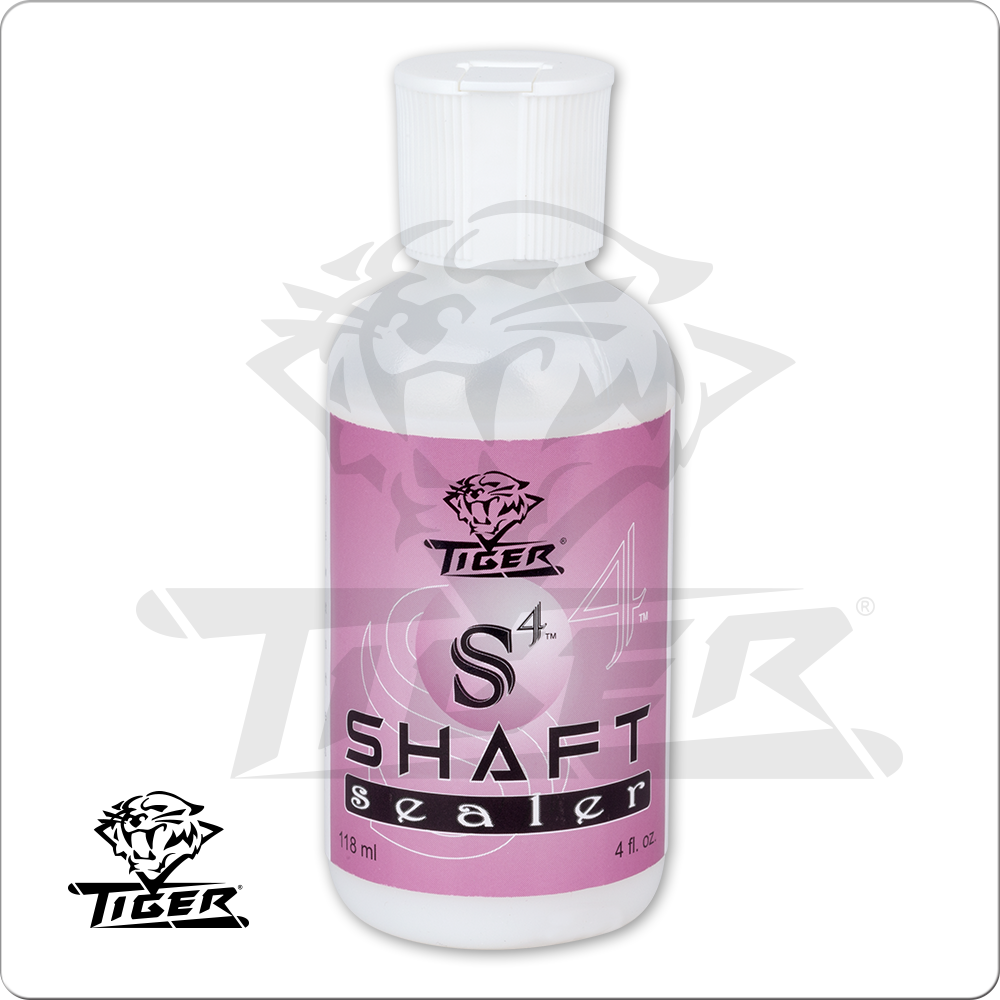
A sealed shaft resists the humidity cycle that started this whole problem. The Tiger Shaft Sealer is designed to seal, smooth, and protect a maple shaft against moisture. Apply a thin coat, let it dry, and burnish again. You will not need to do this every time you clean. Once a season is plenty for most players, and more often if you play in a humid room or carry your cue between air-conditioned and outdoor environments.
Carbon Fiber Shafts: A Different Rulebook
Everything above applies to wood. Carbon fiber shafts from Predator, Cuetec, Lucasi, and the other brands have a hard composite surface with no grain, no pores, and no need to seal. They also have a surface that can be damaged by exactly the abrasive tools that wood shafts love.
Never use a scuffer pad, a burnisher with any abrasive element, sandpaper, or a magic eraser on carbon fiber. Those products remove material from wood, which is fine in tiny amounts. On carbon they can dull the finish or, worse, break through the outer layer. Carbon fiber gets cleaned with a damp microfiber cloth or a dedicated wipe, and that is all.
The Predator REVO Wipes are made for exactly this. A box of fifty is $29, singles are available for a dollar if you want to try one first, and each wipe cleans a shaft in about thirty seconds without leaving residue. They also work on any other carbon shaft, not just Predator’s. Pair the wipes with a microfiber towel for the quick wipe-down after every session and a carbon shaft will look new for years.
One more carbon note. Chalk residue on a carbon shaft feels more noticeable than on wood because the surface is so smooth, and some players over-clean in response. A quick wipe after each session is enough. If the shaft feels tacky, the problem is almost always hand oil, and a glove solves that faster than any cleaner.
What to Never Do
Do not sand a wood shaft as routine maintenance. Fine sandpaper removes wood every time, and over a few years it changes the taper and the diameter of the shaft. Sanding is a repair for a specific problem, such as a raised ding, not a cleaning method. If you have a ding, the Cue Doctor Dent Buffer is built for that and does not remove material the way sandpaper does.
Do not use furniture polish or car wax. Silicone-based polishes leave a film that feels great for a day and then attracts chalk like a magnet. They also make it harder for a proper sealer to bond later.
Do not soak the shaft. A damp cloth is fine. Running water is not. Maple swells when it absorbs water, and a swollen shaft can loosen the ferrule or warp.
Do not skip the ferrule. The ferrule collects chalk more than any other part of the cue, and a dirty ferrule transfers chalk to the tip side of the shaft every time you chalk. Clean it with the same cleaner and wipe it dry.
How Often, and What to Keep in the Case
A quick wipe with a dry microfiber after every session takes fifteen seconds and prevents most buildup. A proper clean and burnish every two to four weeks for a wood shaft, depending on how much you play and how humid the room is. A seal once or twice a year. For carbon, a wipe after each session and a REVO wipe when it starts to look chalky.
The case kit that covers all of that is small: one cleaner, one burnisher, one towel, and a few wipes if you have a carbon shaft. Total cost is under $60 and it protects a shaft that may have cost several hundred.
Featured Cue Care Products
-
-
-
-
-
-
-
-
When Cleaning Is Not Enough
Some shafts are past the point where cleaning helps. If the shaft has a visible warp when you roll it on a flat table, if the ferrule is cracked, or if the taper has been sanded down to the point where it feels thin and whippy, no product will bring it back. That is when a replacement shaft makes sense, and the good news is that it is far cheaper than a new cue. The shaft collection at Quarter King Billiards covers standard maple replacements for most joint types as well as carbon fiber upgrades, so a well-loved butt can get a new life.
And if you are shopping for a new cue and wondering whether to go wood or carbon partly because of maintenance, the honest answer is that both are easy to care for once you know the rules. Wood takes a little more attention and rewards it with a feel that many players still prefer. Carbon takes almost none. The full cue collection lists the shaft material on every product page, so you can decide with that in mind.

About Corey Bernstein
Corey Bernstein is a competitive pool player, billiards equipment specialist, and co-owner of Quarter King Billiards in Wilmington, North Carolina. With over a decade of experience in the sport, Corey has competed in regional APA and BCA sanctioned tournaments and maintains an intimate knowledge of cue construction, shaft technology, and table mechanics. As a certified dealer for brands including Predator, McDermott, Jacoby, Viking, Lucasi, Meucci, Joss, and Cuetec, Corey personally tests and evaluates every cue that comes through the shop. His hands-on approach to the business means he has racked thousands of hours behind the table — breaking in shafts, comparing tip compounds, and dialing in the nuances that separate a good cue from a great one. When he is not behind the counter or on the table, Corey is researching the latest advances in low-deflection technology, carbon fiber shaft construction, and cue ball physics. His articles on Quarter King Billiards combine real-world playing experience with deep product knowledge to help players at every level find the right equipment for their game.