 844 408 3056


 Hot Deal
Eighty women entered the Pechauer WPBA Signature Series Stop #2 at Janet Atwell’s Borderline Brunswick Arena over the last weekend of August, and the one who left with the trophy had been waiting a quarter century for it. Caroline Pao of New Jersey, a fixture on the J. Pechauer Northeast Women’s Tour since 2003 and a cash finisher in 54 WPBA events before this one, came through seven loss-side matches and three double-hill finishes to claim her first title under the WPBA banner. The final against Eleanor Callado, played as a single extended race to 9, went to the last rack too.
That is a good story on its own. It is also a useful one for anyone who plays league on a Tuesday night and wonders whether the game has a real stage for them. The Signature Series was built specifically for WPBA competitors at or below a 650 FargoRate, and after one year it is producing exactly the kind of pool that level of player can learn from. Here is what happened, why the format works, and what it says about the cue company that has sponsored it from the start.
How the Signature Series got here
The WPBA launched the Pechauer Signature Series just shy of a year ago as a home for its sub-650 players, and the first, unnumbered event last October drew 89 entrants. The official Stop #1 in May ran into a conflict with the APA League’s National Championships and the field dropped to 47. Both events were won by Canada’s Veronique Menard. Stop #2, played August 27 to 30, brought the number back up to 80, and Menard was in the field again as the two-time defending champion.
Races were to 7 on the winners’ side, with shorter races on the loss side and a single extended race to 9 for the final. That structure matters for what comes next, because it rewards a player who can hold a stroke together for a long weekend rather than one who catches a gear for two hours on a Saturday.
The winners’ side: Pao gets sent over early
Pao opened the way you want to: 7-2 over Brenda Knott, 7-4 over Nathalie Chabot, then a single rack conceded to Olivia Cheng. In a winners’ side quarterfinal she ran into Kindra Prestegard and lost 7-2. That is the moment a lot of amateurs treat as the end of the tournament. Pao treated it as a change of bracket.
On the other side of the draw, Menard worked through Charlie Simpson, Cecilia Watts and Holly Figueroa before Christy Norris pushed her to a 13th and deciding game. Menard won it, and Norris would go on to finish the event holding its qualifying spot for a future WPBA event. Eleanor Callado, another long-time road player, survived a double-hill opening match against Gwen Sharpton and then gave up three racks to Kelly Wyatt, one to Nicole James and three to room owner Janet Atwell. Callado beat Prestegard 7-4 and Menard beat Giovanna Napolitano 7-2 to set up the hot seat match, and Callado took it 7-4.
The loss side: seven matches, three of them double hill
Pao’s first loss-side opponent was Linda Shea, a long-time friend and former JPNEWT tour director. It went double hill, and Pao won. She beat Kaley Sullivan 6-4, shut out Napolitano, then beat Norris 6-3 in a Sunday morning quarterfinal that carried extra weight: whoever won it had to go through Menard, the only champion the series had ever had, to reach the final.
Pao and Menard went double hill in the semifinal. Pao won that too, and then the final against Callado went to a deciding rack in the extended race to 9. Callado had been chasing her first recorded WPBA win since a Regional Tour Championship in 2013, so there was no soft opponent anywhere on that Sunday. Pao closed all three.
Four things league players can take from this
Losing early is not the same as losing
Pao’s path to the title ran through more matches than anyone else’s in the field. In a double-elimination event, the loss side is a longer road, not a lesser one. The habit worth copying is what she did between the Prestegard loss and the Shea match: reset, and treat the next opponent as the first match of a new tournament. If your league or regional tour runs double elimination, plan your energy, your food and your warm-up for the longer route, not the shorter one.
Double hill is a skill you can practice
Three deciding racks in one weekend is not luck. The players who close those racks tend to have a pre-shot routine that does not change when the score does. If yours speeds up under pressure, that is the first thing to fix. Set up practice races to 3 against a friend where the loser racks and pays for the table time, and you will feel your routine wobble in a low-stakes place where you can actually work on it.
Experience compounds
Pao has 31 cashes on the JPNEWT alone, including eight wins between 2019 and 2022, on top of those 54 WPBA cashes. Nobody would call that an overnight success. Regional tours are where the reps come from, and the Signature Series exists because the WPBA recognized that its sub-650 players needed somewhere to turn those reps into titles. If there is a regional tour within driving distance of you, it is the best money you can spend on your game.
The field is the point
Eighty entrants at a Fargo-capped event says something the pro tours cannot. Those are players with jobs, families and a 650-or-under rating who still traveled for a long weekend of pool. When you see a field like that, the takeaway is not that you should aspire to the pro level. It is that there is a full competitive ladder below it, and every rung is worth climbing.
Why Pechauer’s name is on this series
J. Pechauer Custom Cues has backed women’s pool in the Northeast for a long time. The JPNEWT carried the Pechauer name for years, and Pao’s own record on that tour dates back to 2003. The WPBA thanked Pechauer as the Signature Series sponsor again this weekend, and the next WPBA event at Borderline Brunswick Arena will be a Pechauer Invitational, scheduled for the weekend of October 7 to 11.
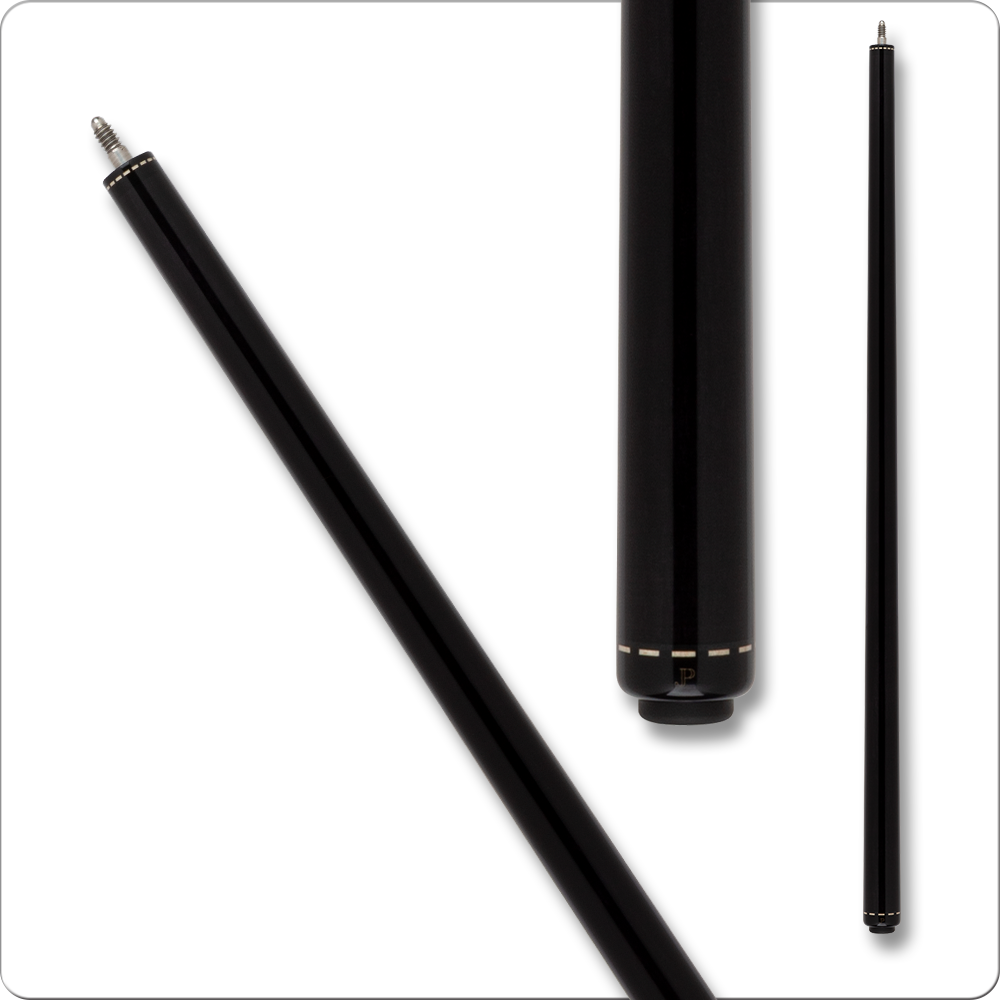
That kind of sponsorship tends to come from a company that is comfortable with amateur players as customers, and Pechauer’s catalog reflects it. The cues are built in Green Bay, Wisconsin, with the woodwork, machining, inlay and finishing done in-house, and the lineup at Quarter King Billiards runs from a JP Series playing cue in the low $300s up to Pro Series models that pass $1,000. The two lines come out of the same shop with the same build standards. The JP Series is the accessible entry point, with a flat-faced Speed Joint and an engraved JP logo on the butt cap, and the Pro Series adds Pechauer’s low-deflection Plus shaft along with more intricate inlay work.
For a league player who has run a starter cue for a couple of seasons, the Pechauer JP2501 shows what a real American production shop feels like without a four-figure commitment. The JP2505 sits a step up in the same line with a blue-stained look, and the JP25R02 Pro Series is the least expensive way into the Plus shaft. To see where the Pro Series goes with more design work, the JP25R05 is a good example. We put Pechauer next to another Wisconsin shop in our Pechauer vs Jacoby comparison if you want the longer version.
Featured Pechauer Products
-
Sale!

-
Pechauer JP25R05 Pro Series Cue
Original price was: $550.00.$495.00Current price is: $495.00. Select options -
Sale!

-
Pechauer JP25R02 Pro Series Cue
Original price was: $410.00.$369.00Current price is: $369.00. Select options -
Sale!

-
Pechauer JP2505 JP Series Cue
Original price was: $440.00.$396.00Current price is: $396.00. Select options
Rounding out a Pechauer bag
Pechauer also builds the specialty cues that a double-elimination weekend eventually demands. The Pechauer JPJMP jump cue is a short, wrapless maple jumper with a Tiger Emerald tip that gets over a blocker without the bulk of a full-length cue, and the Naked JPBKR break cue with the Rogue carbon shaft pairs a carbon break shaft with a bare curly maple grip for players who do not want a wrap under their break stroke. Neither is required to win a Signature Series stop. Both make a long Sunday easier.
What comes next
The WPBA returns to Borderline Brunswick Arena for the Pechauer Invitational on October 7 to 11, and the Signature Series will keep giving sub-650 players a reason to travel. Menard is still the standard in the series with two wins. Callado showed she is a hot seat player. And Pao, 25 years in, is finally a WPBA champion. If that is not a reason to enter the next regional stop near you, nothing is.
Browse our full range of pool cues, or start with the Green Bay shop that has been backing women’s pool for two decades.

About Corey Bernstein
Corey Bernstein is a competitive pool player, billiards equipment specialist, and co-owner of Quarter King Billiards in Wilmington, North Carolina. With over a decade of experience in the sport, Corey has competed in regional APA and BCA sanctioned tournaments and maintains an intimate knowledge of cue construction, shaft technology, and table mechanics. As a certified dealer for brands including Predator, McDermott, Jacoby, Viking, Lucasi, Meucci, Joss, and Cuetec, Corey personally tests and evaluates every cue that comes through the shop. His hands-on approach to the business means he has racked thousands of hours behind the table — breaking in shafts, comparing tip compounds, and dialing in the nuances that separate a good cue from a great one. When he is not behind the counter or on the table, Corey is researching the latest advances in low-deflection technology, carbon fiber shaft construction, and cue ball physics. His articles on Quarter King Billiards combine real-world playing experience with deep product knowledge to help players at every level find the right equipment for their game.