 844 408 3056

 Hot Deal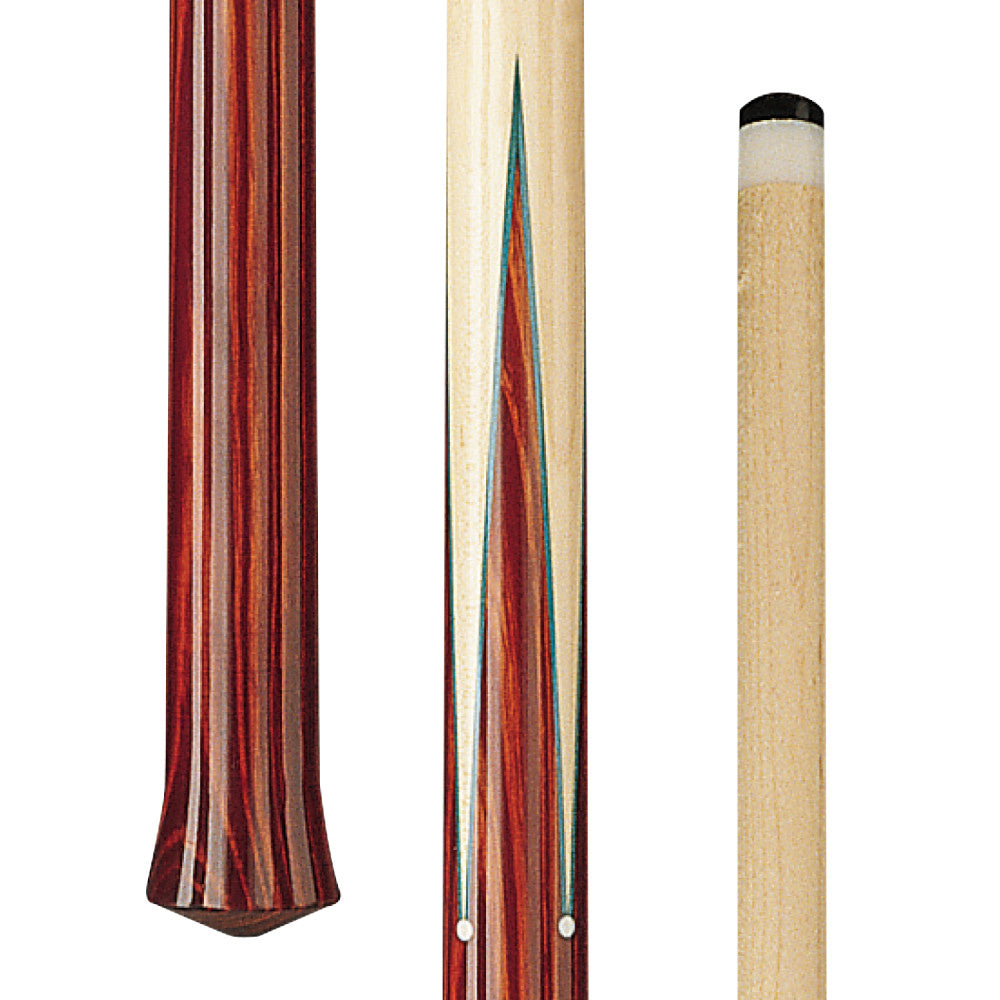
Two shots into a rack of 9-ball, the game offers you something no other moment does: permission to hit the cue ball anywhere you like without touching a ball or a rail, and then let your opponent decide who shoots next. Most league players either never use the push out or use it as a white flag. Both are mistakes. Played well, the push out is a negotiation, and the player who understands what is being negotiated wins more racks from bad breaks than the player who does not.
This guide covers the rule as written, the decision of whether to push, the harder decision of where to push to, and the third decision that gets the least attention: what to do when someone pushes on you.
The rule, exactly
Under the World Standardized Rules used by the WPA, the push out is available only on the second shot of the rack, immediately after a legal break. If the breaker made a ball, the breaker may push. If the break was dry, the incoming player may push. Either way, the shooter has to announce the push out before shooting. Once announced, two normal fouls are suspended for that one shot: the requirement to hit the lowest-numbered ball first, and the requirement to drive a ball to a rail after contact. Everything else still counts. Scratch on a push out and your opponent has ball in hand. Knock a ball off the table and the same applies.
If the push out is legal, the other player chooses: shoot from where the cue ball lies, or hand the table back and make you shoot. Pocketing a ball on a push out does not earn you another shot, and if the 9 goes in on a push it is spotted. The 10-ball rules work the same way for the 10.
League formats vary. Some run the WPA rule exactly, some drop the push out entirely, and some only allow it in higher-level divisions. Know your rulebook before you rely on any of this in a match that counts.
Decision one: should you push at all?
You are looking at a push out when the cue ball has no clean path to the lowest ball and the alternatives are poor. Work through the alternatives first. Is there a kick you have made ten times this month? Play it. Is there a jump over a single ball with a clear landing zone, and do you carry a jump cue? Play that. Is there a safety where you can drive the object ball to a rail and leave the cue ball behind a blocker? That is often better than pushing, because a good safe puts the pressure on your opponent immediately instead of starting a negotiation.
Push when none of those are live. The classic setup is a cue ball buried in the stack after a break that scattered nothing, or a cue ball frozen on a rail with the 1 ball hidden behind two others and no kicking lane. In those spots a push out is not surrender. It is the only way to stop the rack from being decided by a foul.
There is a second, sneakier reason to push: when you have a shot, but it is a shot you would hate to have to make. A long, thin cut on the 1 with the cue ball two diamonds off the rail is makeable, and it also sends the cue ball around the table with no shape on the 2. Some players push from there on purpose, leaving a different problem they prefer. That is an advanced use, and it only works if you are truthful with yourself about which shots you actually make under pressure.
Decision two: where to leave it
This is where most pushes go wrong. Players push to a spot that gives themselves a shot and forget that the opponent gets first refusal. The target is a position that is good for you and bad for them, and there are a few reliable ways to build one.
Push to a shot you own and they do not
If you are a confident jumper and your opponent is not, push to a position where the 1 is blocked by a single ball, the cue ball is a foot or so away, and the landing area is open. To you that is a routine jump. To them it is a kick they do not want. If your bank game is stronger than theirs, push to a position where the only shot at the 1 is a bank across the table. Play to the difference in skill sets, not to the difference in the balls.
Push to distance, not to hiding
Pushing behind a ball is tempting and usually pointless, because your opponent simply gives it back. Pushing to length is better. Leave the 1 visible but far away, with the cue ball near a rail so the bridge is awkward. A player who accepts that shot has to make a long cut with a rail bridge and still get shape on the 2. A player who passes hands you the same problem, which is fine if you practice long shots and they do not.
Think about the 2 ball, not just the 1
The push out is the one time you can place the cue ball with the whole rack in view. Look at where the 2 sits and push to a spot where making the 1 also leaves natural shape on the 2. If your opponent shoots and makes the 1 but has no shape, you get a safety or a favorable exchange next. If they pass and you shoot, you are already on a runout line.
Do not push to a coin flip
A fifty-fifty shot that both of you make half the time is the worst possible push, because you have handed your opponent the choice on a shot that has no edge in it. Aim for shots you make seven times out of ten and they make four. If you cannot find one, push to a safety opportunity instead: a spot where the shooter’s best play is a safe, and you play safes better than they do.
Decision three: answering a push out
When your opponent pushes, you have a decision to make before you chalk. The default is to shoot if you can make the ball with reasonable shape, or if you can play a safety that leaves them worse than they left you. Pass it back only when the position is one you would not want and you believe they do not want it either, which is more common than people think. Most pushes are made to a shot the pusher likes but does not love, and making them shoot it is often the strongest answer.
Watch for the trap. If the push leaves you a jump and you know the opponent carries a jump cue and jumps well, that is not an accident, and passing may be exactly what they want. In that case, ask whether you have a kick from the same position. A one-rail kick with a full hit that drives the 1 to a rail is a legal shot that neutralizes the jump advantage, because you never needed the jump cue at all.
Two more habits help. First, decide, then commit. Second, do not let a good push make you angry. It is a legal play, it is a smart play, and the players who use it well are the ones you want to learn from.
A drill for the push out
Break a rack of 9-ball and, no matter what the break leaves, force yourself to push out. Then walk to the other side of the table and decide, as your opponent, whether to shoot or pass. Play it out. After ten racks you will notice which pushes were bad because you left a pass and which were bad because you left a makeable shot. Then swap: have a friend push against you every rack, and log how often shooting beat passing. One session will fix the biggest leaks in your push-out game.
The equipment that changes the math
The push out is a game of options, and a dedicated jump cue adds one you cannot fake. With a full-length playing cue, a jump over a close blocker is a low-percentage shot that risks the cloth and the cue. With a short, light jump cue and a hard tip, the same shot becomes a routine escape. That is why serious players carry one, and why pushing to a jump only works if you know who at the table has one.
Two price points cover most players. The Lucasi L-2000JC is a classic maple jumper with a quick-release Turbo Lock joint, a super-hard tip and a full professional taper, and it is the kind of cue that lives in a case for years. The Players E-JC is its exotic cousin, a birdseye maple short jump cue with a flared handle designed for control. If you want carbon fiber in the shaft, the Cuetec AVID CT339 Surge brings Cuetec’s carbon technology to a jump cue at a price most league players can justify. At the top of the category, the Predator Air Rush pairs extended handles with the Air REVO carbon shaft and is built specifically for the hard-to-get-out-of situations this article is about.
Featured Jump Cues
-
-
-
-
-
-
-
Sale!

-
Cuetec AVID CT339 Surge Jump Cue
Original price was: $309.00.$279.00Current price is: $279.00. Select options
Where this fits in your game
We have covered the jump shot technique itself and the jump-or-kick decision framework in earlier guides, and the push out sits on top of both. Once you can jump and kick with confidence, the push out stops being a way to avoid the shot and becomes a way to choose it. Browse the full jump cue lineup or the wider selection of pool cues at Quarter King Billiards, and next time the break leaves you nothing, negotiate.

About Corey Bernstein
Corey Bernstein is a competitive pool player, billiards equipment specialist, and co-owner of Quarter King Billiards in Wilmington, North Carolina. With over a decade of experience in the sport, Corey has competed in regional APA and BCA sanctioned tournaments and maintains an intimate knowledge of cue construction, shaft technology, and table mechanics. As a certified dealer for brands including Predator, McDermott, Jacoby, Viking, Lucasi, Meucci, Joss, and Cuetec, Corey personally tests and evaluates every cue that comes through the shop. His hands-on approach to the business means he has racked thousands of hours behind the table — breaking in shafts, comparing tip compounds, and dialing in the nuances that separate a good cue from a great one. When he is not behind the counter or on the table, Corey is researching the latest advances in low-deflection technology, carbon fiber shaft construction, and cue ball physics. His articles on Quarter King Billiards combine real-world playing experience with deep product knowledge to help players at every level find the right equipment for their game.