 844 408 3056

 Hot Deal
Somebody parks a blocker in front of your money ball. You have no kick path you trust, no safety that helps, and the table is begging you to do something about it. This is the moment the jump shot exists for, and it is also the moment most league players butcher, because nobody ever taught them the technique or explained why their full length playing cue is fighting them the whole way.
The good news is that jumping is not a circus trick. It is a learnable, repeatable stroke with clear mechanics, and modern jump cues have made it dramatically easier than it was twenty years ago. This guide covers the legal technique first, because gear cannot save a flawed stroke, and then explains what actually matters when you choose a jump cue.
What Makes a Jump Shot Legal
A legal jump uses an elevated cue to drive the cue ball down into the slate so it rebounds up and over the obstructing ball. The cue tip strikes the cue ball at or above center. What you can never do is scoop, meaning digging the tip under the cue ball and shoveling it into the air. Scooping is a foul everywhere the game is played seriously.
One caution before you invest in equipment. League formats treat jump cues differently, and some restrict or ban dedicated jump cues while still allowing jumps with a full length playing cue. Read your rulebook before you bring a new toy to league night, and confirm what your local tour allows. Most open events played under standard WPA style rules permit them.
The Technique, Step by Step
Elevation and setup
For a standard jump over a ball about a diamond away, start with the cue elevated somewhere near 45 degrees. Closer obstructions need more elevation and shorter power. Stand taller than your normal stance, get your chest over the shot, and lighten your bridge hand. Your bridge only guides the shaft, it does not fight the downward stroke.
The dart stroke
Most strong jumpers use the dart grip. Hold the butt overhand between thumb and first two fingers, like throwing a dart, and deliver a short, fast punch down through the cue ball. The stroke is all acceleration and release. A death grip kills the rebound, which is why the classic mistake, muscling the shot with a clenched fist, produces a cue ball that thuds into the slate and crawls two inches off the cloth.
Strike and release
Hit slightly above center on the vertical axis and let the cue rebound naturally in your fingers after contact. The cue ball compresses into the slate and pops up at roughly the angle you sent it down. Short hop for close obstructions, flatter and longer for distance. Twenty minutes of practice with a striped ball as your target will teach you more than any video, because you will feel the difference between a punched release and a shoved one immediately.
Why a Dedicated Jump Cue Changes Everything
Your playing cue weighs 19 ounces and stretches 58 inches, and every one of those numbers works against a jump. A dedicated jump cue is short, usually around 40 inches, and light, often 8 to 11 ounces, so you can accelerate it violently with a flick. The second ingredient is the tip. Jump cues wear hard phenolic or carbon composite tips that return energy into the cue ball instead of absorbing it the way soft leather does. Less energy lost means the ball gets airborne with less effort, which means more control over where it lands.
That is the entire secret. Light, short, stiff, hard tip. Everything else is refinement, and the refinements are what separate the models below.
Featured Jump Cues
-
-
-
Sale!

-
Cuetec AVID CT339 Surge Jump Cue
Original price was: $309.00.$279.00Current price is: $279.00. Select options -
Sale!

-
Bull Carbon BCJCW NW White Insane Air Jump Cue – No Wrap
Original price was: $579.00.$521.10Current price is: $521.10. Select options
How These Four Compare
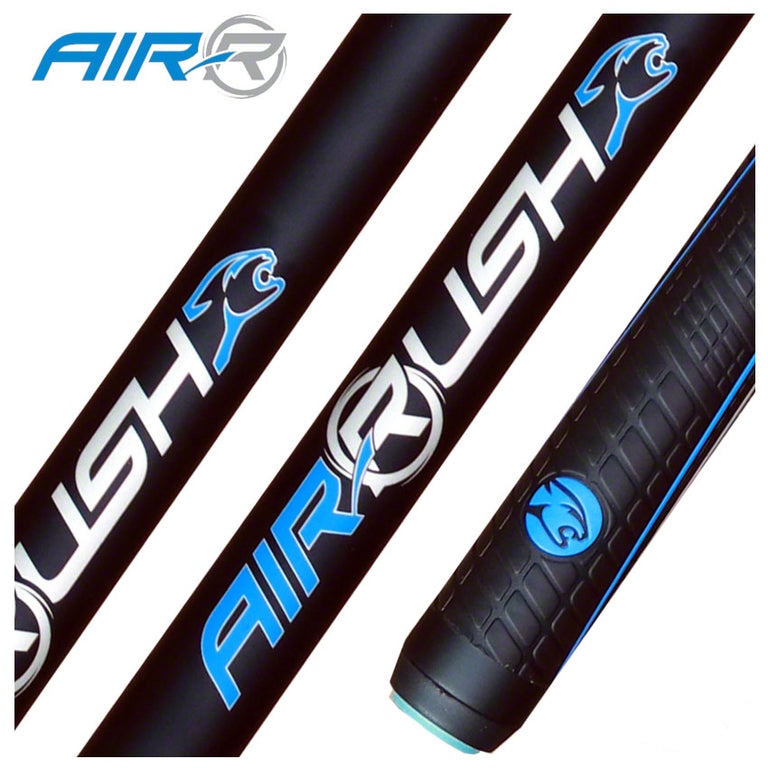
The Predator Air Rush is the reference point in this group. Predator has spent years iterating on the Air line, and the Rush generation launches the cue ball with a compact stroke that makes full ball jumps at a diamond feel routine. If you jump often in competition and want the most forgiving tool in the bag, this is the one to beat.
The Cuetec AVID CT339 Surge is the value sweet spot. Cuetec’s fiberglass composite construction shrugs off the abuse jump cues take, and the Surge gets balls airborne quickly enough that most league players will never outgrow it. At its price it is the easiest recommendation on this page.
The Valhalla VA-JMP2 comes from Viking’s value line and keeps things simple, a no nonsense two piece jumper for players adding the shot to their game without a big outlay. It rewards the dart stroke fundamentals covered above and travels light in the case.
The Bull Carbon Insane Air in white brings full carbon fiber construction to the jump game. Carbon’s stiffness converts your stroke into launch with very little loss, and the wrapless white finish looks sharp coming out of the bag. Players who already shoot with carbon shafts will feel at home instantly.
When to Jump and When to Kick
Owning a jump cue does not mean every hook is a jumping problem. The decision comes down to three questions. First, how much of the target ball can you land on? A jump gives you a full hit and a real chance to pot or play shape, while a kick often delivers a glancing hit at best, so when the pot matters and the blocker is close to the cue ball, jumping is usually the higher percentage play. Second, what happens if you miss? A failed jump can leave the cue ball airborne off the table or sitting in the open for an easy out, while a controlled kick with speed can leave the balls safe even on a miss. Third, what are the table conditions? New, slick cloth and a clean cue ball make jumps predictable, while worn cloth near the rails makes elevation awkward and favors the kicking game.
Watch professional matches with this framework in mind and the choices start making sense. Pros jump when a full hit converts the rack and kick when containment matters more than contact quality. Building that judgment is as important as building the stroke itself.
Common Mistakes That Keep the Ball on the Cloth
Three errors account for nearly every failed jump. Gripping too tight is the big one, because a clenched hand cannot accelerate the cue and cannot let it rebound after contact, so the energy dies in your arm instead of transferring to the ball. Aiming too low is the second, since a strike below center with an elevated cue is the illegal scoop, and a strike at exact center often drives through rather than down. Set your eyes on a point just above the equator. Standing in your normal shooting stance is the third, because a level stance forces a shallow cue angle that plows the cue ball into the blocker. Get tall, get over the shot, and let the elevation do the work.
Practice Progression That Actually Works
Start with the cue ball one diamond from a blocking ball and a full ball target beyond it. Groove the 45 degree dart stroke until you clear cleanly five times in a row. Then move the blocker closer a half diamond at a time, adding elevation as you go. Once you clear reliably, stop practicing the jump and start practicing the landing, because pros do not just clear the blocker, they land the cue ball somewhere useful. Pick a landing zone the size of a notebook and score yourself on it.
Ten focused minutes per session is plenty. The stroke is athletic and your hand will tire, and tired reps teach bad habits. Pair the jump work with your normal drills and the shot will be match ready inside a month.
When you are ready to add one to your bag, our jump cue collection carries everything from starter jumpers to full carbon builds, and the wider pool cue lineup covers the playing and breaking side of your game. Most three butt cases in our case collection swallow a jump cue without complaint, so there is no excuse to leave it home.
The next time someone hooks you on the money ball, you will not be reaching for a prayer. You will be reaching for the right tool, with a stroke you trust.

About Corey Bernstein
Corey Bernstein is a competitive pool player, billiards equipment specialist, and co-owner of Quarter King Billiards in Wilmington, North Carolina. With over a decade of experience in the sport, Corey has competed in regional APA and BCA sanctioned tournaments and maintains an intimate knowledge of cue construction, shaft technology, and table mechanics. As a certified dealer for brands including Predator, McDermott, Jacoby, Viking, Lucasi, Meucci, Joss, and Cuetec, Corey personally tests and evaluates every cue that comes through the shop. His hands-on approach to the business means he has racked thousands of hours behind the table — breaking in shafts, comparing tip compounds, and dialing in the nuances that separate a good cue from a great one. When he is not behind the counter or on the table, Corey is researching the latest advances in low-deflection technology, carbon fiber shaft construction, and cue ball physics. His articles on Quarter King Billiards combine real-world playing experience with deep product knowledge to help players at every level find the right equipment for their game.