 844 408 3056

 Hot Deal
Ask a room full of league players what they worked on last week and you will hear about draw, banks, the break, maybe a kicking system. You will almost never hear about the bridge hand. That is strange, because the bridge is the last thing the cue touches before the tip meets the ball. A stroke can be perfect and still miss if the bridge moves a quarter inch at contact. Watch slow motion footage of a player who “always seems to miscue on power draw” and you will usually find the bridge hand lifting or rolling, not a bad tip.
This guide covers the four hand bridges every player needs, the specific failure of each one, and the situation most amateurs handle worst: the shot you should have used the mechanical bridge on. It also walks through the bridge heads we carry, because a good head on a house stick changes that shot from a coin flip to a routine.
What every bridge has to do
A bridge has three jobs. It must hold the tip at a fixed height above the cloth so your vertical contact point on the cue ball does not change between practice strokes and the real one. It must let the shaft slide with almost no friction so you do not steer the cue. And it must not move during the stroke. Every bridge below is a different tradeoff among those three, and every miss that “felt good” is usually one of them quietly failing.
Bridge length matters as much as bridge shape. Most players do well with the bridge hand about six to eight inches from the cue ball for a normal shot, shorter for delicate shots and slightly longer for power. Too long and the tip wanders; too short and you cannot accelerate smoothly.
The open bridge
Lay the hand flat, spread the fingers for a wide base, then pull the fingertips back so the knuckles rise and the palm heel presses into the cloth. Rest the shaft in the V formed by the thumb pressed against the base of the index finger. The open bridge gives you the clearest view down the shaft, which is why snooker players use it almost exclusively, and it is the easiest bridge to keep low for follow shots or to raise for slight elevation.
Its weakness is that nothing holds the shaft down. On a hard draw stroke the cue can lift out of the V at the moment of contact, which sends the tip lower than you aimed and produces the miscue that gets blamed on chalk. If your open bridge is your only bridge, drill it with the thumb pressed firmly up against the finger so the V is a real channel, not a suggestion. Players who wear a glove often find the open bridge glides better; our pool glove guide covers fit and materials if humidity is your enemy.
The closed bridge
Start from the open bridge, then loop the index finger over the shaft and touch the thumb, creating a ring the shaft passes through. The middle, ring and little fingers spread into a tripod, and the palm heel stays planted. Now the cue cannot lift. This is why the closed bridge is the standard for American pool players hitting with power: on the break, on hard draw and on long force follow shots, the loop keeps the tip where you aimed it.
The cost is friction and sight line. A tight loop grabs the shaft, especially with a sweaty hand, and the finger over the top hides part of the cue. Keep the loop just snug enough that the shaft cannot lift, not so tight that it squeaks.
The rail bridge
When the cue ball sits within a few inches of the rail there is no room for a normal hand. Lay the shaft directly on the rail and use the hand as a guide only. Two common versions work: fingers flat on the rail with the shaft trapped between the index and middle fingers, or the thumb tucked under and the index finger pressing the shaft against the rail from above. The shaft rides on the rail itself, which is stable, but you have no control over height, so you will be striking the cue ball slightly above center whether you like it or not. Plan for a touch of natural follow and do not attempt draw from a rail bridge unless the cue ball is far enough off the cushion for a normal hand.
The elevated bridge
An obstructing ball between you and the cue ball forces the bridge up onto the fingertips. Plant the fingertips, straighten the fingers, lift the palm off the cloth and raise the thumb to make a high V. It is the least stable bridge in the game because the base is small and the hand is fighting gravity. Shorten the bridge, shorten the backswing and shoot the softest speed that gets the job done. If the cue ball must be struck so steeply that your hand cannot get high enough, stop. That is a mechanical bridge shot, and pretending otherwise is how good racks end.
When the mechanical bridge is the smart play
Nearly everyone reaches for the mechanical bridge too late. The honest test is simple: if you have to lift your back foot off the floor, twist your torso to reach, or bridge at a distance where the shaft wobbles in the V, you are already shooting worse than you would with the bridge stick. Under WPA rules a player may use up to two mechanical bridges to support the cue, so there is no situation on the table it cannot reach.
Technique on the bridge stick is different enough to deserve practice. Set the head close to the cue ball, about six inches, not a foot and a half. Grip the cue near the butt with the fingers and thumb, palm facing sideways or up, and stroke with the forearm only, like throwing a dart, keeping the elbow still. Keep the stick itself pinned to the table with your bridge hand’s forearm or palm so it cannot slide. Take the same number of practice strokes you take on a normal shot; the mechanical bridge is not a reason to rush. Our guide on stance and pre-shot routine applies here as much as anywhere.
The bridge head is where cheap house sticks fail
Most pool rooms hand you a bridge stick with a chipped plastic head that rocks on the cloth and rattles against the shaft. That head is the reason the shot feels awkward. Replacing it is one of the cheapest upgrades in the sport, and the options we carry cover every priority.
The Kamui VUE bridge head is the one for players who hate losing sight of the shot line. Kamui built it with a transparent body so the cue ball and object ball stay visible through the head, precision molded grooves for a smooth stroke and a low profile that stays out of your aim. It is made in the USA and ships with a carrying bag, which tells you Kamui expects it to travel in your case rather than live on a house stick.
The Justa-Bridge adjustable bridge head takes a different approach: the groove rotates, so you can change the angle the shaft rides at without moving the bridge stick. That is a real advantage on shots where the head is already in the only spot it can go and you need the cue a little higher or lower. It is also made in the USA.
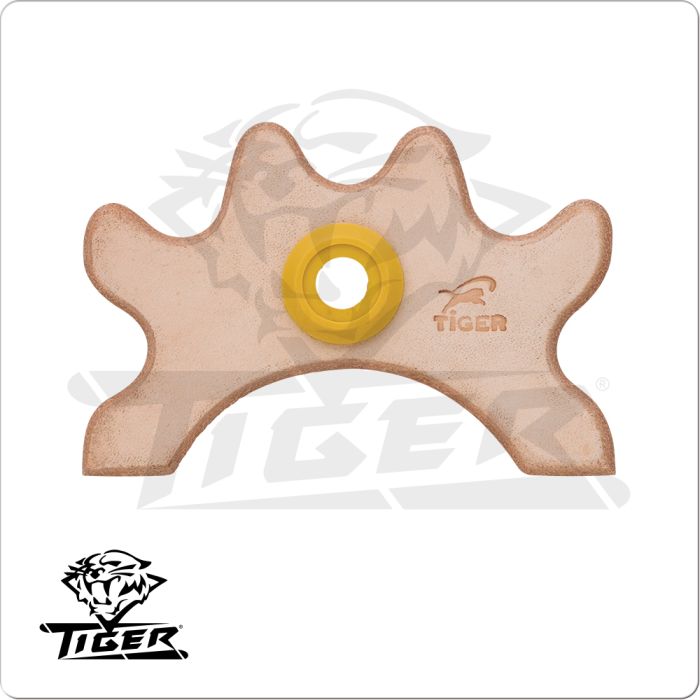
The Tiger Corona leather bridge head, pictured above, wraps the head in smooth leather. The payoff is silence and feel: no clicking of a metal head on the slate edge, no plastic scrape as the shaft moves, and a channel that lets the cue glide. Tiger is known for tips and precision accessories, and this is the head you will see on the bridge sticks at serious rooms.
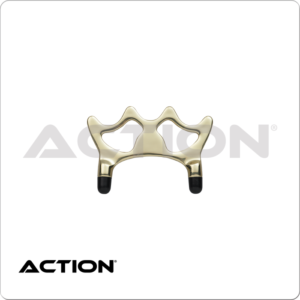
If the priority is stability on a budget, the Action brass bridge head at just under ten dollars is machined from solid brass. The weight is the point. A heavy head does not rock when the shaft moves through it, and the polished finish resists corrosion in a damp room.
A few others deserve a mention. The BulletProof clear bridge head gives you the see-through advantage at a lower price and carries a lifetime warranty. The Bat Bridge offers fifteen rest points at different heights for shooting over balls. The Action aluminum bridge head is the under three dollar replacement for a broken house head, and the Action moose head is the classic antler shape with nine angles for shots where nothing else reaches.
Featured Bridge Head Products
-
-
-
-
-
-
-
-
A ten minute bridge drill
Set the cue ball on the head spot and an object ball on the foot spot. Shoot ten stop shots with a closed bridge, ten with an open bridge, then move the cue ball to within two inches of the side rail and shoot ten straight-in shots with a rail bridge. Finish with five shots using the mechanical bridge from the far end of the table. Score each set out of ten on whether the cue ball behaved as planned, not on whether the object ball dropped. The set with the lowest score is your bridge to work on this month.
Most players find the mechanical bridge set is their worst, and that it stops being after two weeks of five shots a day. If you want the equipment side handled, browse the full range of bridge heads, take a look at the rest of our billiard accessories, or start with the cue itself in our pool cues collection.

About Corey Bernstein
Corey Bernstein is a competitive pool player, billiards equipment specialist, and co-owner of Quarter King Billiards in Wilmington, North Carolina. With over a decade of experience in the sport, Corey has competed in regional APA and BCA sanctioned tournaments and maintains an intimate knowledge of cue construction, shaft technology, and table mechanics. As a certified dealer for brands including Predator, McDermott, Jacoby, Viking, Lucasi, Meucci, Joss, and Cuetec, Corey personally tests and evaluates every cue that comes through the shop. His hands-on approach to the business means he has racked thousands of hours behind the table — breaking in shafts, comparing tip compounds, and dialing in the nuances that separate a good cue from a great one. When he is not behind the counter or on the table, Corey is researching the latest advances in low-deflection technology, carbon fiber shaft construction, and cue ball physics. His articles on Quarter King Billiards combine real-world playing experience with deep product knowledge to help players at every level find the right equipment for their game.