 844 408 3056

 Hot Deal
Watch a room full of intermediate players for an hour and count the misses. Then count the shots that went in and still cost the player the rack. The second number is almost always bigger. Aim gets all the attention because a miss is loud and obvious. Speed control loses racks quietly, one ball of overrun at a time, and most players never diagnose it because the shot they just shot went in.
Speed is the part of the stroke nobody can see. You can film your alignment, check your bridge in a mirror, and have a friend tell you your elbow drops. Nobody can look at your stance and tell you that you hit that shot fourteen percent too hard. You have to build the feedback loop yourself, and the equipment on the table decides how good that feedback is.
Why Speed Is Harder Than Aim
Aiming is a spatial problem with a right answer that does not move. The pocket sits where it sits. Speed is a different animal because the correct answer changes with the cloth, the humidity in the room, how dirty the balls are, how much chalk is on the cue ball, and whether the table has been played on for six hours or six minutes.
That is why a player can shoot beautifully at home and feel lost in a tournament room. The aiming carried over. The speed calibration did not. Every new table is a new calibration problem, and the players who adjust fastest are the ones who have a routine for it rather than a hope.
There is a second reason speed is hard. Feel is stored as a comparison, not as a number. Your hands do not know what four miles per hour is. They know what “a little firmer than the last one” is. So the only way to build reliable speed is to shoot a lot of shots where you know in advance what the target was and you can see immediately how far off you landed.
The Three Speeds You Actually Need
Lag Speed
Lag speed is the softest stroke that will still carry the cue ball the full length of the table and back. It is the speed you use when you want the cue ball to drift into position and die. Most players cannot produce it on demand because their grip tightens the moment they try to hit softly, which converts a smooth stroke into a poke.
The fix is counterintuitive. Lengthen your backswing and slow the whole motion down rather than shortening the stroke. A long slow stroke delivers a soft hit with the tip still accelerating through the ball, which keeps the contact clean and predictable.
Pocket Speed
Pocket speed is the stroke that drops the object ball with just enough pace to fall and no more. Pocket speed is the highest percentage speed in pool because a ball rolling slowly into a pocket can catch a rail and still drop. A ball fired at the same pocket needs to be perfect. Every fraction of speed you take off the shot widens the pocket.
Table-Length Speed
This is the one that shows up in the ninth rack of a long set, and the one that abandons you first when you are tired. Table-length draw and force follow require a stroke that stays smooth at high speed, which is a completely different skill from hitting hard.
Three Drills That Build Real Calibration
The Seven-Speed Ladder
Place the cue ball on the head spot and shoot it straight up and down the table with no object ball. Your goal is seven distinct speeds: stop before the far rail, one rail, two rails, three rails, four rails, five rails, six rails. Shoot each one and call it out loud before you shoot it. Do the whole ladder twice.
This drill is boring, takes six minutes, and is the single fastest way to calibrate to a strange table. Do it before your league match while the other team is still putting their cues together.
The Stop Shot Corridor
Set an object ball a diamond from a corner pocket and the cue ball two diamonds away, dead straight. Pocket the object ball and stop the cue ball dead. Then move the cue ball back one diamond and do it again. Then another diamond. A stop shot at two feet and a stop shot at nine feet require completely different combinations of speed and tip position, and the drill teaches you the relationship instead of a single memorized stroke.
The Two-Rail Return
Cue ball on the head spot, hit it into the far short rail and bring it back to a coin or a piece of chalk you place on the cloth. This drill trains the exact skill you need when a route calls for the cue ball to travel a long way and still arrive somewhere small. Most players discover they are consistently long by about a foot, which is useful information you cannot get any other way.
Why Your Cue Ball Is Part of the Problem
Here is the part most players skip. If you practice at home with a mismatched cue ball, everything you learn about speed is slightly wrong when you get to a real table.
The Mismatch Problem
Coin-operated bar tables need a way to separate the cue ball so it returns while the object balls stay in the box. The two mechanisms are an oversized cue ball or a magnetic core, and both change how the ball behaves. An oversized ball carries more mass and reacts differently off the object ball. A magnetic ball has different weight distribution than a standard phenolic ball. Neither is wrong for its table, but if you drill at home with a bar box ball and then play a league match on a nine footer with a standard Aramith Premier cue ball at $9.10, your calibration is off before your first shot.
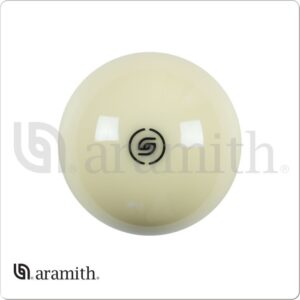
The simplest fix is to practice with the same class of ball you compete with. If your league plays on Diamond tables, a Diamond TV cue ball at $69.95 gets your home table honest. If you play on standard tables, the Aramith Tournament cue ball at $31.61 is the reference standard most tournament rooms use.
Marked Balls Show You What Your Stroke Did
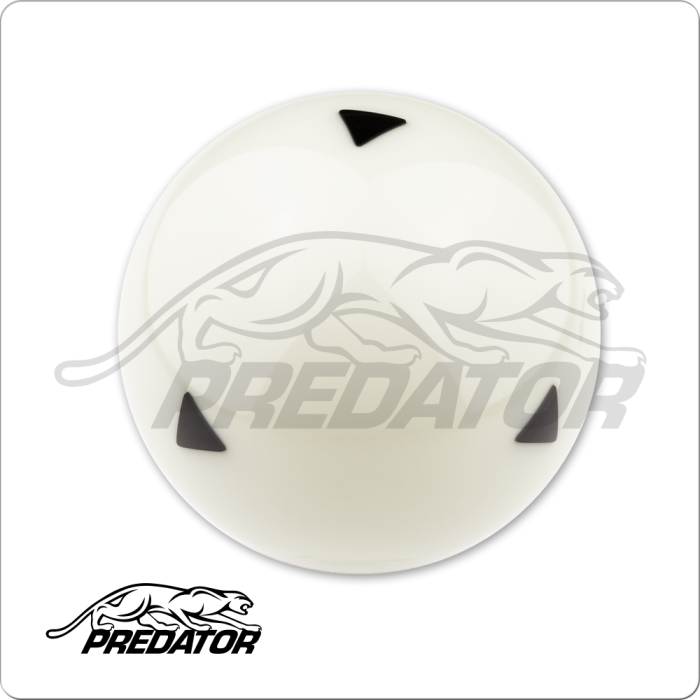
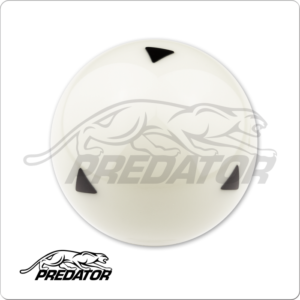
A plain white cue ball tells you nothing about what happened between the tip and the cloth. A marked training ball tells you everything. The Predator Arcos cue ball at $50 carries markings that let you see the axis the ball is spinning on, which means you can watch whether you actually applied the draw you thought you applied or whether you hit an inch of unintended left english.
Speed and spin are not separate problems. Unintended side spin changes how the cue ball comes off a rail, which changes where it stops, which reads to you as a speed error when it was really a contact error. A marked ball separates the two so you can fix the right thing. Even the budget Aramith Dynamo cue ball at $19.73 is a real upgrade over a scuffed house ball of unknown origin.
Featured Cue Balls
-
-
-
Sale!
-
Aramith CBAT Tournament Cue Ball
Original price was: $39.51.$31.61Current price is: $31.61. Add to cart -
Sale!
-
-
-
Cloth, Chalk, and the Honest Table
Speed lives on the cloth. A fast worsted cloth and a slow napped cloth can differ enough that a three-rail position route on one becomes a two-and-a-half rail route on the other. If you have a home table, know what cloth is on it and know how that compares to where you compete. If your table is slow because the cloth is old and dirty, you are training a stroke that will be a foot long everywhere else.
Chalk matters for the same reason. A miscue is an obvious failure, but a partial slip is not, and a partial slip robs speed and spin without announcing itself. Cheap chalk that skates on a polished tip will make your speed look inconsistent when the real problem is contact. Browse the rest of our billiards accessories if your chalk, tip tools, or gloves are older than your last cue.
Build the Routine
Twenty minutes, three times a week, will move your speed control further than an hour of racking and running. Start every session with the seven-speed ladder to calibrate. Spend ten minutes on the stop shot corridor. Finish with the two-rail return and write down whether you were long or short, because the pattern over a month tells you something a single session never will.
None of this requires a new cue. It requires a cue ball that tells you the truth and the patience to shoot the same shot until the feedback becomes a feel. That said, a shaft that behaves predictably when you move off center does make the feedback cleaner, which is why the same players who own good training balls tend to end up looking at the pool cues that hold their aim under side spin. Fix the cue ball first. It is the cheapest upgrade in the sport.

About Corey Bernstein
Corey Bernstein is a competitive pool player, billiards equipment specialist, and co-owner of Quarter King Billiards in Wilmington, North Carolina. With over a decade of experience in the sport, Corey has competed in regional APA and BCA sanctioned tournaments and maintains an intimate knowledge of cue construction, shaft technology, and table mechanics. As a certified dealer for brands including Predator, McDermott, Jacoby, Viking, Lucasi, Meucci, Joss, and Cuetec, Corey personally tests and evaluates every cue that comes through the shop. His hands-on approach to the business means he has racked thousands of hours behind the table — breaking in shafts, comparing tip compounds, and dialing in the nuances that separate a good cue from a great one. When he is not behind the counter or on the table, Corey is researching the latest advances in low-deflection technology, carbon fiber shaft construction, and cue ball physics. His articles on Quarter King Billiards combine real-world playing experience with deep product knowledge to help players at every level find the right equipment for their game.