 844 408 3056

 Hot Deal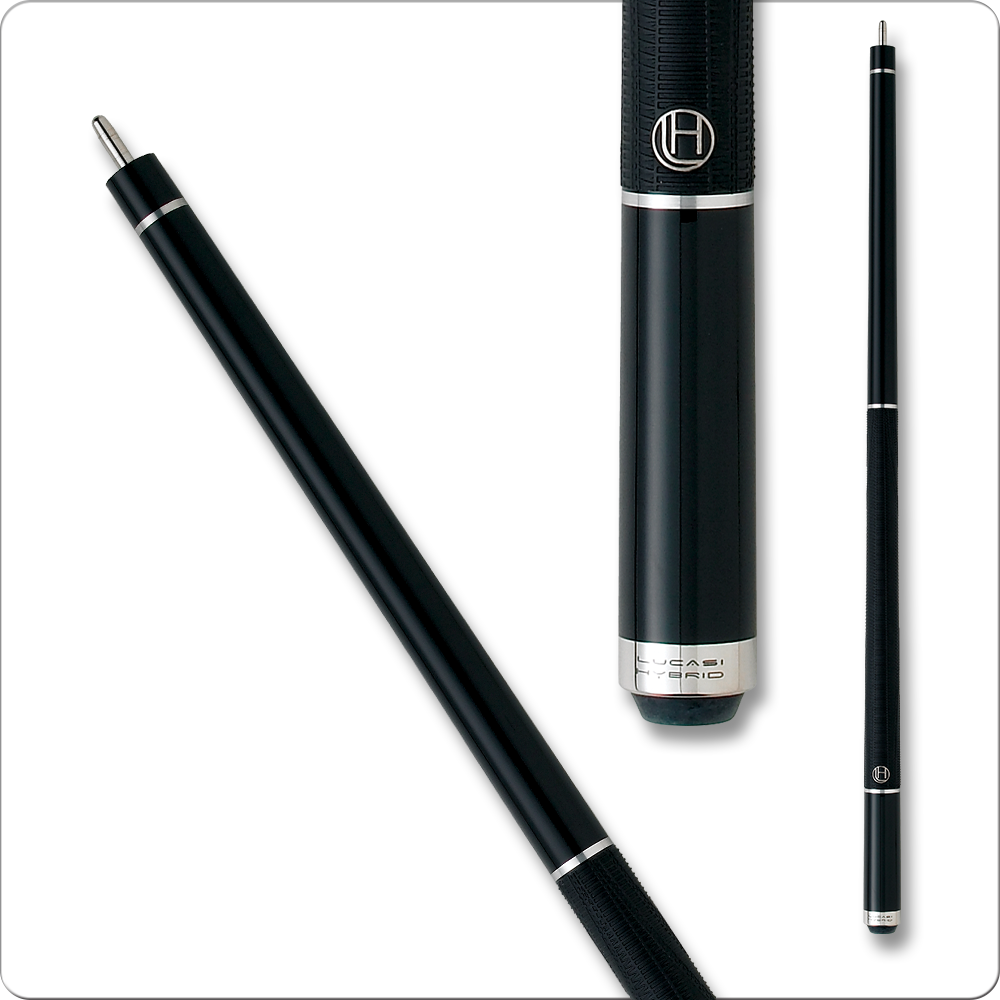
Ask five strong players how they aim and you will get five different answers, two arguments, and at least one person who insists they just see the shot. All of them are telling the truth. Aiming systems are not magic formulas that pocket balls for you. They are reference frameworks that get your body aligned to something close to the correct line, so your subconscious can handle the final correction. The players who improve fastest are the ones who pick a framework, learn its blind spots, and drill it until the reference becomes instinct.
This guide walks through the three aiming approaches that have survived decades of table time, explains where each one breaks down, and covers the part almost every aiming discussion skips: why your equipment quietly decides how much compensation your system needs to make. If your shaft behaves differently every time you play, no system on earth will hold up.
Ghost Ball: The Classic Starting Point
The ghost ball method asks you to imagine the cue ball frozen against the object ball at the exact spot where contact must happen, directly opposite the pocket. Your job is to send the real cue ball to occupy that imagined position. It is the first system most players learn because it is easy to teach and it builds a correct mental model of how collisions work.
Its weakness is that the ghost ball is invisible, and human brains are bad at judging the center of an imaginary sphere floating in space. Most players who rely on pure ghost ball undercut thin shots, because the visible edge of the object ball pulls their perception toward thicker contact. Ghost ball also ignores throw, the friction effect that pushes the object ball slightly off the pure geometric line. On a full table shot cut at a moderate angle, throw can move the object ball more than an inch off the ghost ball prediction. Good players learn to aim a touch thinner on slow, chalky cut shots for exactly this reason.
Fractional Aiming: Quarters and Halves
Fractional systems replace the invisible ghost ball with something you can actually see: the overlap between the cue ball and object ball. A full hit sends the object ball straight. A three quarter ball hit cuts it roughly 15 degrees. Half ball sends it near 30, and a quarter ball hit approaches 45. Instead of imagining a phantom sphere, you categorize the shot into one of a handful of overlap pictures and align your cue through the matching reference.
The strength of fractions is that the reference points are visible and repeatable, which makes the system excellent for building a shot library. The weakness is obvious the moment you face a 22 degree cut: real shots do not arrive in neat quarter increments. Fractional players handle the in-betweens by feel, which works fine once you have hit thousands of balls but frustrates newer players who wanted the system to be complete. Treat fractions as a coarse map, not a GPS. The map gets you to the neighborhood and your eyes finish the job.
Contact Point Systems and the Parallel Shift
A third family of systems has you find the contact point on the object ball, find the matching point on the cue ball, and connect them. Some players visualize a line from the pocket through the object ball to locate the contact point, then shift their cue parallel until it runs through the cue ball’s matching point. This approach appeals to detail oriented players because both reference points physically exist. The trap is that connecting two points on two curved surfaces is geometrically trickier than it sounds, and parallel shifting introduces its own errors at longer distances. Players who thrive with contact points usually pair them with a disciplined pre-shot routine that locks the line in while standing, before they ever bend down.
Sidespin Breaks Every System
Here is the uncomfortable truth: every framework above assumes a center ball hit. The moment you apply english, three physical effects start bending the shot. Squirt pushes the cue ball off your aiming line in the opposite direction of your spin. Swerve curves it back as the spin grabs the cloth. Spin induced throw changes the object ball’s departure angle at contact. Your beautiful ghost ball alignment is now wrong in three different ways at once.
Experienced players compensate through some blend of aim adjustment and backhand english, where you pivot the back of the cue to apply spin while keeping the bridge hand planted at the shaft’s natural pivot point. Backhand english works because it uses the shaft’s own squirt characteristics to self correct. But it only works if you know your shaft’s pivot point, and that is a property of the specific shaft in your hands. Which brings us to equipment.
Your Shaft Decides How Much Compensation You Need
Low deflection shafts exist precisely to shrink the squirt problem. By reducing the mass in the last several inches of the shaft, they let the cue ball leave closer to the line you actually aimed, even with sidespin applied. Less squirt means smaller compensation, which means your aiming system survives contact with real shots more often. This is why so many instructors quietly steer serious students toward low deflection equipment: it makes every system easier to calibrate.
Lucasi has built its reputation on delivering exactly this technology at prices working players can reach. The Lucasi LHE10 Hybrid at $692.10 pairs the brand’s low deflection Zero Flexpoint shaft with a modern construction that damps vibration without deadening feedback. The Hybrid Rival LHRV24 at $597.60 brings the same shaft philosophy in a sharper looking package. Traditionalists who want the technology hidden inside a plain wrapper should look at the LSP02 Custom Sneaky Pete at $476.10, which looks like a bar cue and plays like anything but.
Featured Lucasi Products
-
Sale!

-
Lucasi LZD1 Custom Cue
Original price was: $637.00.$573.30Current price is: $573.30. Select options This product has multiple variants. The options may be chosen on the product page
A Pre-Shot Routine That Makes Any System Work
Systems fail at the table for a mundane reason: players find the line while standing, then lose it on the way down. Build a routine that protects the line. Stand behind the shot and commit to the aim before you move. Step into the shot along that line, placing your bridge hand so the cue is already aligned when it lands. Once you are down, resist the urge to re-aim. Your standing view was better than your crouched view. Take two or three smooth practice strokes, let your eyes settle on the object ball contact point, and deliver the cue straight through.
If you find yourself steering mid stroke, stand up and start over. It costs ten seconds and saves the rack. Every strong player you have ever watched does this, and every struggling player thinks they do not have time for it.
Three Drills That Calibrate Your Aim
First, the center ball ladder. Set up a straight shot with the object ball one diamond from the pocket and the cue ball two feet behind it. Pocket it with a stop shot, then move the cue ball back a foot and repeat until you reach the far rail. This drill exposes stroke crookedness that masquerades as aiming error. Most aiming problems are actually delivery problems.
Second, the cut shot fan. Place an object ball on the spot and pocket it in the same corner pocket from five different cue ball positions, moving progressively from full hit to thin cut. Note which fraction each position needs. You are building the shot library that fractional aiming promises.
Third, the spin pairs drill. Shoot the same medium cut twice, once with center ball and once with a tip of outside english, and watch how the object ball’s path changes. This teaches your eyes what your specific shaft does with spin, which is knowledge no system can give you. Do this drill again whenever you change equipment, because compensation learned on one shaft does not transfer cleanly to another. That is also the strongest argument for settling on one good cue instead of rotating through several. A consistent, low deflection setup from the Lucasi collection gives your aiming system a stable foundation, and the broader pool cue selection at Quarter King Billiards covers every budget on the way there.
Pick one system. Learn where it lies to you. Drill until the corrections are automatic. That is the entire secret, and no one can sell you a shortcut around it.

About Corey Bernstein
Corey Bernstein is a competitive pool player, billiards equipment specialist, and co-owner of Quarter King Billiards in Wilmington, North Carolina. With over a decade of experience in the sport, Corey has competed in regional APA and BCA sanctioned tournaments and maintains an intimate knowledge of cue construction, shaft technology, and table mechanics. As a certified dealer for brands including Predator, McDermott, Jacoby, Viking, Lucasi, Meucci, Joss, and Cuetec, Corey personally tests and evaluates every cue that comes through the shop. His hands-on approach to the business means he has racked thousands of hours behind the table — breaking in shafts, comparing tip compounds, and dialing in the nuances that separate a good cue from a great one. When he is not behind the counter or on the table, Corey is researching the latest advances in low-deflection technology, carbon fiber shaft construction, and cue ball physics. His articles on Quarter King Billiards combine real-world playing experience with deep product knowledge to help players at every level find the right equipment for their game.