 844 408 3056

 Hot Deal
Ask ten league players to shoot the same cross-side bank and you will see ten different outcomes, most of them short. Banks have a reputation as guesswork, the shot you take when nothing else is available and hope carries the ball home. That reputation is undeserved. Banking is one of the most learnable skills in pool, because the ball obeys the same three variables every single time: the angle you send it into the rail, the speed it arrives with, and the spin it carries. Learn how those three interact and banks stop being prayers and start being percentages.
Start With the Mirror, Then Learn Its Lies
Every banking education starts with the equal-angle idea: the ball leaves the rail at roughly the same angle it entered, so you can imagine a mirror image of the target pocket reflected across the rail and shoot the object ball at that imaginary point. As a first approximation, the mirror system works. It gets you to the neighborhood.
The problem is that the mirror only tells the truth under one narrow condition: medium-soft speed, no sidespin, and a clean, freshly clothed rail. Change any of those and the ball comes off the cushion on a different line than the mirror promised. This is why players who learned the mirror and stopped there miss the same banks for decades. The system is not broken. It is incomplete.
Speed Is the Biggest Lever
Here is the single most valuable sentence in banking: the harder you hit a bank, the shorter it goes. Pace compresses the cushion, and a compressed cushion rebounds the ball at a tighter angle than it arrived. A bank that splits the pocket at lag speed will catch the near rail if you fire it. Flip that around and you have a tool, not a problem. When the natural mirror line sends the ball wide of the pocket, add pace and let the cushion pull it shorter. When the line comes up short, take speed off and let the angle open up.
Prove it to yourself in one rack. Set up a straight-back cross-corner bank and shoot it five times at increasing speeds without changing your aim line. Watch the rebound angle tighten as you add pace. Ten minutes of this teaches your eyes more than a season of banking by feel, and it transfers to every table you will ever play on.
What Spin Does, Wanted or Not
Sidespin bends banks two ways. Spin you put on the cue ball transfers to the object ball at contact in the opposite direction, and that transferred spin changes how the object ball grabs the cushion. Inside english tends to shorten a bank, outside english tends to lengthen it. Skilled bankers use this deliberately, holding a bank line steady and adjusting the pocket with the tip position alone.
But spin also shows up uninvited. Any time you cut a bank, collision-induced spin sneaks onto the object ball even with a centered tip. Cutting a ball to the left puts a touch of right spin on it, and that spin walks the rebound off the mirror line. This is why cut banks betray players who aimed them perfectly. The fix is to expect it: on cut banks, read the collision spin first, then decide whether to cancel it with opposite english or ride it and adjust your line.
Follow and draw matter too. Follow lengthens a bank as the rolling ball climbs off the cushion, while draw or stun holds it shorter. A stunned, dead-ball bank is the most predictable version of the shot, which is why instructors teach it as the default.
Reading the Table Before You Trust It
No system survives contact with a strange table until you calibrate. Cushions bank differently with humidity, cloth wear, and rail height, and the cue ball itself is a variable most players never consider. A worn or dirty house ball picks up cloth friction differently than a clean regulation ball, changing both the cut and the bank behind it. Two minutes of warm-up banks before a match, one soft, one firm, one with running english, tells you whether this table banks long or short, and that information wins games at the exact moment your opponent is guessing.
A Practice Ladder That Builds Real Banks
Random banking practice produces random results, so climb a ladder instead. Rung one: the spot-shot bank. Place an object ball on the foot spot, cue ball in hand, and bank cross-side until you make five. Rung two: move the object ball a diamond at a time along the rail and repeat, building a mental map of how each position changes the line. Rung three: add a specific speed to each make, one soft and one firm from every position, so you own two routes to every pocket. Rung four: cut banks only, reading the collision spin before every shot and calling which way it will bend the rebound.
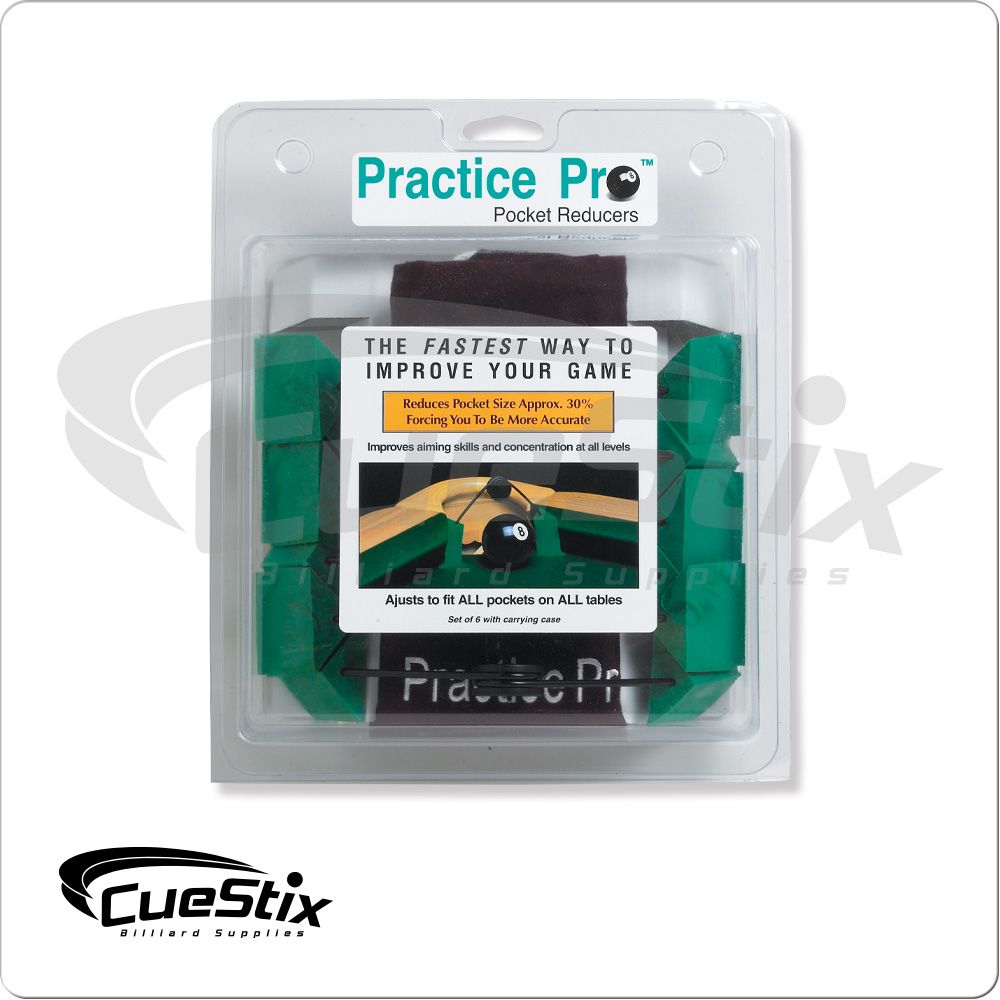
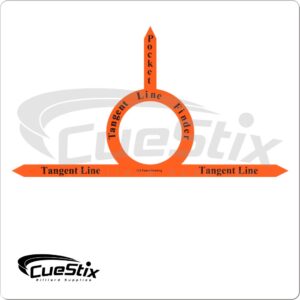
The right tools sharpen every rung. The Jim Rempe training ball gives you printed target zones so you can verify your tip position actually matches your intention, which matters enormously once you start spinning banks on purpose. Pocket reducers shrink your pockets so tournament pockets feel generous, and the Tangent Line Trainer builds the cue ball path prediction that keeps you from scratching off the banks you finally start making. Practicing with a regulation ball like the Aramith Tournament cue ball instead of a scarred barbox rock removes the last variable between your practice table and match conditions.
Long Rail Banks Are a Different Animal
Cross-side and cross-corner banks get most of the practice time, but long rail banks, where the object ball travels up or down the table off a side cushion, punish sloppy speed twice as hard. The ball spends more time on the cloth, so roll-off and cloth condition matter more, and the longer rebound path magnifies every degree of error in your entry angle. Play them a notch softer than feels natural, favor stun over follow, and aim to arrive at the pocket at dead weight. A long bank that dies in the jaws is a made ball on most tables, while one fired at the same line rattles and leaves your opponent a road map.
Featured Practice Tools
-
Sale!
-
-
Sale!
-
Aramith CBAT Tournament Cue Ball
Original price was: $39.51.$31.61Current price is: $31.61. Add to cart -
Sale!
-
When to Bank and When to Duck
Knowing how to bank includes knowing when not to. A bank is rarely the highest percentage option when a safety is available, because even a well-read bank leaves the cue ball traveling and the table open if you miss. The professionals who bank brilliantly on television also turn down more banks than they shoot. Before committing, ask what happens on a miss. If the answer is that your opponent gets ball in hand on an open table, play the safety and make them bank instead. Banks win games most reliably as offensive weapons you choose from strength, not escapes you attempt from panic.
Equipment consistency deserves the last word here as well. Banking rewards a repeatable stroke more than raw talent, and a repeatable stroke starts with a cue that fits you. If you are still fighting a warped house cue or a mismatched hand-me-down, browse a proper playing cue that delivers the tip where you aimed it. Every system in this article assumes the cue ball goes where you sent it, and that assumption lives or dies with your gear.
Make Banks Boring
The end goal of all this work is to make banks feel boring, just another shot with a known answer. Mirror line for the neighborhood, speed to tune the angle, spin read and either cancelled or used, table calibrated in warm-up. Run the practice ladder twice a week for a month and the bank that used to be a coin flip becomes a shot you call with a straight face. Your opponents will call it luck for the first few weeks. Let them.

About Corey Bernstein
Corey Bernstein is a competitive pool player, billiards equipment specialist, and co-owner of Quarter King Billiards in Wilmington, North Carolina. With over a decade of experience in the sport, Corey has competed in regional APA and BCA sanctioned tournaments and maintains an intimate knowledge of cue construction, shaft technology, and table mechanics. As a certified dealer for brands including Predator, McDermott, Jacoby, Viking, Lucasi, Meucci, Joss, and Cuetec, Corey personally tests and evaluates every cue that comes through the shop. His hands-on approach to the business means he has racked thousands of hours behind the table — breaking in shafts, comparing tip compounds, and dialing in the nuances that separate a good cue from a great one. When he is not behind the counter or on the table, Corey is researching the latest advances in low-deflection technology, carbon fiber shaft construction, and cue ball physics. His articles on Quarter King Billiards combine real-world playing experience with deep product knowledge to help players at every level find the right equipment for their game.