 844 408 3056

 Hot Deal
Two sets up, two sets down, and a deciding set for a world title. That was the position Margarita Fefilova Styer faced on August 6 at the Rome Cavalieri Hotel, where the 2026 Banca del Fucino WPA Women’s World 10-Ball Championship came down to a final that swung as hard as any in recent memory. Fefilova, the Belarusian who had twice settled for bronze at world championships, beat Chezka Centeno of the Philippines in the decider to claim her first WPA world title and the $55,000 winner’s check. If you play league on Tuesday nights or grind weekend tournaments, this final has more to teach you than almost any instructional video, because it was a live demonstration of momentum, pressure, and process playing out on the sport’s biggest stage.
How the Final Unfolded
Centeno came in as the favorite. She had won two WPA world titles in the twelve months before Rome, and her speed and shotmaking make her one of the most dangerous players alive in a race format. Yet it was Fefilova who controlled the opening, taking the first set 4-1 and the second 4-0 while Centeno made uncharacteristic errors. One more set and the title was hers.
Then the match flipped completely. Centeno blitzed the third set 4-1 and the fourth 4-0, playing at the tempo that has carried her to world titles before. Everything Fefilova had built across two sets evaporated in less than an hour, and the players headed to a deciding set at two apiece with a shootout looming as a real possibility.
The decider was not pretty. The racks were tight and sometimes messy, and neither player found easy run-outs. Fefilova simply kept winning the small battles, taking the final set 4-0 to seal the championship. Afterward she admitted she could barely process it, saying she felt totally exhausted but proud of herself for never giving up.
The Momentum Problem Every Player Knows
Amateur players like to believe momentum is something that happens to other people. It is not. The same swing that hit Fefilova at two sets up hits you when you go up three games in a race to five and suddenly cannot make a ball. What separates a world champion is not immunity to momentum but a plan for it.
Listen to how Fefilova described her time out when the match was slipping: she kept telling herself to keep doing the right thing, stick with the process, and give full effort on every shot. She deliberately avoided thinking about the score or the fact that it was a world championship final, because those thoughts pull your mind away from what actually sinks balls.
That is a repeatable framework, not a platitude. When a set is going against you, your job narrows to one shot. Pick a target, commit to a speed, deliver the cue straight, and evaluate afterward. The scoreboard is background noise. Fefilova won a world title in a deciding set by refusing to play the occasion and insisting on playing the table.
Reputations Do Not Pocket Balls
The other lesson from Rome is about labels. Centeno was the favorite, and for two sets she looked nothing like it. Fefilova was the player with two bronze medals and a history of heartbreak in quarterfinals and semifinals, and she said afterward that those losses had planted real doubt about whether she could ever finish the job. She could, and did.
Carry that into your local scene. The player with the reputation still has to make this nine ball, right now, on this table. The player with the shaky history is one committed session away from beating anyone. Ten-ball punishes assumptions more than any discipline, because call-shot rules and tight patterns mean nobody gets to coast on rolls.
The Equipment Underneath a World Championship
Rome also showed how much the modern professional game trusts its gear. The Predator Pro Billiard Series ran the championship on Predator ARC nine foot tables, with Predator Arcos II balls, Predator Arcadia Reserve cloth, and an Aerorack triangle. When the margins are a world title, the organizers standardize every variable they can, because consistent equipment produces consistent rolls.
You cannot install a tournament arena in your basement, but you can absolutely borrow the logic. Most missed banks and botched position routes at home come from inconsistent gear: a chipped house cue ball that rebounds strangely, a mismatched set of balls that throw differently from rack to rack, or chalk that flakes off at contact. Upgrading the small stuff moves your practice closer to the conditions the pros compete on.
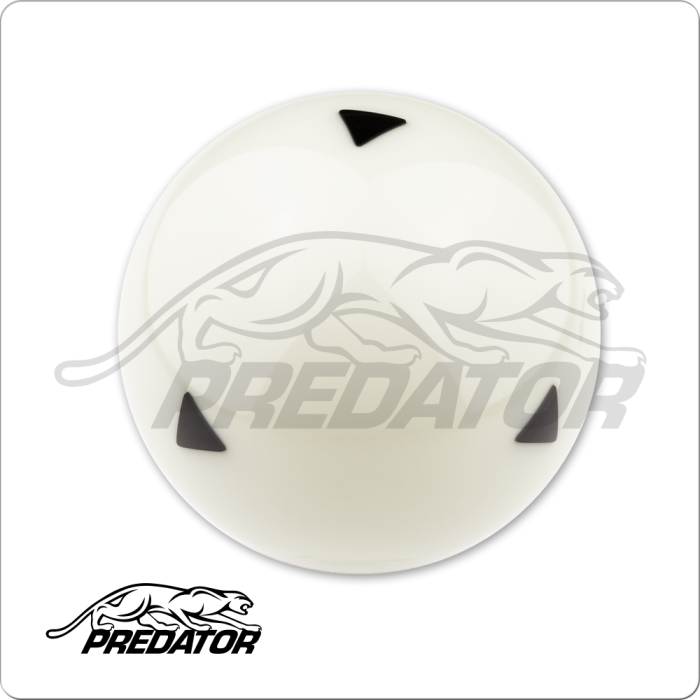
Start with the ball you strike on every single shot. The Predator Arcos cue ball is the same ball family the Pro Billiard Series racks up in events like Rome, and at fifty dollars it is the cheapest way to feel tour conditions at home. Pair it with Predator Pure chalk and you remove two excuses at once.
If you want the fuller Predator experience, the cues deserve a look too. The BK Rush break cue is a fixture on professional TV tables because it converts a compact stroke into serious cue ball speed, and the Air Rush jump cue handles the vertical game that ten-ball safeties force on you. Our full Predator cue collection covers the rest.
Featured Predator Products
-
-
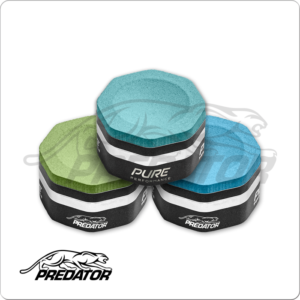
Predator CHPURE Pure Chalk – Single
$19.94 Select options This product has multiple variants. The options may be chosen on the product page -
-
-
-
-
-
Bringing Ten-Ball Discipline to Your Table
Ten-ball is the strictest teacher in pool. Every shot is called, the break is harder to control than nine-ball, and the extra ball on the table crowds your position routes. Even if your league plays eight-ball, training with ten-ball rules for two sessions a week will tighten your game noticeably.
Try the format Fefilova survived in Rome: play short sets against a practice partner, races to four, and force yourself to close out sets when you get to the hill. Most players never practice finishing. They practice until they feel good and then quit, which is why hill-hill games feel so foreign. Short sets create dozens of closing opportunities in a single evening.
Work the break too. In Rome the tight racks and templates meant the players who controlled the one ball off the break dictated entire racks. At home, chart ten breaks from the same spot and note where the cue ball and the one end up. Adjust speed before you adjust anything else. A repeatable ninety percent break beats an explosive break you cannot place, and if your current playing cue fights you on power shots, browse the wider pool cue lineup for something that matches your stroke instead of working against it.
A Pre-Shot Routine That Survives Pressure
One more habit worth stealing from Rome: nothing about a champion’s routine changes when the score gets ugly. Fefilova chalked, surveyed, committed, and delivered the same way at 0-2 in the fifth set as she did in the opening rack. Build a routine short enough to repeat on every ball, thirty seconds at most, and rehearse it in practice until it runs without thought. Chalk deliberately before every shot rather than spinning the cube out of nervous habit, walk the shot line, pick an exact contact point, and take the same number of warm up strokes each time. Under pressure you will not rise to the occasion, you will fall back on your routine, so make sure the one you fall back on is worth landing on.
The Takeaway From Rome
Fefilova said she plans to bring the gold medal home to Minsk, where her parents keep a little pool room displaying the trophies from a career they coached for its first ten years. The medal took her more than a decade, two bronze finishes, and a final where she watched a commanding lead disappear before she earned it back rack by rack.
Your version of that story plays out in smaller rooms with smaller stakes, but the mechanics are identical. Momentum will swing. Doubt will show up on the hill. The answer is the one Fefilova gave under the brightest lights the women’s game has: keep doing the right thing, one shot at a time, on equipment you trust. The next Predator Euro Tour stop, the Longoni Open, runs August 20 to 23, and the pros will be doing exactly that. There is no reason your practice table should run on lower standards.

About Corey Bernstein
Corey Bernstein is a competitive pool player, billiards equipment specialist, and co-owner of Quarter King Billiards in Wilmington, North Carolina. With over a decade of experience in the sport, Corey has competed in regional APA and BCA sanctioned tournaments and maintains an intimate knowledge of cue construction, shaft technology, and table mechanics. As a certified dealer for brands including Predator, McDermott, Jacoby, Viking, Lucasi, Meucci, Joss, and Cuetec, Corey personally tests and evaluates every cue that comes through the shop. His hands-on approach to the business means he has racked thousands of hours behind the table — breaking in shafts, comparing tip compounds, and dialing in the nuances that separate a good cue from a great one. When he is not behind the counter or on the table, Corey is researching the latest advances in low-deflection technology, carbon fiber shaft construction, and cue ball physics. His articles on Quarter King Billiards combine real-world playing experience with deep product knowledge to help players at every level find the right equipment for their game.