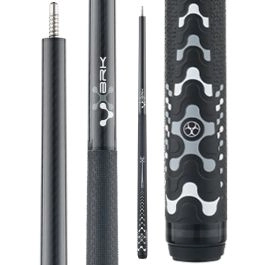
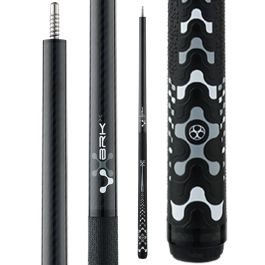
Poison is a carbon fiber pool cue brand built around three playing lines: VX Break and Jump/Break cues, the dark-themed Maelith line, and the color-forward Candy line. Every cue runs the same Venom carbon fiber shaft on a Radial joint, a low-deflection composite built on the same engineering principle found in premium carbon shafts, tuned for a lower price. Quarter King carries 23 Poison listings: 15 pool cues plus hard cases, bridge gloves, and a compatible replacement shaft, ranging from about $20 to about $550. For the 15 cues alone, see our Poison Pool Cues shelf.
Every item is brand new and 100% genuine, backed by its full manufacturer warranty. Free shipping on orders over $98 (contiguous US) and 30-day returns. Every spec on this page is checked against the manufacturer's published data by our Wilmington, NC store team.
Poison builds pool cues around one core idea: put a real low-deflection carbon fiber shaft
under a bold, distinctive finish at a price below flagship carbon cues. The brand runs three
playing lines rather than one catalog of look-alike sticks. VX covers break and jump/break
cues built for sport play. Maelith runs a dark, understated design family. Candy runs bright,
color-forward finishes. Every cue across all three lines is built around the same Venom
carbon fiber shaft, a composite shaft engineered by Predator on the same low-deflection
principle used in Predator's own premium shafts, tuned for a lower price point rather than
tour-level precision. That one-shaft-across-the-line approach means a buyer is not choosing a
lesser shaft by picking a less expensive Poison model within the range; every cue gets the
same Venom platform regardless of finish or line.
Quarter King's current Poison assortment runs to 23 listings. Fifteen of those are complete
pool cues, organized under our Poison Pool
Cues category. The rest round out the brand: five hard cases, two bridge-hand gloves, and
a carbon fiber replacement shaft fitted with a Poison Bullet quick-release joint pin, so a
Poison buyer can build a full setup, spare shaft included, without mixing in another brand's
accessories. Across dealer and marketplace listings we checked, Poison is consistently
described as a value-priced carbon fiber line rather than a hand-made or limited-production
brand, which lines up with how the three lines are organized here: by finish and role rather
than by custom options or wood choices.
Our 15 Poison cues split across the three lines the maker sells. Two are VX Break cues at
about $380 each. Three are VX Jump/Break cues at about $400 each. Six are Maelith cues at
about $450 each. Four are Candy cues, also about $450 each. Every model is sold as its own
listing by colorway rather than as a single cue with color options, so each finish shown on
our Poison Pool Cues shelf is its own
SKU with its own stock status.
Beyond the cues, Quarter King stocks five Poison hard cases: a 2x2 case and two versions of
a 2x4 case in black or red vinyl with a Poison logo on the shell, running from about $90 to
about $120, plus two camo-finish Armor cases in 2x4 and 3x4 sizes at about $140 and about
$150. We also carry two Poison bridge-hand gloves at about $20 each, and a carbon fiber REVO
shaft fitted with a Poison Bullet quick-release joint pin, priced at about $550, sized to fit
a Poison cue's joint for a player who wants a second shaft on hand. Full specs and current
stock for each sit on their own product pages, linked from this hub.
VX is the only line built for break and jump play rather than everyday shooting, and the
only one on a Sport Wrap grip instead of a bare handle. Maelith and Candy are both full
playing cues on the identical wrapless, 12.40mm Venom platform, so the choice between them is
almost entirely about finish: Maelith stays dark and restrained across six colorways, while
Candy stays bright and pastel across four. None of the three lines overlaps much with either
of the others in either price or intended use, which keeps the lineup easy to shop by what a
player actually needs rather than by a confusing tier structure.
Every cue in our Poison range shares the same joint and shaft platform, which is why the
brand reads as consistent even though each line looks different.
All 15 cues use a carbon fiber Venom shaft on a
Radial joint. Our Candy and Maelith listings carry that
shaft at a 12.40mm diameter, matching the single diameter
the maker lists for the Venom shaft across the entire Poison lineup. Carbon fiber construction
resists the warping that a solid wood shaft can pick up from humidity and temperature swings,
part of why the same shaft platform is used across every line rather than reserved for one
tier. See our cue glossary for more on shaft and joint terms.
Candy and Maelith cues in our range are built wrapless,
with a bare, painted or textured handle rather than a wrapped grip. The VX Break and VX
Jump/Break cues instead use a Sport Wrap grip, a tacky,
textured material suited to the fast, repeated strokes of breaking and jumping rather than a
finesse playing grip.
Maelith cues run dark colorways, mostly black and grey with a contrasting stripe of red,
magenta or silver, most finished with no wrap and a logo or steel-ring accent on the handle.
Candy cues run pastel and bright two-tone finishes such as green and yellow, peach and
lavender, peach and pink, and pink and light blue. The VX cues use a plainer two-tone body
over the same carbon fiber shaft platform, since the finish is secondary to the break and jump
role those cues play.
The three-line structure gives Poison a different pitch depending on which line a shopper
is looking at. VX is a break and jump cue purchase, aimed at a player who wants a second cue
purely for opening racks and jumping over blockers, and who does not want to risk their main
playing cue's tip and ferrule on repeated hard breaks. Maelith and Candy are complete playing
cues, aimed at a player moving up from a starter cue who wants a carbon fiber shaft's
low-deflection accuracy without paying flagship prices, and for whom the finish, dark and
restrained on Maelith, bright and colorful on Candy, matters as much as the shaft underneath.
None of the three lines is marketed as a tour-level or fully custom cue, and a player already
playing on a premium shaft is shopping the wrong shelf here. A gift buyer looking for a
distinctive-looking carbon fiber cue for a recreational or league player fits squarely in this
range, particularly on the Candy line, where the finish is the whole point.
Poison backs the Venom shaft with a limited lifetime warranty against manufacturing
defects, though the maker's own comparison of Venom against its premium shaft specifically
excludes warpage from that coverage, unlike the warpage protection carried on the pricier
shaft. That is a meaningful distinction for a carbon fiber shaft buyer to know going in: the
composite construction itself resists warping far better than a wood shaft, but the written
warranty does not promise to replace a shaft that warps regardless of cause. As with any cue
at this price point, wear items such as the tip and any wrap material are not covered by a
manufacturing warranty. A cue kept in its case between sessions, rather than left leaning in a
corner or a hot car, holds up best over time regardless of shaft material.
Poison comes up often on the AZBilliards forums in side-by-side comparisons with Predator's
pricier break and jump cues, since the two share a joint style and shaft heritage. In one
long-running thread comparing the VX Jump/Break cue with Predator's BK2 break cue, several
posters said they could not tell the two apart in a blind test, and one commenter who owns
both wrote that the VX broke almost identically to the BK2 for a fraction of the price. A more
detailed reply in the same thread found the pricier cue slightly firmer and more accurate on
hard breaks, while preferring the way the Poison felt in hand, and noted wear at the front end
of the VX after repeated full-power breaks with the tip contacting the table, a pattern the
poster said any similarly built break cue would show. Posters in an older thread on what
separates Poison from Predator generally described Poison as the more affordable line aimed at
casual and league players rather than tournament competitors, while one pointed out that
Poison still ships the same low-deflection Venom shaft even at that lower price, which is not
a given for every entry-priced cue on the market.
Because the shaft and joint are identical across the lineup, the visual variety is where the
three lines actually differ from each other. Maelith runs in black and black with two handle
treatments, a logo handle and a steel-rings handle, plus black and red, dark and light grey,
grey and red, and magenta and black, all wrapless. Candy runs green and yellow, peach and
lavender, peach and pink, and pink and light blue, also wrapless. The VX Break and VX
Jump/Break cues come in black and grey or green and pink, both on the Sport Wrap grip built
for that line. A buyer who wants a specific mood, dark and restrained versus bright and
playful, can shop by line first and then by colorway within it.
A carbon fiber shaft like Venom needs less upkeep than a wood shaft, not more. Wipe it down
with a slightly dampened cloth after a session rather than a water-based cleaner, and store
the cue in a case between sessions rather than leaning it against a wall or a table rail.
Because the shaft will not react to humidity and temperature swings the way wood does, most of
the maintenance routine on a Poison cue comes down to the tip and ferrule rather than the
shaft itself: check tip shape and hardness periodically, and keep the cue out of a hot car
trunk or a damp storage space regardless of shaft material, since extreme heat can still
affect the joint, wrap and finish even on a carbon fiber build. None of that changes based on
which of the three lines a cue belongs to; VX, Maelith and Candy all ride on the same shaft
and benefit from the same routine.
Venom is a low-deflection carbon fiber composite shaft used across every Poison line, at a single 12.40mm diameter, engineered by Predator on the same low-deflection principle used in its own premium shafts.
Yes. Alongside 15 Poison cues we stock five hard cases, two bridge-hand gloves, and a carbon fiber replacement shaft fitted with a Poison Bullet quick-release joint.
A Radial joint across all 15 cues we carry, the same joint style used on the compatible replacement shaft we also stock.
No. Poison's limited lifetime warranty covers manufacturing defects on the Venom shaft but specifically excludes warpage, per the maker's own comparison of its shafts.
Yes, three: VX Break and Jump/Break cues, the dark-themed Maelith line, and the bright Candy line, all built on the same Venom shaft.
Learn about our up and coming Quarter King Billiards engineered products, get coupons to save $$$, stay up to date with our sales, and of course stay in the loop with our constantly changing used cues!