Two weeks, two capitals, two very different finals. In Quezon City, Johann Chua finally won the title his country had been waiting on. In Ho Chi Minh City, Mickey Krause took down the world number one with a run of racks that changed the whole match. Neither final was decided by a highlight-reel shot. Both came down to things every league player deals with on a Tuesday night: break control, safety choices and holding your nerve on the hill.
Here is what happened on the World Nineball Tour’s Asian swing, what we think club players can take from it, and the gear that fits those lessons.
Krause Outlasts Yapp in Ho Chi Minh City
The Universal Ho Chi Minh City Open ran November 11 to 15 with a $63,000 prize fund, and the Dane had to get there the long way. An early 9-5 loss to Jerson Cumayas sent Krause to the one-loss side. He responded by whitewashing James Oyangoren to reach the last 64, then beat Toh Lian Han and Jefrey Zen on Saturday.
The knockout rounds were a gauntlet. Krause held off a late charge from reigning world champion Carlo Biado in the last 16, edged Jonas Magpantay hill-hill, and then beat Johann Chua 11-8 in the semifinals. On the other side, Aloysius Yapp looked close to untouchable. He gave up only eight racks from the last 32 through his semifinal, with wins over James Aranas, Cumayas and Lo Ho Sum.
The final swung twice. Yapp jumped to a 4-2 lead before Krause rattled off seven racks in a row. Yapp called a timeout, came back out and won four straight to cut the gap to one. Then came the moment that decided it: Yapp missed a seven ball in rack 19, Krause got to the hill, and after some patient safety exchanges he ran the last rack and dropped the nine for the title.
It is Krause’s fourth WNT ranking title and his first since the 2025 Scottish Open, where he also beat Yapp in the final. The former European champion has now beaten the world’s top player in two ranking finals.
Chua Finally Wins at Home
Three weeks earlier, the Roobet Philippines Open Pool Championship wrapped up at Gateway Mall in Quezon City on October 24. It was an all-Filipino final, and Johann Chua beat Anton Raga 11-9 to become the first Filipino champion of the event.
Chua’s run included a 10-2 semifinal win over 21-year-old Bernie Regalario after trailing 2-0 early. Raga reached the final by beating Baseth Mocaibat 10-6. The final itself turned on the break. Chua opened up a 5-0 lead after Raga scratched off the break, and Raga clawed back with some brave kicking, including a one-rail kick on the two ball that got him to 5-3. He pulled within 10-9 late, then scratched on the break for the fourth time in the match. Chua took ball in hand and ran out.
Chua called Raga “a warrior” afterward and said he was “speechless and relieved.” It was his second Matchroom Major title and his first Major appearance of 2026.
Lesson One: A Break You Control Beats a Break You Crush
Four scratches on the break in a race to 11 is a brutal number, and it is worth sitting with. Every one of those scratches handed Chua ball in hand with a fresh rack. At the pro level that is close to a free rack. In your league, it is still a huge swing.
Most break scratches come from the same few causes. The cue ball is struck below center and draws back into a corner. It is struck off center and squirts sideways into a side pocket. Or the player simply swings harder than they can control and the cue ball takes a wild path off the head ball.
The fix is boring and effective. Back your speed off to about 80 percent and focus on center ball contact. Your goal is to see the cue ball hop slightly forward and park near the middle of the table after contact. If you are watching the cue ball fly around three rails, you are giving away control for a few extra miles per hour that probably are not pocketing more balls anyway.
Try this drill: rack ten times and break from the same spot. Mark where the cue ball finishes each time with a coin. After ten breaks, you want a tight cluster near the center. If the coins are spread all over, slow down until they bunch up, then add speed a little at a time.
Why a Dedicated Break Cue Helps
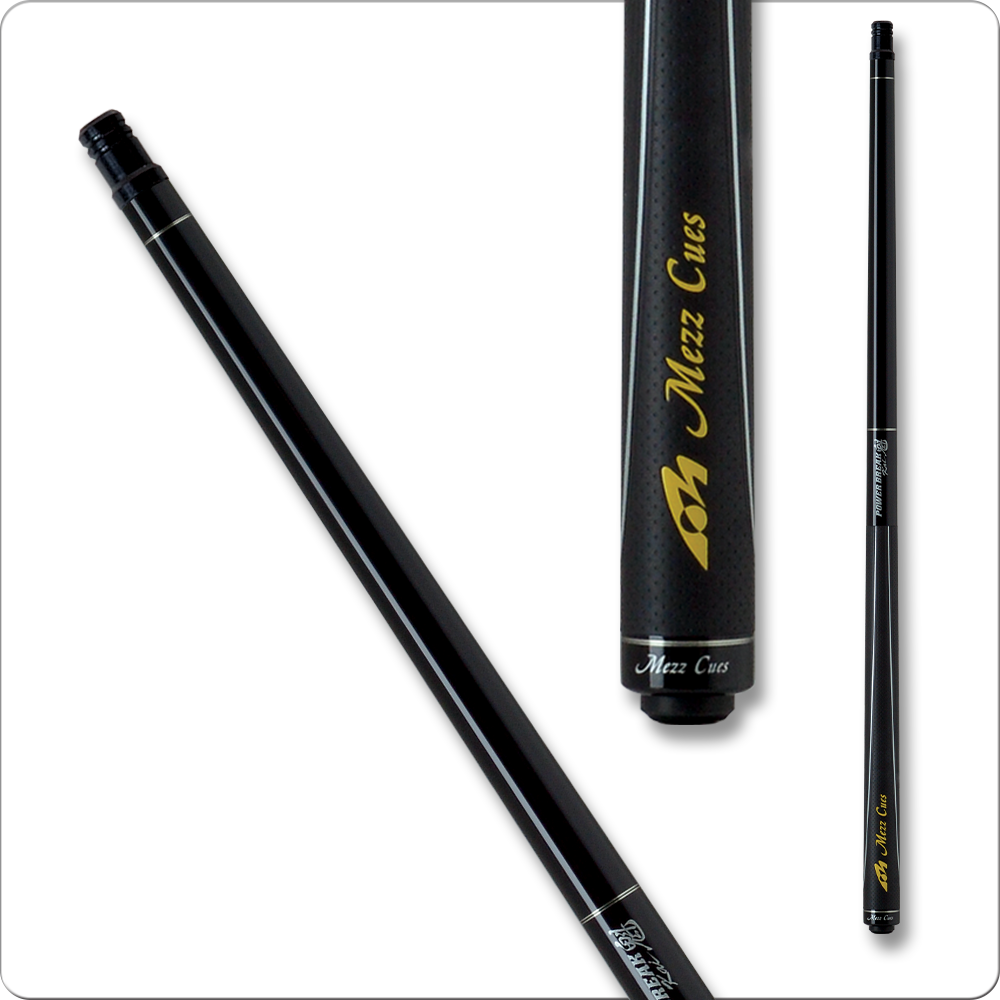
A break cue with a hard tip and a stiff, slightly thicker shaft transfers energy more efficiently, so you can get the same ball spread at a more controllable stroke speed. It also keeps the full-power impacts off your playing cue’s tip and shaft. The Mezz ZZDFN Dual Force Break/Jump Cue is a good example. It uses a 13mm Dual Force break shaft, a hard Sonic Trance tip, a United joint and a forearm that splits off so the cue doubles as a jump cue. Weights run 18 to 21 ounces.
Lesson Two: Safeties Win Hill-Hill Matches
Krause did not beat Yapp by out-running him. Yapp is arguably the best runner in the game right now. Krause won the late stages by trading safeties until he got a look, then finishing. When a better runner is across from you, the smart move is to drag the match into territory where every shot is a decision.
For league players, that means looking for two-way shots: a shot where you attempt the pocket, but if you miss, the cue ball ends up somewhere awkward for your opponent. A thin cut to a far pocket with the cue ball stopping behind a cluster is the classic example. You get the chance to pocket the ball and your downside is limited.
Practice this by setting up a ball you would normally consider a 50-50 shot. Instead of just firing at it, plan where the cue ball goes if you miss. Then shoot it ten times and count how often your opponent would have had an easy shot after a miss. That number should go down fast once you start thinking about it.
Feel Matters for Soft Safeties
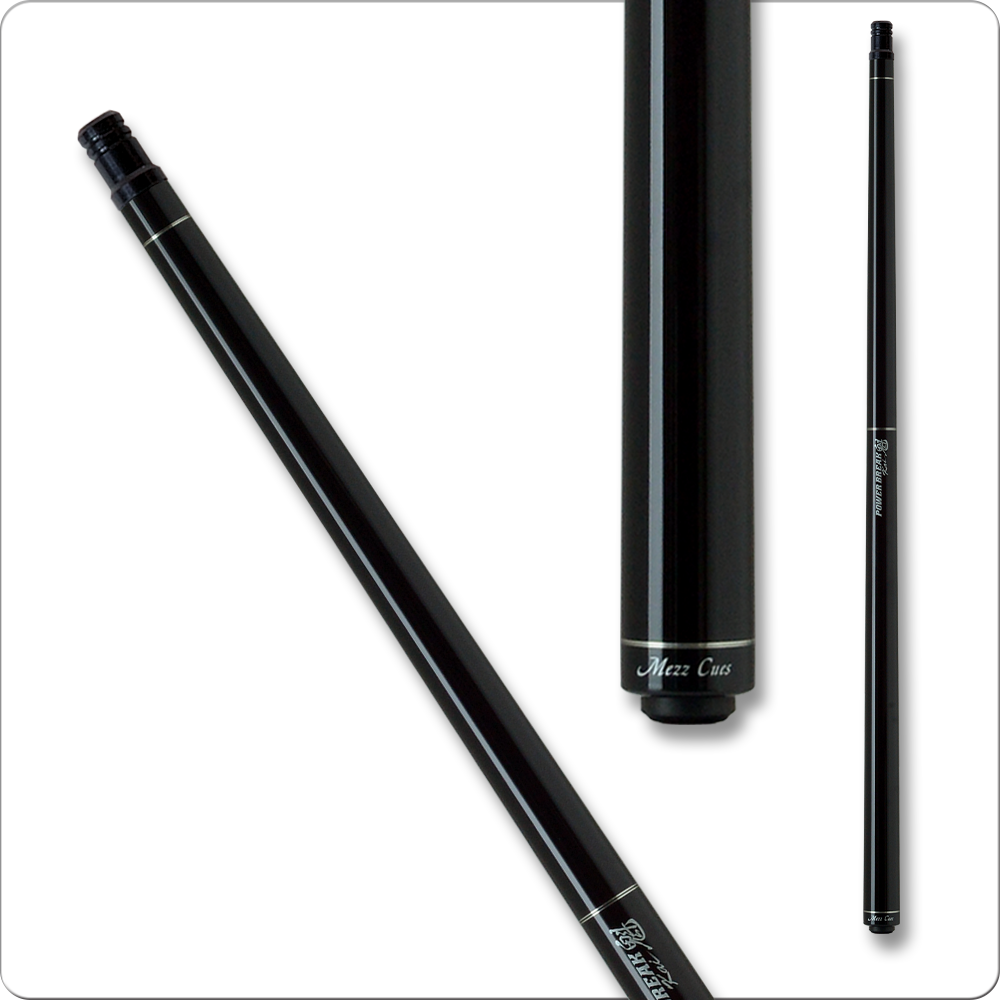
Safety play is a feel game. You need a cue that gives clear feedback at slow speeds so you can trust a soft roll into a cluster or a thin hit that barely moves the object ball. The Mezz ZZPBKW and Mezz ZZPBKN from the Power Break Kai line share the same black finish and Mezz joinery. They come in two handle styles, so pick the one that fits how you like to grip.
Lesson Three: Resetting After a Run Against You
Yapp’s timeout after losing seven straight racks is a smart move that amateurs rarely copy. Momentum in pool is mostly about rhythm. When you lose several racks in a row, your stroke speeds up and your pre-shot routine shortens. A short break, even just walking away from the table for 30 seconds in a league match, lets you reset.
Build a simple routine for when things go wrong. Chalk slowly, take one deep breath, and commit to a full pre-shot routine on the next shot no matter how easy it looks. It sounds small. It works.
Featured Mezz Products
Mezz is a Japanese cue maker with a big following across Asia, and its break and playing cues are built around precise joinery and stable shafts. These are the in-stock Mezz cues that fit the lessons above.

What Comes Next
The tour does not slow down. The Universal Bangkok Open runs November 17 to 21 with a $69,400 prize fund, and then attention turns to Orlando for the Mosconi Cup on November 27 to 30. Krause’s win in Ho Chi Minh City puts him in good form heading into the end of the season, and Chua’s breakthrough at home has to give him confidence too.
For your own game, the takeaways are simple. Slow your break down until the cue ball stays in the middle of the table. Look for two-way shots instead of forcing 50-50 balls. And when the match turns against you, take a breath before you take another shot.
If you are shopping for a break cue to help with that first lesson, our full break cue collection covers every budget, and the Mezz pool cues page has the complete Mezz lineup. You can also browse all pool cues by brand.

About Corey Bernstein
Corey Bernstein is a competitive pool player, billiards equipment specialist, and co-owner of Quarter King Billiards in Wilmington, North Carolina. With over a decade of experience in the sport, Corey has competed in regional APA and BCA sanctioned tournaments and maintains an intimate knowledge of cue construction, shaft technology, and table mechanics. As a certified dealer for brands including Predator, McDermott, Jacoby, Viking, Lucasi, Meucci, Joss, and Cuetec, Corey personally tests and evaluates every cue that comes through the shop. His hands-on approach to the business means he has racked thousands of hours behind the table — breaking in shafts, comparing tip compounds, and dialing in the nuances that separate a good cue from a great one. When he is not behind the counter or on the table, Corey is researching the latest advances in low-deflection technology, carbon fiber shaft construction, and cue ball physics. His articles on Quarter King Billiards combine real-world playing experience with deep product knowledge to help players at every level find the right equipment for their game.