 844 408 3056

 Hot Deal
The World Nineball Tour spent the first weekend of August in Orlando, the second in the Arizona desert, and this week it pulled into a room that looks a lot more like the one you play in. The inaugural Phoenix Open runs August 18 through 22 at Metro Sportz Bar in Phoenix, and it is the third stateside ranking event in as many weeks. A 128 player field turned up for a reported $71,200 prize fund with $20,000 waiting for whoever survives Saturday.
The names are absurd for a venue this size. World number one Aloysius Yapp is here. So is Carlo Biado, the reigning two time world champion. Fedor Gorst returns to competition after time away. Joshua Filler, Francisco Sanchez Ruiz and David Alcaide headline a group that includes 14 of the world’s top 16. Denis Grabe arrives days after taking his maiden major at the Arizona Open, and Shane Van Boening walked in on a 14 match winning streak while he tunes up for the US Open in Frisco next week.
A major field in a working pool room
Most events at this level get staged in a convention hall, where every table is dropped onto the same carpet, under the same rented lighting, in the same climate controlled bubble. Metro Sportz Bar is a room that serves regular players the other 51 weeks of the year. That changes the texture of the week. Sight lines are tighter. Rail noise carries. Spectators are close enough to hear a bad hit.
Pros adapt to that faster than amateurs do, and the reason is not talent. It is preparation. A touring player arrives with a cue that has felt the same for two years, a tip they know the response of, and a chalk they have not switched brands on since spring. When the room changes, the only variable they have to solve is the room. That is the entire trick, and it is available to anyone reading this.
The format explains the pressure
The Phoenix Open runs double elimination until 32 players remain. Those early matches are races to nine racks. From the last 32 onward the event switches to single elimination at races to ten, the semifinals stretch to eleven, and the final is a race to thirteen.
Read that again, because it is the whole story of the week. A race to nine against a world top 16 player is not a test of who is better. It is a test of who is better right now, for about 90 minutes, on a table neither of them owns. One dry break, one missed shot at the seven, and a player who would win a race to fifteen nine times out of ten is on the one loss side by lunch.
That is also exactly what league night is. Your APA or BCA match is a short race. Your local weekly tournament is a short race. The pros in Phoenix are playing a version of your Tuesday, with the volume turned up.
Featured Players Cues
-
Sale!
-
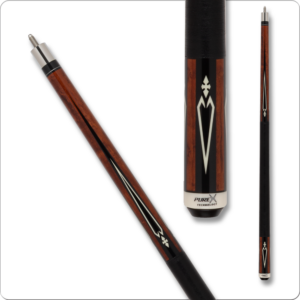
Players HXT15 Pool Cue, HXT Low-Deflection Shaft
Original price was: $362.00.$325.80Current price is: $325.80. Select options This product has multiple variants. The options may be chosen on the product page -
Sale!
-
Players HXT-18SR Pool Cue
Original price was: $219.00.$189.00Current price is: $189.00. Select options
What a race to nine actually rewards
The break sets your ceiling
In a short race, break quality is the single largest swing factor. Not raw power. Control. A break that makes a ball and leaves the cue ball near center table hands you a runout chance. A break that scatters everything and parks the cue ball on a rail hands you a safety battle you did not plan for.
Watch the Phoenix field and count how many of them swing at 90 percent instead of 100. The extra ten percent buys almost no additional spread and costs an enormous amount of accuracy. If your break is inconsistent, the fix is usually a dedicated break cue with a phenolic or hard tip so you stop wearing out the tip on your playing cue. Our break cue selection covers that from entry level up.
The one loss side is a stamina test
Double elimination sounds forgiving. It is not. A player who drops a match early has to win roughly twice as many matches to reach the same round, on the same day, with the same arm. By Thursday night the one loss bracket in Phoenix will contain multiple world champions, and every one of them will have played more pool than the players who stayed clean.
This is where equipment quietly matters. A cue that feels fine for two hours can feel wrong at hour seven. Wrap material, weight, and balance point all become louder as fatigue sets in. Players who compete in long formats tend to settle on a slightly forward balanced cue with a wrap that handles sweat, because a slick butt at hour seven produces a death grip, and a death grip produces missed shots.
Three events, three weeks, one lesson about gear
The Florida Open, the Arizona Open and the Phoenix Open all landed inside 20 days, with the US Open in Frisco starting August 25. Nobody in this field is experimenting. They are not testing a new shaft in Phoenix or trying a different tip hardness on Thursday. They locked their setup before the swing started and they will not touch it until the tour breaks.
Amateur players do the opposite. New tip in week one, borrowed cue in week two, different chalk in week three, then they wonder why their aiming feels off. If you have a league season or a tournament run in front of you, pick your setup now and leave it alone. The Players HXT15 and the Players HXT99 are popular for exactly this reason. Both carry the HXT low deflection shaft, so the swerve and squirt behavior stays predictable from the first rack to the last one, and both sit in a price range where owning a backup is realistic.
Players building a first serious setup often start with something like the Players HXT-18SR, then add a break cue rather than upgrading the playing cue again. That order of operations saves money and produces a bigger jump in results.
The storylines worth following
Grabe is the interesting one. Winning a maiden major changes how a field looks at you, and it changes how you look at yourself, usually within a week. Some players use that as a launch pad. Others spend the next event discovering that everyone now plays them like a favorite. His first matches in Phoenix, days after Yuma, will tell you which kind of run this is.
Van Boening is the other one. A 14 match winning streak heading into an event he is treating as preparation is an unusual position to be in, because winning becomes almost incidental to the real goal in Frisco next week. Watch how he manages the early rounds. Players in that spot tend to play more conservatively than usual, and a race to nine punishes conservatism.
Then there is Gorst, returning after time away from competition. Rust in pool is not what people assume. Shotmaking comes back first. Speed control and rack management take longer, because those depend on hundreds of small calibrations you only rebuild by playing matches that count. If he looks sharp early and then loses a rack he should have run, that is what you are watching.
The depth is the real headline though. Fourteen of the world’s top 16 in a 128 player draw means the early rounds contain matchups that would headline the final day of a smaller event. There is no soft side of this bracket.
How to watch
Coverage runs on WNT TV for subscribers, with additional streams on the Railbirds Productions YouTube channel. If you only have time for one session, take a late round on the one loss side rather than a marquee early match. That is where you see the safeties, the kicks, and the decisions under real consequence, and those are the parts of the game that transfer to your table.
Turning tour habits into league results
Three things separate the Phoenix field from a strong local player, and only one of them is talent. They break at a repeatable speed instead of a maximum one. They play the same equipment every single week. They treat a short race as a discipline problem rather than a shotmaking contest.
All three are copyable this week. If you want help matching a cue to your stroke and your budget, browse the full pool cue collection or reach out and tell us what you play and how often. We would rather point you at the right $300 cue than sell you the wrong $900 one.

About Corey Bernstein
Corey Bernstein is a competitive pool player, billiards equipment specialist, and co-owner of Quarter King Billiards in Wilmington, North Carolina. With over a decade of experience in the sport, Corey has competed in regional APA and BCA sanctioned tournaments and maintains an intimate knowledge of cue construction, shaft technology, and table mechanics. As a certified dealer for brands including Predator, McDermott, Jacoby, Viking, Lucasi, Meucci, Joss, and Cuetec, Corey personally tests and evaluates every cue that comes through the shop. His hands-on approach to the business means he has racked thousands of hours behind the table — breaking in shafts, comparing tip compounds, and dialing in the nuances that separate a good cue from a great one. When he is not behind the counter or on the table, Corey is researching the latest advances in low-deflection technology, carbon fiber shaft construction, and cue ball physics. His articles on Quarter King Billiards combine real-world playing experience with deep product knowledge to help players at every level find the right equipment for their game.