Walk into any pool room and watch the shooters with a few years of experience. Many carry a small metal tool on their keychain or in their case, and they use it every few racks without thinking. That tool is the difference between a tip that grips the cue ball and a tip that skates off it. If you have been playing with a smooth, glazed tip and blaming your stroke, this guide is for you.
Below we cover the three jobs a tip tool does, how the common types differ, and which ones fit different budgets. Our full selection is on the Tip Tools page, part of the larger Accessories section.
The three jobs of a tip tool
Scuffing
Chalk needs something to cling to. As you play, the surface of the tip compresses and smooths, so chalk builds up unevenly and the tip stops holding it. A scuffer roughens the face lightly, restoring that grip. The key word is lightly: a few quick passes, not a grinding session.
Shaping
Most players prefer a tip with a dome profile close to the curvature of a nickel or dime. A flat tip makes off-center contact unpredictable, while a pointy tip can miscue. Shaping tools hold the curve so you can reshape it as it wears. This is why you will often see the nickel and dime names used for tool sizes.
Aerating and tapping
Some tools include a row of small pins or a tapper that opens the pores on the surface of the tip. Many players like this finish on softer leather tips because it speeds up chalk pickup. Others stick with scuffing alone. Both approaches are valid, so test on your own tip and see what feels better.
Types of tools, and who they fit
Multi-function tools. The Koda TT51 5-N-1 Tip Tool at $25.99 packs several functions into one body, so one tool handles scuffing, shaping, and the rest of your tip upkeep. It suits a player who wants one tool and does not want to think about it. The Koda Holy Grail 8-N-1 at $22.99 goes further, with eight functions in a single body and a replacement blade available separately for a couple of dollars, which is nice if you plan to use it for years.
Dedicated shaper and scuffer. If you only need the basics, the Koda Grit Metal Tip Shaper and Scuffer at $13.50 is hard to beat on price. It is simple, it fits in a pocket, and it does the two things most players need. Pair it with a little patience and you will keep a tip in shape for a very long time.
Grip-focused tools. The Koda Lizard Grip Tip Tool at $14.99 is about handling. A textured grip makes controlled passes across the tip easier, and that matters more than people realize. Slipping with a tool is how tips get chewed up unevenly.
Economy options. If you only want something basic for a bag or to leave at the table, the TB5 Economy Pool Cue Tip Scuffer is under two dollars. It will not last like the metal tools, but it works for occasional use.
Featured Tip Tools
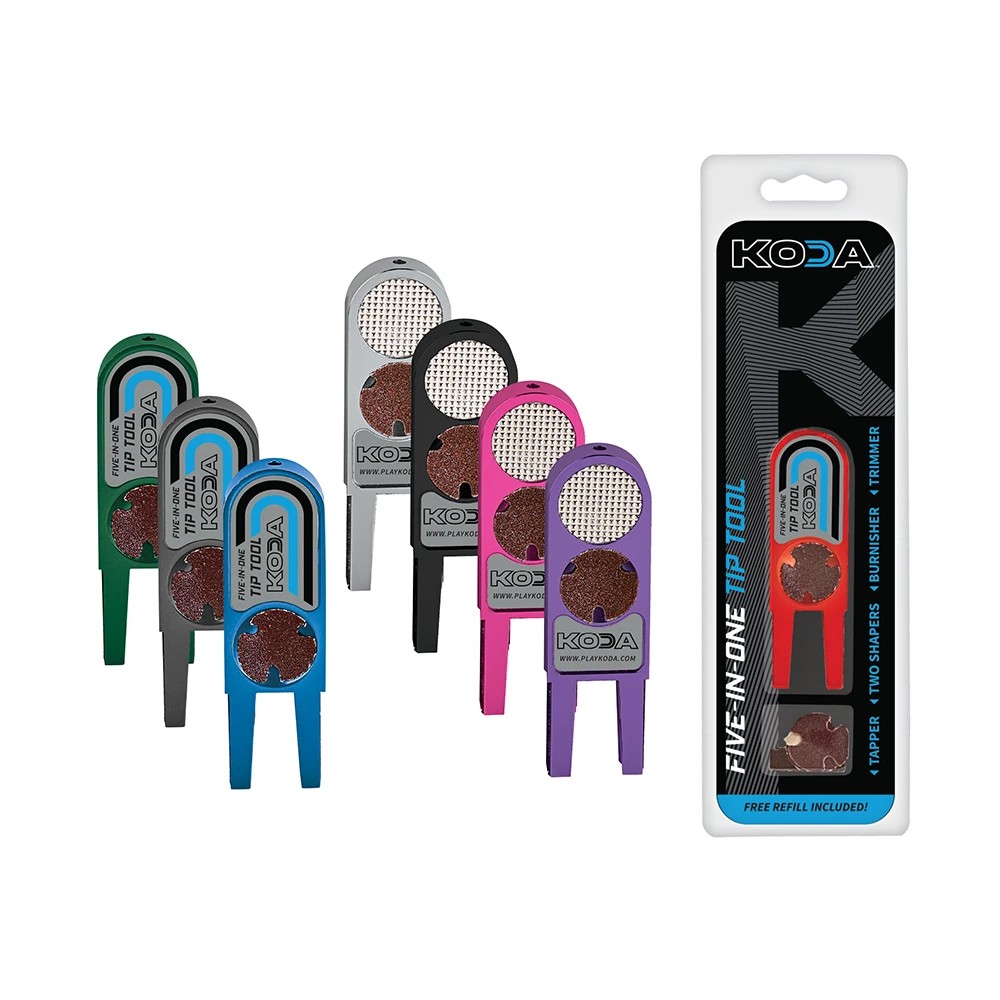
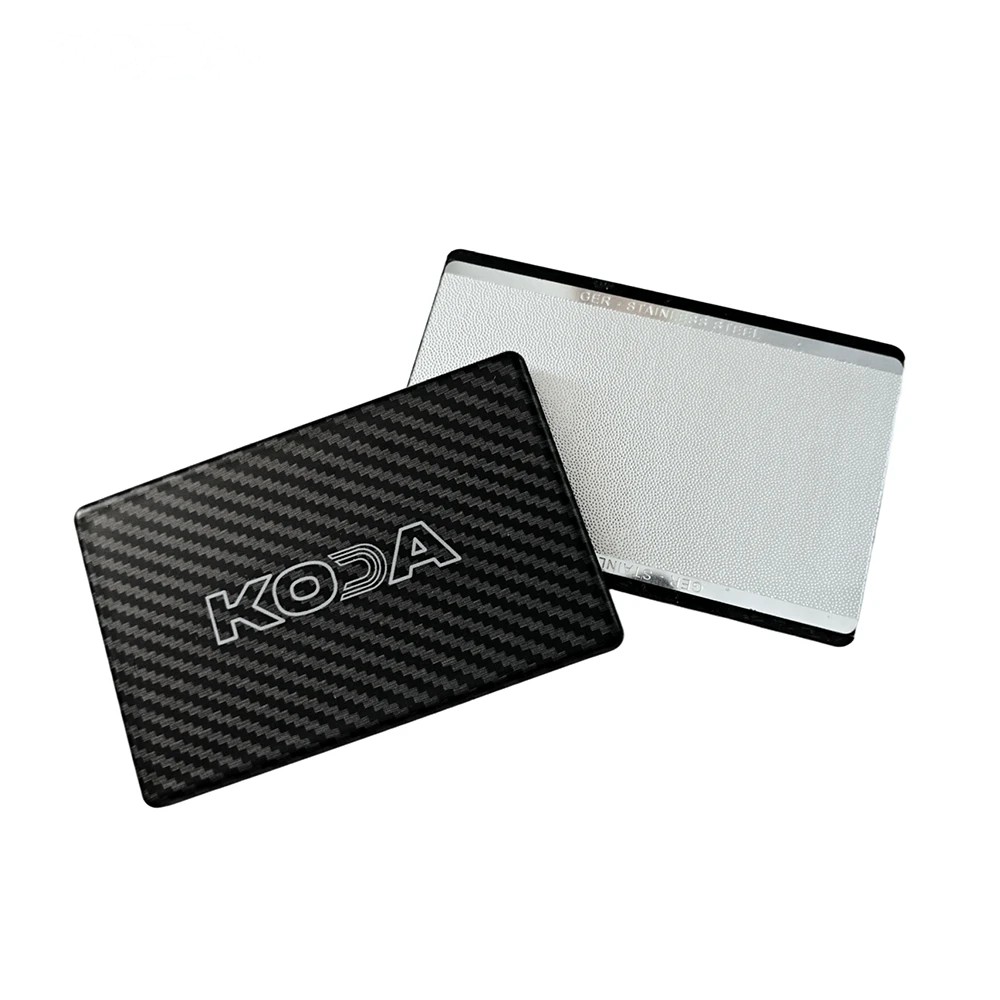
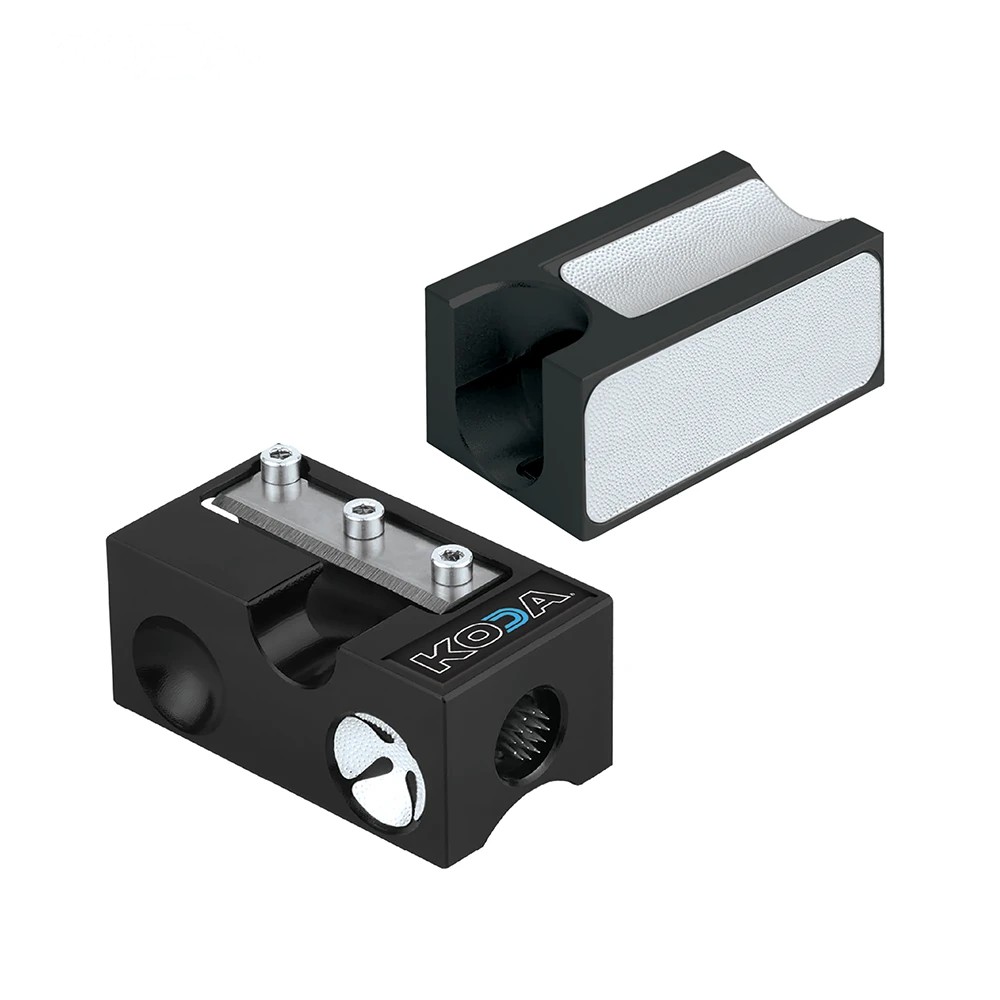
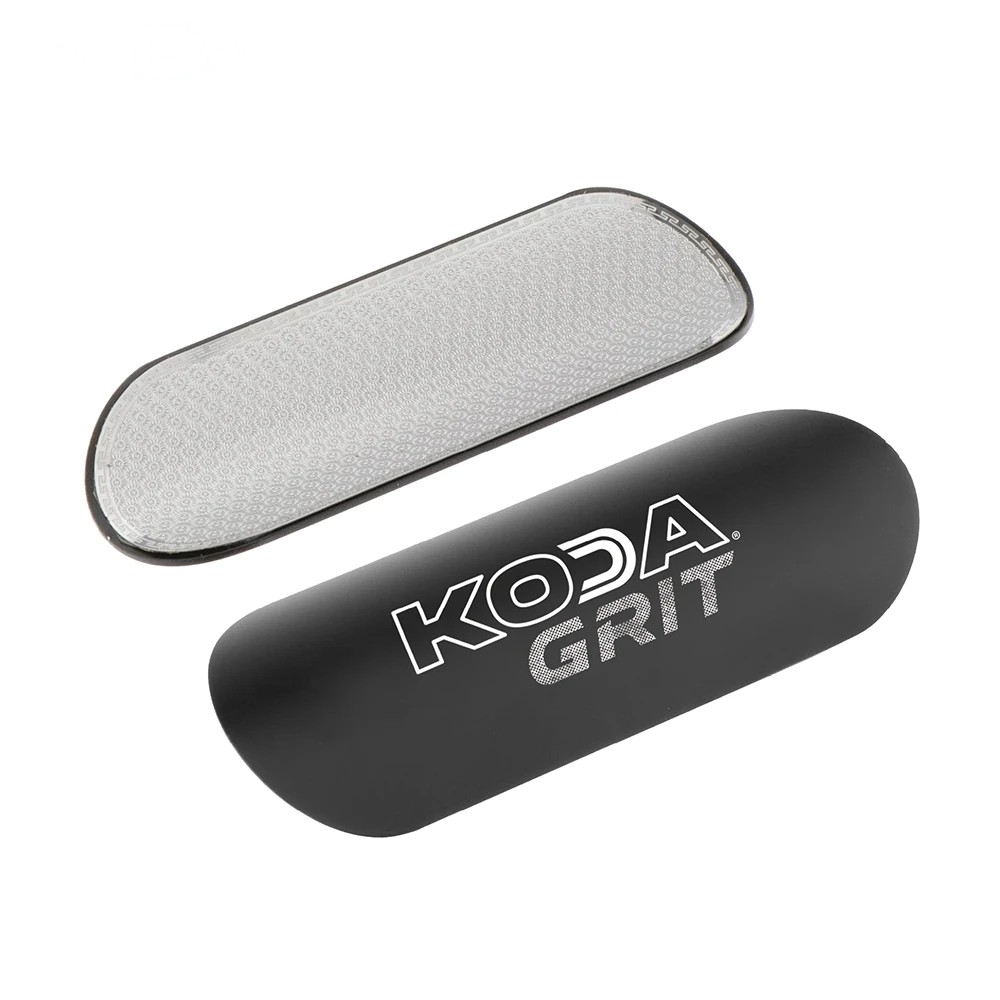
Whichever you choose, keep the tool where you can reach it easily. A tool in the bottom of your case will not get used.
How to scuff a tip the right way
Hold the cue so the tip faces up, and rest the shaft against your hand or the table edge so it does not move. With the scuffer, make short circular or back-and-forth passes across the face of the tip. Use light pressure. You are texturing the surface, not removing leather. Ten seconds is generally enough.
Afterward, brush off the dust with your hand or a cloth, then apply chalk. Chalk after scuffing is where the benefit shows up, because the fresh texture picks up chalk readily. Take a practice stroke into a chalk cube cover to be sure the tip feels tacky.
When to reshape, not just scuff
Look at your tip from the side. If the dome has flattened or the edge looks mushroomed outward, scuffing alone will not fix it. Use the shaping surface on your tool to restore the curve. Work the tip in slow rotations while you hold the tool at the curve you want. Check often. It is much easier to take a little more off than to put some back.
If the tip has mushroomed outward beyond the ferrule, trim the overhang carefully with a proper trimmer, not a pocket knife, because a slipped blade can damage the ferrule. If the tip is down to a thin layer of leather, it is time for a replacement, and a repair kit can help here.
Tip hardness changes the routine
A soft tip compresses faster and needs attention more often. A hard tip holds shape longer but can glaze, so it benefits from regular scuffing. Neither choice is wrong, and your tip tool needs follow your tip. If you are unsure which hardness suits you, our post on tip hardness explains the tradeoffs.
Tool care
Metal tools last for years, but the abrasive surfaces clog with chalk and leather dust. Tap the tool against your palm now and then, and clean any rasp surface with a stiff brush. If you carry a keychain tool, keep it in a pocket away from sharp keys so the edges stay clean.
Mistakes that wreck a tip
The first mistake is using too much pressure. Players hear that a tip needs to be rough and then dig in with a rasp, which strips leather and shortens tip life. The second is using sandpaper that is too coarse, which leaves deep scratches that hold chalk unevenly. The third is skipping chalk after a scuff, so the fresh surface never gets the benefit.
A fourth mistake is ignoring the ferrule. When you shape the tip, keep the tool away from the ferrule edge. A slip can chip it, and a chipped ferrule can crack further on a hard break. Go slowly and check your progress every few passes.
Which tool should you buy first?
If you play occasionally and want the basics covered, the Koda Grit shaper and scuffer is the value pick. If you play a few nights a week and want one tool that does it all, the TT51 or the Holy Grail multi-tool will cover you. If you tend to rush or slip, the Lizard Grip gives you something solid to hold. Price differences are small, so choose on how the tool feels in your hand, since a tool you enjoy using is a tool you will actually use.
For deeper reading on how tip hardness changes upkeep, see our guide to soft, medium and hard cue tips.
One last point on storage. Chalk dust and leather shavings collect inside a case pocket, so keep the tool in a small pouch or on a keychain instead of loose among your tips and joint protectors. A clean tool does a cleaner job, and it saves you from picking leather dust out of the pocket later.
A simple routine for every session
Before you start, scuff the tip lightly and chalk it. After every few racks, add a fresh coat of chalk. Once a week, check the shape and touch it up. That is the whole routine, and it takes maybe a minute of total time. Players who follow it report fewer miscues and better spin control, mostly because the tip is simply doing what it should.
If your shaft and tip are both in good shape and you are looking to upgrade the whole cue, take a look at our Pool Cues department for options at every budget.

About Corey Bernstein
Corey Bernstein is a competitive pool player, billiards equipment specialist, and co-owner of Quarter King Billiards in Wilmington, North Carolina. With over a decade of experience in the sport, Corey has competed in regional APA and BCA sanctioned tournaments and maintains an intimate knowledge of cue construction, shaft technology, and table mechanics. As a certified dealer for brands including Predator, McDermott, Jacoby, Viking, Lucasi, Meucci, Joss, and Cuetec, Corey personally tests and evaluates every cue that comes through the shop. His hands-on approach to the business means he has racked thousands of hours behind the table — breaking in shafts, comparing tip compounds, and dialing in the nuances that separate a good cue from a great one. When he is not behind the counter or on the table, Corey is researching the latest advances in low-deflection technology, carbon fiber shaft construction, and cue ball physics. His articles on Quarter King Billiards combine real-world playing experience with deep product knowledge to help players at every level find the right equipment for their game.