 844 408 3056

 Hot Deal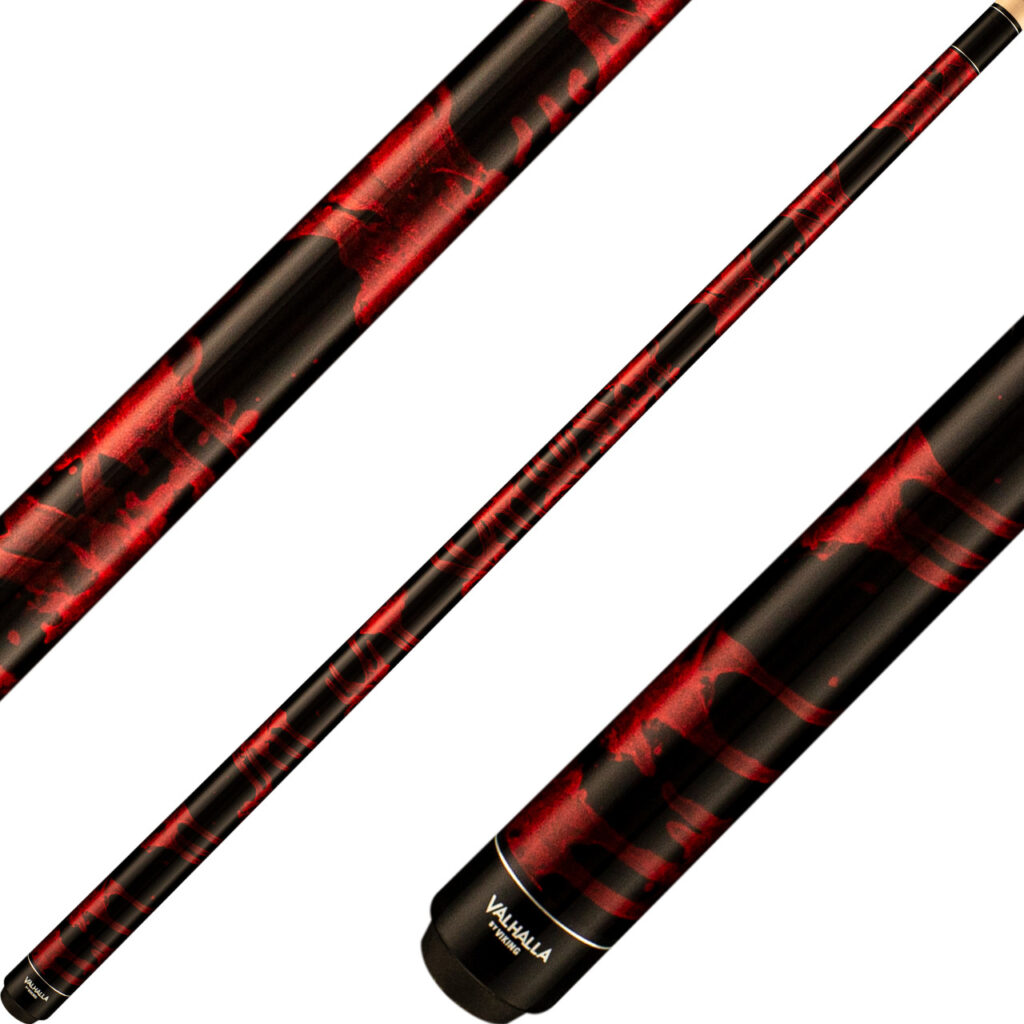
Frisco woke up Tuesday to a 256 player draw, a $500,000 prize fund, and the 49th edition of the tournament that still carries the Barry Behrman name on its trophy. By the end of the opening session, the loudest table in the Embassy Suites belonged to a 65 year old.
Earl Strickland beat Eklent Kaci on the hill in the first round of the 2026 US Open Pool Championship. He did it the hard way. Strickland raced out to a 4-0 lead, watched Kaci grind all the way back and reach the hill first at 8-7, then leveled the match when the Albanian scratched on the break and closed it out in the final rack after a safety exchange.
Strickland told organizers afterward that he ran six miles before the match and walked into the arena feeling pumped up. He also said he should have won it sooner, that he handed Kaci too many chances. Both things are true and neither is the interesting part. The interesting part is how he won the last rack. A run out in the 16th, then one clean safety when it mattered, against a player half his age who has beaten nearly everyone in the sport.
What Actually Happened on Day One in Frisco
Strickland got the headline, but the top of the draw handled its business without much drama. Defending champion and world number one Aloysius Yapp came through twice, beating Britain’s Martin Wragg 9-1 before edging Canada’s Stephen Holem 9-7 to reach the Winners’ Qualification Round. Yapp was refreshingly honest about it, admitting he feels nervous this week and has not been playing his best over the last few weeks. Reigning world champion Carlo Biado also went 2-0 on the day, handling Juan Parra and Harrison Leinen with the kind of composure that has made this one of his favorite stops on the calendar.
The cleanest scoreline of the day belonged to Shane Van Boening, who opened his chase for a historic sixth US Open title with a 9-0 shutout of fellow American Glen Davis. Van Boening talked about the size of the crowd more than the score, which tells you something about a five time champion who has been in this building enough times to know what a good week feels like.
The Format Punishes Players Who Need a Perfect Table
The structure of this event matters more than most people realize when they watch the highlights. Double elimination runs from August 25 through August 27, with races to nine on the winners’ side and races to eight on the one loss side. Sixty four players survive into single elimination beginning August 28, where it stretches to races of ten through the quarterfinals. The semifinals move to eleven and the final on Sunday, August 30 is a race to thirteen across two sessions, with ESPN2 carrying the final and ESPN+ and WNT TV covering the full week.
What that schedule creates is volume. A player who goes deep will shoot several hundred racks in six days on unfamiliar equipment under television lights. There is no version of that week where a shooter gets to be picky. You cannot wait for a table you like. You cannot wait for the humidity to settle. You adapt, rack after rack, and the thing that lets you adapt is knowing your own cue so completely that you stop thinking about it.
That is why Strickland’s win is a useful lesson for anybody reading this from a league night in North Carolina. He was not out-toolinged. He was not playing a cue with some secret advantage over a top ten player. He simply knew, in the final rack of a hill-hill match, exactly how much his cue was going to squirt on a thin safety. That is the whole edge.
Featured Viking Products
Viking has been building cues in Wisconsin since 1965, which puts them in a very short list of American shops that survived every boom and bust the industry threw at them. Their reputation is not built on exotic materials. It is built on maple that behaves the same way in January as it does in July, joints that stay tight after a thousand break shots, and a lifetime warranty against warpage that they have honored for decades. That is the profile of a cue you learn instead of a cue you chase.
-
Sale!
-
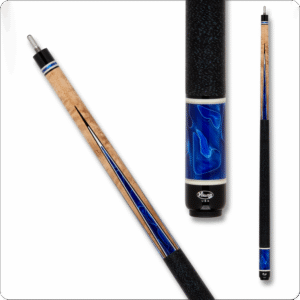
Viking VIKT0304 Twilight Series Cue
Original price was: $700.00.$630.00Current price is: $630.00. Select options -
-
-
Sale!
-
Viking VIK611 Cue
Original price was: $1,100.00.$990.00Current price is: $990.00. Select options This product has multiple variants. The options may be chosen on the product page -
Sale!
-
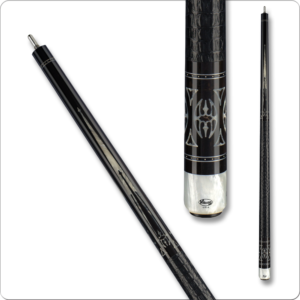
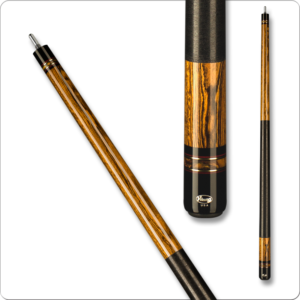
Viking VIK502 Cue
Original price was: $530.00.$477.00Current price is: $477.00. Select options This product has multiple variants. The options may be chosen on the product page
Why an American Maple Cue Still Wins Matches

There is a version of the cue market that runs entirely on spec sheets. Deflection numbers, tip diameters, radial consistency percentages. Some of that matters. Most of it matters far less than the number of hours you have spent with one cue in your hands.
Kaci is one of the best players alive and he lost a match he led on the hill. Strickland is thirty years past what most people would call his prime and he won it. The difference was not in the wood. It was in the certainty, and certainty is a function of repetition with a stick that does not change on you.
The case for the value tier
Viking’s Valhalla line is where most players should start if they are moving up from a house cue. The Valhalla VA212 is a straightforward maple cue with a Irish linen wrap and the same lifetime warranty against warpage that the flagship cues carry. It is not trying to be a tournament cue. It is trying to be a cue you own for five years without ever wondering whether the cue is the problem. For a lot of players, that is worth more than any low deflection claim.
The whole Valhalla range sits in the same territory, and the honest advice is to pick the one you find attractive. At this tier the playing characteristics are close enough that liking the way it looks in your hands is a legitimate tiebreaker, because you will practice more with a cue you enjoy pulling out of the case.
The case for stepping up
Above the value tier, the argument changes. The Viking VIK502 and the Twilight Series VIKT0304 bring tighter inlay work, better balance points, and shaft options that let you dial in tip diameter and taper. At the top of the range, the VIK611 gets into genuine showpiece territory without leaving the same build philosophy behind.
The practical question is not which cue is best. It is which cue you will stop thinking about fastest. Buy the one you can afford comfortably, put a case around it from our pool cue cases selection, and then leave it alone for two years. That is the Strickland method, whether he would describe it that way or not.
What to Watch for the Rest of the Week
The double elimination stage runs through Thursday, which means the field gets brutal fast. Strickland himself was candid about his odds, saying that if he wants to go deep he is going to need a lot of luck, but that he is playing really good right now so anything could happen. That is roughly the correct assessment for about two hundred people in that building.
Watch how the one loss side plays out. Races to eight on that side compress everything, and players who came in expecting to grind their way back will find there is no room to do it. Yapp’s admission that he is feeling the pressure is worth remembering too. Defending a US Open with the world number one ranking attached to your name is a different job than winning one.
Build Your Setup Before the Final
The final is Sunday, August 30, race to thirteen, live on ESPN2. That gives you five days to stop watching other people’s equipment and go handle some yourself. Whether you are looking at a first real cue or your third, the full pool cues range at Quarter King covers every tier, and the Viking and Valhalla lines are a good place to start if longevity matters more to you than badge value.

About Corey Bernstein
Corey Bernstein is a competitive pool player, billiards equipment specialist, and co-owner of Quarter King Billiards in Wilmington, North Carolina. With over a decade of experience in the sport, Corey has competed in regional APA and BCA sanctioned tournaments and maintains an intimate knowledge of cue construction, shaft technology, and table mechanics. As a certified dealer for brands including Predator, McDermott, Jacoby, Viking, Lucasi, Meucci, Joss, and Cuetec, Corey personally tests and evaluates every cue that comes through the shop. His hands-on approach to the business means he has racked thousands of hours behind the table — breaking in shafts, comparing tip compounds, and dialing in the nuances that separate a good cue from a great one. When he is not behind the counter or on the table, Corey is researching the latest advances in low-deflection technology, carbon fiber shaft construction, and cue ball physics. His articles on Quarter King Billiards combine real-world playing experience with deep product knowledge to help players at every level find the right equipment for their game.