Carbon fiber cues used to come in one flavor: black, plain and expensive. Bull Carbon has spent the last few years proving that a carbon cue can look like a traditional cue, come with real shaft choices, and still land under $700 for the entry model. We carry more than 40 Bull Carbon products, which makes the lineup a little overwhelming at first glance.
This guide breaks it down. We will cover the two shaft options that every Bull playing cue offers, walk through the main price tiers, and look at the break cue that rounds out a full Bull setup.
OG vs RK: The Choice That Matters Most
Every Bull Carbon playing cue we stock lets you pick between two carbon fiber shafts. This is the most important decision you will make, more important than the butt design or the wrap.
The OG shaft is Bull’s high performance design. It ships with a Kamui Black Soft tip. If you are coming from a traditional maple shaft or a low deflection wood shaft and want the change to carbon to feel less dramatic, the OG is the shaft we suggest trying first.
The RK shaft is Bull’s extreme low deflection design, fitted with a Kamui Athlete Soft tip. Deflection, often called squirt, is how far the cue ball pushes off your aiming line when you use side spin. Lower deflection means less adjustment when you apply English. If you already play a carbon or low deflection shaft and want to minimize compensation, the RK is the natural pick.
Diameter and Length Options
Both shafts come in four tip diameters: 11.75, 12.25, 12.65 and 12.85mm. Most players land on 12.25 or 12.65mm. Players with smaller hands or those who prefer a slim feel through the bridge often go 11.75mm, while 12.85mm is closer to a traditional house cue feel. You also choose a 29 or 30 inch shaft length, and the 30 inch option is useful for taller players or anyone who likes a longer bridge.
Shared Hardware
The Bull playing cues share a lot of hardware. They use the V-TEK interchangeable joint system with a Uni-Loc quick-release joint, a Juma ferrule with a red impact plate listed at Perfect Sight Height, and a 10mm collar. Weights run 18 to 21 ounces, and the stackable weight bolt system lets you fine-tune in .10 ounce increments. The listings carry a 10 year warranty that covers warpage.
The Entry Point: LD15
The Bull Carbon LD15 Pool Cue at $665.99 is where most players should start. It pairs a white stained maple forearm with a matching butt sleeve and a textured ultra-leather wrap, so it looks like a classic cue from a few feet away. Underneath, you get the full Bull carbon shaft choice, the Uni-Loc joint and the same Juma ferrule as cues costing twice as much.
For a league player moving from a wood shaft to carbon for the first time, the LD15 with an OG shaft in 12.25 or 12.65mm is our default recommendation. You get the stability and consistency of carbon without paying for extra inlays.
The Workhorse: BCC Series
The BCC models sit in the $719 to $899 range and offer more design variety. The Bull Carbon BCC1 Pool Cue at $799.99 is a good representative. It is all black with a comfort textured leather wrap, a 10mm black Implex butt cap and a screw-in butt stopper. Players who grip the cue through long sessions tend to like the texture of the leather wrap, which gives a secure feel without being sticky.
Other BCC models add curly maple forearms in grey, green or pink stains, exotic wood butt caps or embossed leather wraps. The shaft and joint options stay the same, so you are choosing on looks and grip rather than performance.
The Upper Tier: BCL Series
The BCL models start around $1,145 and move into the $1,300 range. These cues add points inlaid with abalone or mother of pearl, more elaborate forearms and premium finishes. The Bull Carbon BCL19 Pool Cue at $1,299.99 is built around weight tuning. Its stackable weight bolt system lets you customize balance in .10 increments from 18 to 21 ounces, which suits players who are particular about how the cue feels in the back hand.
Is the BCL worth the jump over the BCC? If you want a cue that looks like a custom build and you care about the details, yes. If you are buying purely for performance, the shaft is the same across the tiers, so the LD15 or a BCC delivers the same hit.
Finishing the Setup: The Bull Breaker
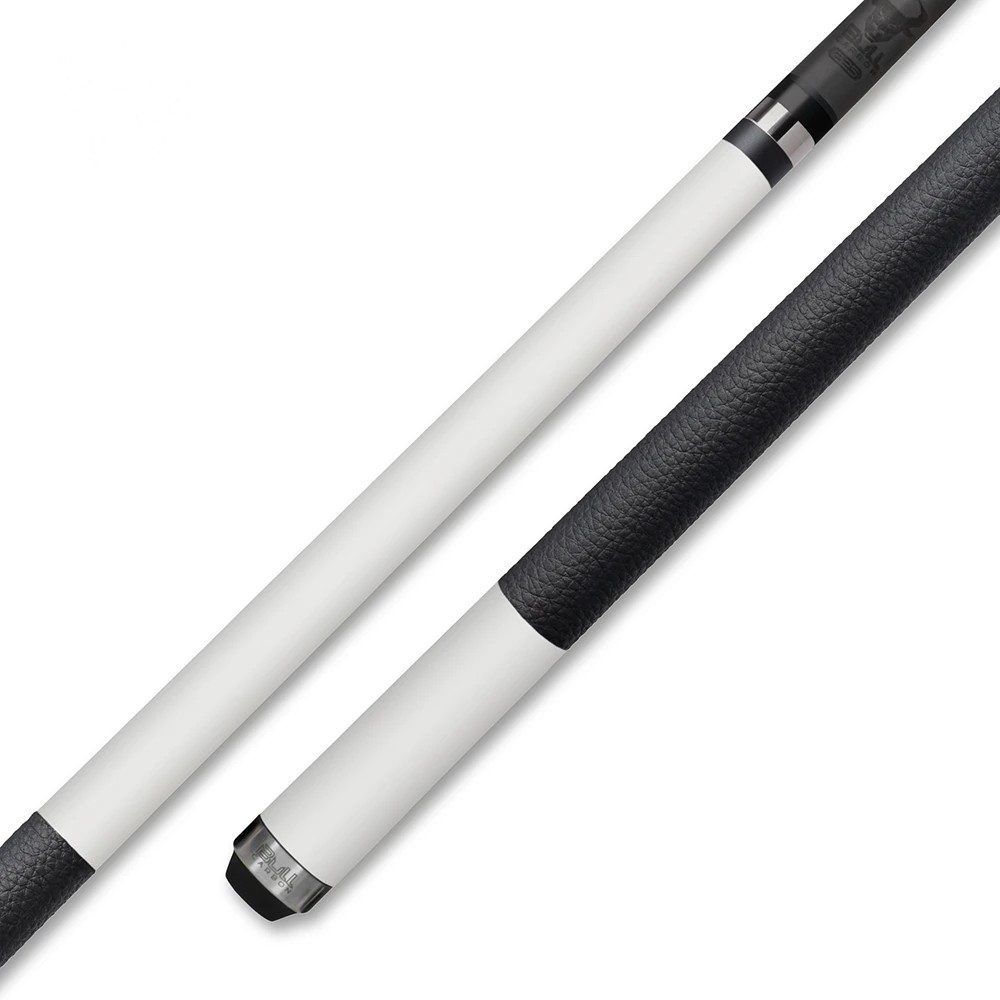
A carbon playing cue deserves a dedicated break cue. Breaking with your playing cue compresses the tip and puts stress on the shaft and joint over time. The Bull Carbon BCBKW SW White Break at $674.10 is the wrapped version of Bull’s white Bull Breaker.
It weighs 20 ounces and uses a 29 inch carbon fiber break shaft with a 15 inch pro taper. A hard G-Force jump and break tip, a 4mm high-impact Juma ferrule and a double Uni-Loc Steel-Lite quick-release pin round out the build. The wrap gives your grip hand extra traction on a fast, hard break stroke. There is also a no-wrap version if you prefer a smooth handle.
Making the Switch From Wood to Carbon
Moving to any carbon shaft takes a short adjustment period, and knowing what to expect makes it easier. The first thing most players notice is the sound and feel at contact. Carbon tends to feel crisper than maple, and some players read that as harder. Give it a couple of weeks of regular play before you judge it.
The second change is aim on shots with side spin. Because a low deflection shaft pushes the cue ball off line less, the small aiming corrections you built up on a wood shaft may now be too much. Spend a practice session shooting the same cut shot with center ball, then with left and right English, and watch where the object ball goes. You will recalibrate faster than you expect.
Care is simpler than with wood. A carbon shaft does not need sanding or burnishing. Wipe it with a clean, slightly damp microfiber cloth after you play, then dry it, and it will stay slick through your bridge. Avoid abrasive pads that can scratch the finish. Keep the tip shaped and scuffed as usual, since the tip is still leather and still needs regular attention.
Finally, chalk with a light touch and chalk often. A well-chalked tip matters on any shaft, but players who use a lot of spin with a low deflection shaft rely on it even more.
Featured Bull Carbon Products
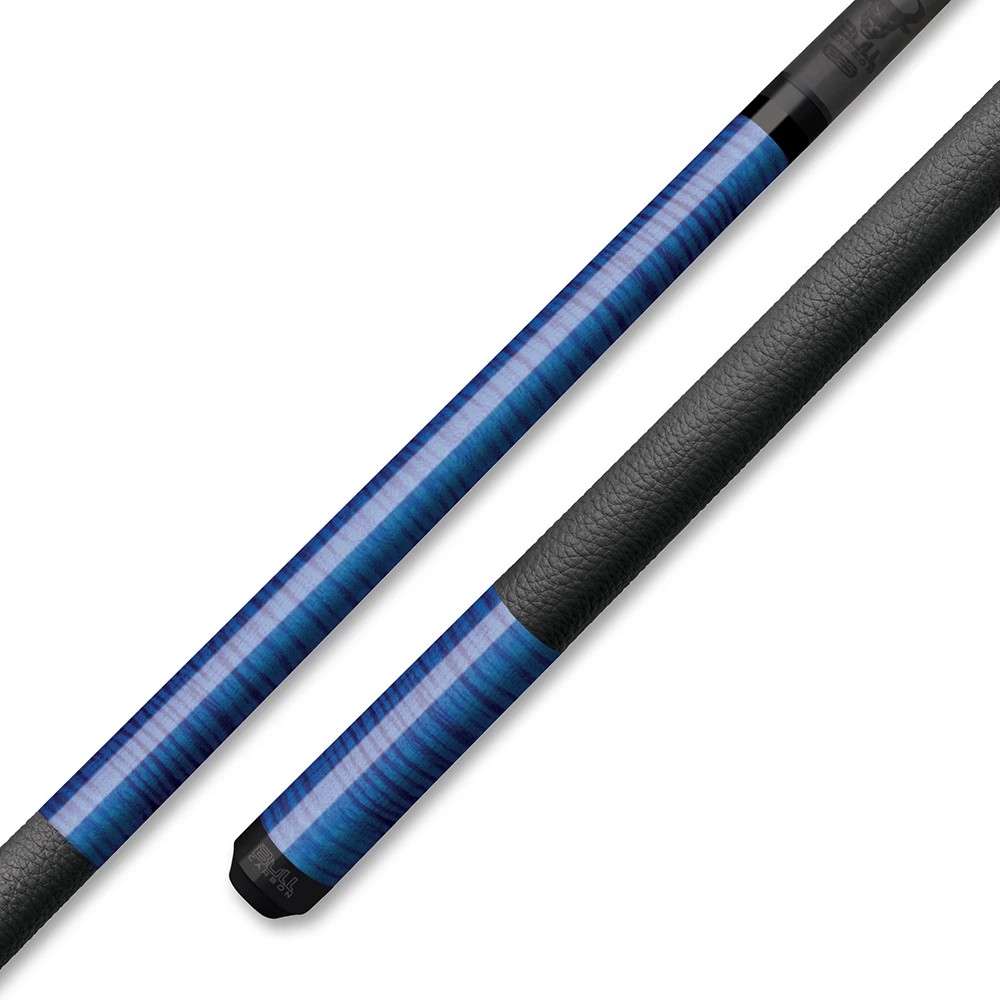
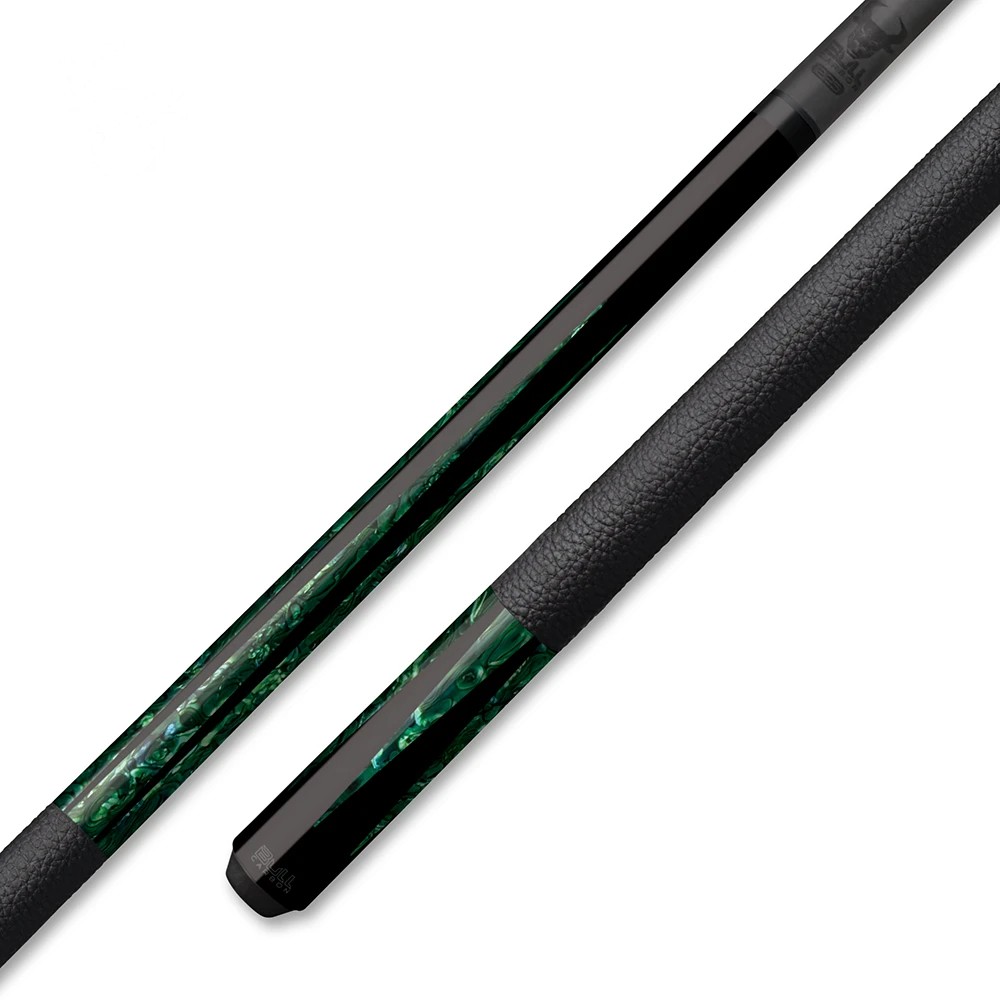
Who Should Buy a Bull Carbon Cue?
Bull Carbon makes the most sense for players who want carbon’s consistency but do not want an all-black, space-age look. The maple forearms and leather wraps on many models look traditional, while the shaft gives you carbon’s resistance to humidity and warping.
It is also a strong choice for players who like to customize. Between two shaft designs, four diameters, two lengths and adjustable weight, you can set up a Bull cue to match almost any preference.
If you are still deciding whether carbon is right for you, our carbon fiber vs wood shafts guide covers the trade-offs. For players who want to keep their current cue and just upgrade the shaft, our carbon fiber shafts section is worth a look.
Quick Buying Summary
Start with the LD15 if you want the best value. Step up to a BCC model like the BCC1 if you want more design choice and a textured leather wrap. Go BCL if you want premium inlays and weight tuning. Add the Bull Breaker to complete the setup. Choose the OG shaft if you are coming from wood, and the RK if you want the lowest deflection possible.
Browse the full Bull Carbon pool cues collection, or compare against every brand in our pool cues section.

About Corey Bernstein
Corey Bernstein is a competitive pool player, billiards equipment specialist, and co-owner of Quarter King Billiards in Wilmington, North Carolina. With over a decade of experience in the sport, Corey has competed in regional APA and BCA sanctioned tournaments and maintains an intimate knowledge of cue construction, shaft technology, and table mechanics. As a certified dealer for brands including Predator, McDermott, Jacoby, Viking, Lucasi, Meucci, Joss, and Cuetec, Corey personally tests and evaluates every cue that comes through the shop. His hands-on approach to the business means he has racked thousands of hours behind the table — breaking in shafts, comparing tip compounds, and dialing in the nuances that separate a good cue from a great one. When he is not behind the counter or on the table, Corey is researching the latest advances in low-deflection technology, carbon fiber shaft construction, and cue ball physics. His articles on Quarter King Billiards combine real-world playing experience with deep product knowledge to help players at every level find the right equipment for their game.