 844 408 3056

 Hot Deal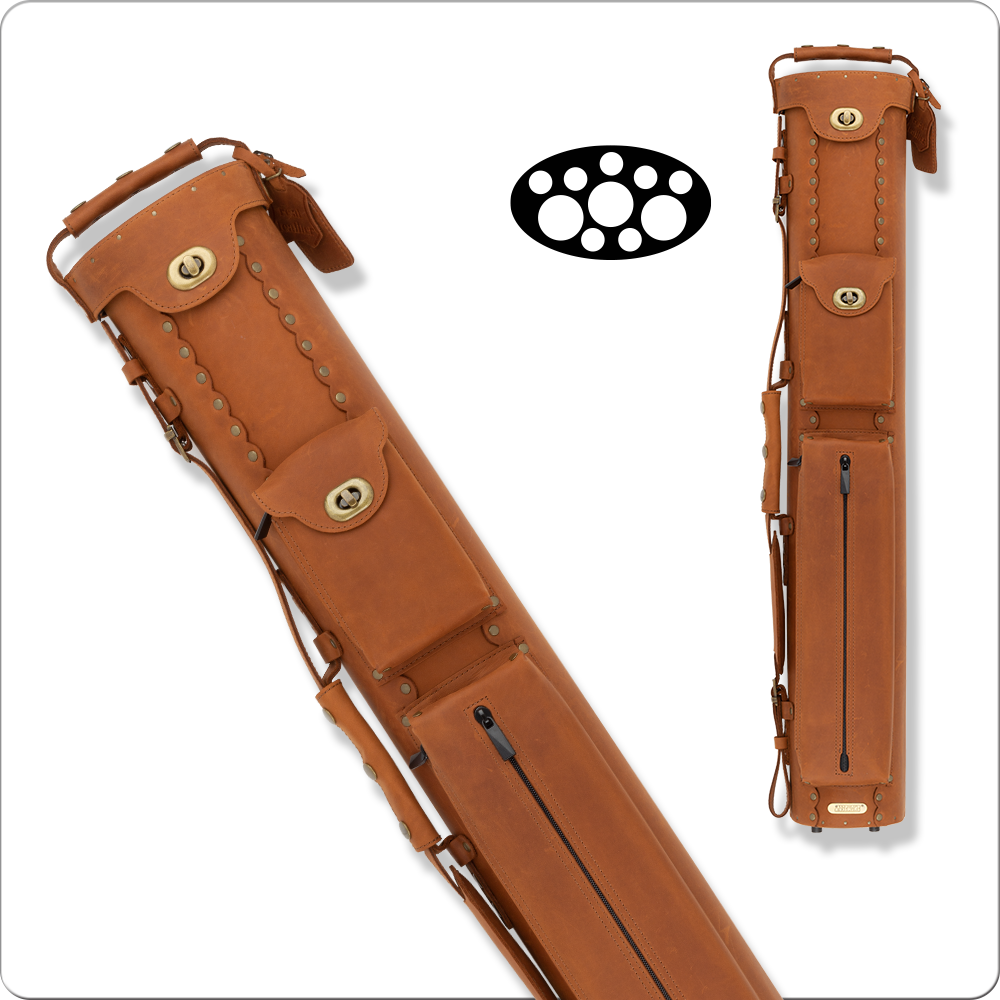
A player will agonize for months over the difference between a $400 cue and a $500 cue, then dump the winner into a twenty dollar padded sleeve that cannot survive a closing car door. Cases are the least glamorous purchase in pool and among the most consequential. A warped shaft does not care how much you paid for it, and the repair bill for a crushed joint often exceeds the price of the case that would have prevented it.
The market splits into four broad builds: molded hard cases, structured soft cases, leather cases, and backpack style carriers. Each solves a different problem. This comparison walks through a strong example of each from the wall at Quarter King Billiards, with honest guidance on who should buy which.
What a case actually has to do
Strip away the marketing and a cue case has three jobs. The first is impact protection, meaning the drop off the truck tailgate, the trunk full of groceries shifting on a hard brake, and the friend who stacks a table box on top of your gear. The second is climate buffering. Wood shafts move with humidity and temperature, and a sealed case slows the swings that cause warping, especially for players who leave equipment in vehicles. The third is capacity and organization, because a case that cannot hold your jump cue is a case you will eventually replace.
Weight and carry style form the quiet fourth job. The most protective case on earth does you no good if you hate carrying it enough to leave it home.
Capacity math, decoded
Case sizing reads like apartment listings. A 2×4 holds two butts and four shafts. A 3×5 holds three butts and five shafts. The arithmetic matters more than it first appears, because a serious league kit grows fast. A playing cue is one butt and usually two shafts once you add a spare or a carbon upgrade. A break cue adds a butt and a shaft. A jump cue adds another butt. Suddenly the 2×4 that felt spacious is full, and the jump butt is riding loose in a side pocket.
The rule that saves money is simple: buy one slot beyond what you own today. Players upgrade shafts far more often than they expect, and the resale market treats larger cases kindly.
Interiors matter more than exteriors
Two cases with identical shells can treat your shafts completely differently inside. Tube interiors isolate each piece in its own channel, which prevents the rattle and rub that slowly polish a shaft finish away in cheaper cases. Box style interiors leave a shared cavity where pieces can touch, acceptable for short trips and much less so for a bouncing back seat. Padded dividers land in between. When you evaluate any case in person, drop a butt in, tip the case gently, and listen. Silence is what protection sounds like.
Pockets deserve a look too. Chalk, tips, a glove, a jump ball, and a bridge head all want a home, and exterior storage is the difference between one bag on your shoulder and three. The four cases below take noticeably different approaches, from the minimalist Lizard to the everything included Action backpack.
The four builds, compared
The hard shell: Elite 3×5 Nexus
The Elite 3×5 Nexus hard case is the sensible center of the market at around $233. A molded shell shrugs off impacts that would dent softer builds, the interior cradles each shaft individually, and the 3×5 capacity swallows a full league kit with room for growth. Elite has built its reputation on exactly this formula, maximum protection per dollar without boutique pricing. If you drive to league night and want one case that handles everything, this is the default answer.
The heirloom: Instroke Buffalo 3×7 leather
The Instroke Buffalo 3×7 leather case sits at the top of this comparison near $487, and it earns the position. Genuine leather over a rigid frame, room for three butts and seven shafts, and the kind of presence that gets noticed in a tournament room. Instroke cases have a decades long following among players who own multiple cues, and the 3×7 format is genuinely practical for anyone hauling playing, break, and jump setups with spare shafts for each. Leather also ages instead of wearing out, which changes the math on the price.
The soft case done right: Lizard Vibrant 3×5
The Lizard Vibrant 3×5 soft case in cream and black proves soft does not mean flimsy. At $399 it is a structured build with real interior organization, dramatically lighter on the shoulder than a comparable hard case, and styled like nothing else in the room. Lizard has carved out a niche with players who treat the case as part of the kit’s personality. The tradeoff is honest: a soft shell absorbs less abuse than molded plastic, so this is a case for careful owners rather than truck beds.
The commuter: Action Backpack 2×4
The Action Backpack 2×4 hard case is the value play at $126 and the only one here you can wear. Backpack straps free both hands for transit, stairs, and coffee, while the hard shell still protects a two butt, four shaft kit. Action has always owned the budget conscious end of the case market, and this design is the right answer for students, city players, and anyone whose walk to the pool room is measured in blocks rather than parking spots.
See them side by side
-

-
-
Sale!

-
Action Backpack ACB24 2×4 Hard Case
Original price was: $140.00.$126.00Current price is: $126.00. Add to cart -
Sale!

-
Instroke Buffalo Pool Cue Case, 3×7, Brown, Leather
Original price was: $609.00.$487.20Current price is: $487.20. Add to cart -
-
Hard shell or soft, settled honestly
If you want the short version of the whole debate, here it is. Hard cases win on pure protection and lose on weight and looks. Soft structured cases win on carry comfort and personality and ask you to be a slightly more careful owner. Leather buys both protection and presence at a premium. Backpacks trade a little capacity for a lot of convenience. There is no wrong answer on this list, only a wrong match between the case and the life it is about to live. Picture your worst equipment day of the year, the rainy night with a full trunk and a long walk, and buy for that day rather than the sunny ones.
Which case fits how you play
Match the build to your actual week, not your imagined one. The once a week league player who drives to the room should default to the Elite hard shell, because trunk life is harder on equipment than table life. The daily player on foot or transit wants the Action backpack, full stop, since the best case is the one that never gets left behind. The multiple cue owner heading to regional tournaments grows into the Instroke 3×7, which holds an entire arsenal and looks the part at the players meeting. The stylist whose home room doubles as a social scene will be happiest with the Lizard, which protects well under civilized conditions and photographs even better.
Climate deserves one more word. If your cues live in a car through southern summers or northern winters, prioritize the sealed hard builds and consider it insurance. No case fully defeats a hundred degree trunk, but the difference between a sealed shell and a thin sleeve is measured in straight shafts.
Making any case last a decade
A little maintenance multiplies the lifespan of every build here. Leather wants a wipe down and a conditioner twice a year, and it wants to live away from radiators and direct sun. Soft cases want an occasional vacuum of the interior channels, since grit that falls in eventually sands your finish. Hard shells mostly want their latches and zippers kept clean, because hardware fails long before the shell does. And every case, regardless of price, appreciates being stored horizontal rather than propped in a corner, where a slow lean becomes a permanent one.
Protect the investment you already made
The cue on your table represents real money and, more importantly, real hours of adjustment between your stroke and that specific setup. Guarding it costs a fraction of replacing it. Browse the complete pool cue case collection to compare capacities and builds beyond these four, dig deeper into the Instroke leather lineup if the heirloom route calls to you, and if the new case sparks thoughts of a new cue to fill the extra slot, the pool cues collection is one click away.

About Corey Bernstein
Corey Bernstein is a competitive pool player, billiards equipment specialist, and co-owner of Quarter King Billiards in Wilmington, North Carolina. With over a decade of experience in the sport, Corey has competed in regional APA and BCA sanctioned tournaments and maintains an intimate knowledge of cue construction, shaft technology, and table mechanics. As a certified dealer for brands including Predator, McDermott, Jacoby, Viking, Lucasi, Meucci, Joss, and Cuetec, Corey personally tests and evaluates every cue that comes through the shop. His hands-on approach to the business means he has racked thousands of hours behind the table — breaking in shafts, comparing tip compounds, and dialing in the nuances that separate a good cue from a great one. When he is not behind the counter or on the table, Corey is researching the latest advances in low-deflection technology, carbon fiber shaft construction, and cue ball physics. His articles on Quarter King Billiards combine real-world playing experience with deep product knowledge to help players at every level find the right equipment for their game.